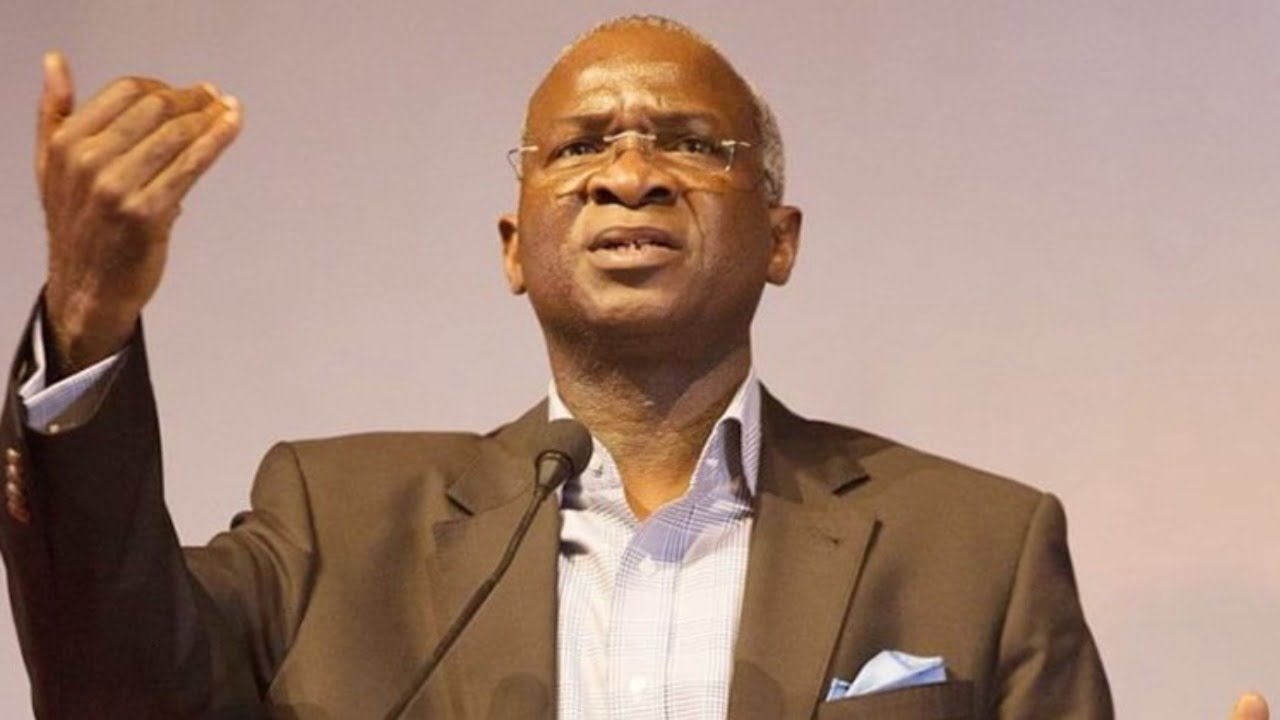
As public discourse around granting local governments autonomy intensifies across Nigeria, former Lagos State Governor Babatunde Fashola has expressed skepticism about the feasibility of such autonomy within the existing Constitution’s framework.
Speaking on Channels Television’s Sunrise programme on Saturday, Fashola argued that it is practically impossible for local governments to operate independently given the prevailing constitutional and institutional arrangements. He pointed out that the involvement of state governments and state Houses of Assembly in local council affairs contradicts the principle of true autonomy.
According to the former Minister of Power, Works, and Housing, the current legal structure empowers state assemblies to make laws guiding local governments. This influence, he said, inherently negates the concept of autonomy.
“I believe the conversation we need to have—and it’s a necessary one—is whether we genuinely want local governments to be autonomous. Given how things stand today, expecting such autonomy is not realistic,” he asserted.
Fashola elaborated that after closely examining several provisions in the Nigerian Constitution, it becomes clear that local governments were never designed to function independently. “For instance, the Constitution specifies that laws regulating local governments’ economic and administrative actions are to be enacted by state assemblies,” he explained.
He added, “When you consider the true meaning of the term ‘autonomy,’ it implies operating without any external influence. So if a state assembly is legislating on the operations of a local government, that in itself contradicts the notion of autonomy.”
Fashola also addressed the issue of land ownership, which plays a crucial role in local infrastructure development. He pointed out that since land is managed by state governments, local councils are handicapped in performing duties assigned to them, such as overseeing abattoirs, cemeteries, road construction, advertising, managing primary schools, and running health centres.
“Land is the common denominator for all these responsibilities. Since local governments don’t control land, their ability to function independently is compromised,” he said.
He added that if Nigerians choose to pursue actual autonomy for local governments, it would require major structural reforms, especially regarding control over land and administrative powers.
“In my view, what the Constitution envisioned was a cooperative model—some form of supervision or oversight by the states—not complete independence,” he said. “This intent is reflected in Section 162, which addresses the state and local government joint account.”
The Rationale Behind State Oversight
Fashola also provided historical context for the financial relationship between state and local governments. He explained that many local councils defaulted on basic responsibilities, such as salary and pension payments to workers in health and education, after the return to democratic rule in 1999.
He said, “There’s a historical reason for the joint account system. Until 1999, local governments received allocations directly from the Federation Account through a process called JAAC—Joint Accounts Allocation Committee.”
“However, at the dawn of democracy, it was discovered that numerous local governments had failed in meeting their core duties, especially in paying salaries to primary health workers and teachers. When I assumed office as governor, I inherited part of that financial mess.”
Fashola stated that the creation of the state-local government joint account was a corrective measure meant to ensure financial supervision. Whether or not those responsible for overseeing the local governments have become as inefficient as the councils they supervise is, according to him, another issue entirely.
On the Supreme Court’s recent judgment granting financial autonomy to local councils and prohibiting governors from dissolving elected local governments, Fashola said legal experts are divided on its constitutional standing.
Despite these concerns, he acknowledged that conducting credible local government elections is a vital step toward strengthening their independence.
The Supreme Court, in its July 2024 ruling, declared that state governors no longer have the power to disband democratically elected local governments and granted them direct access to their finances.
What You Should Know
Babatunde Fashola is a prominent Nigerian lawyer and politician who served as the Governor of Lagos State (2007–2015) and Minister of Power, Works, and Housing.
A Senior Advocate of Nigeria (SAN), he is known for his deep legal insights and policy expertise. His recent remarks on local government autonomy reflect concerns about constitutional limitations and the practical challenges hindering grassroots governance in Nigeria.