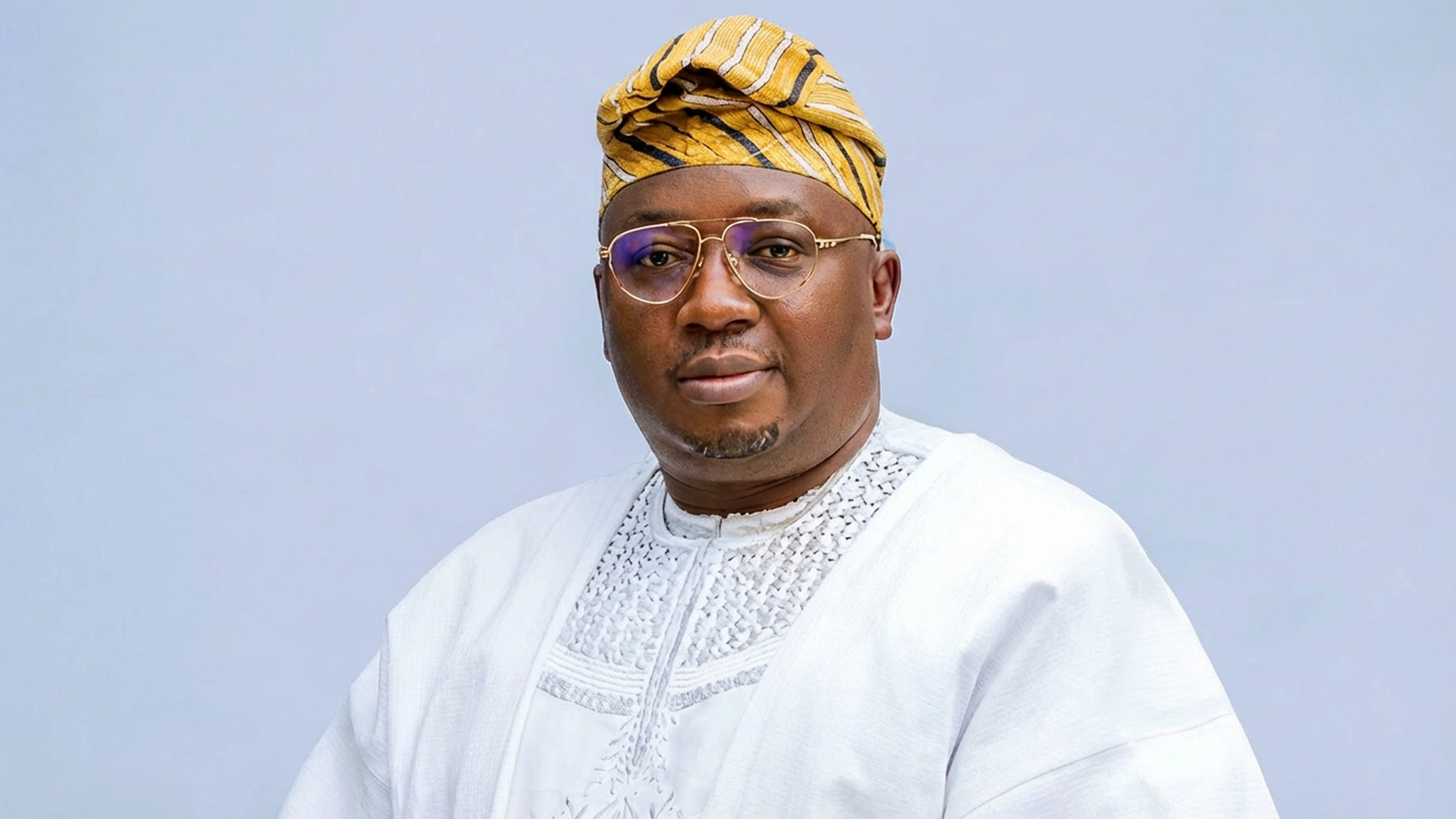
Former Minister of Power Adebayo Adelabu flatly rejected claims that President Bola Tinubu has thrown his weight behind any candidate, instead revealing that he has received the president’s personal blessing to pursue the governorship.
Speaking in his native Yoruba to a charged audience at an APC stakeholders’ meeting in Ibadan South-East, Adelabu was unambiguous and unapologetic: “I have seen people going around saying the president has already endorsed someone in Oyo. They are telling lies.”
The denial came directly in response to a gathering of APC leaders in Ibadan, where Senator Sharafadeen Alli was reportedly adopted as the party’s consensus governorship candidate, a development that set off alarm bells in Adelabu’s camp and forced the former minister to go public with the details of what he says was a private, closed-door conversation with the president himself.
What makes Adelabu’s account particularly significant is not merely what he denies but what he claims. According to the former minister, before tendering his resignation from the federal cabinet, a prerequisite for any serious governorship bid, he made a point of securing a face-to-face audience with President Tinubu.
“Before I resigned, I told him I needed to see the person who appointed me face-to-face. That was why I delayed my resignation so I could meet him properly,” he told the gathering.
It is a detail that speaks to both political protocol and personal loyalty. Adelabu, a two-time governorship aspirant in Oyo State, was clearly unwilling to leave office without the explicit knowledge and, ideally, the approval of the man who put him there.
In Nigerian political culture, such a gesture carries considerable weight: it is an acknowledgment of hierarchy, an act of deference, and a bid for legitimacy, all rolled into one.
The meeting, he confirmed, eventually happened. “I met him last week in a closed-door meeting. I cannot come out and say things that are not true about the President,” he said.
The contents of that closed-door meeting, as Adelabu recounted them, are likely to reverberate across Oyo’s political landscape for weeks to come. According to the former minister, Tinubu not only acknowledged his long-held gubernatorial ambition but also actively encouraged him to proceed.
“He told me, ‘Bayo, it is time. This ambition has been long-standing. I won’t stop you. Go and resign and start your work,” Adelabu quoted the president as saying.
It is a striking disclosure—and a carefully worded one. Adelabu stops short of calling it a formal endorsement, a distinction he appears to be deliberate about. What he describes is closer to a presidential release: an acknowledgment of ambition, a withdrawal of any potential presidential objection, and a directive to begin political mobilization. In the grammar of Nigerian elite politics, that is often more than enough.
Tinubu, Adelabu added, also suggested that consultations among key stakeholders be explored to determine whether a consensus candidate could emerge. “The president said he would speak with two or three people to see if a consensus is possible. If not, we go for direct primary,” he said.
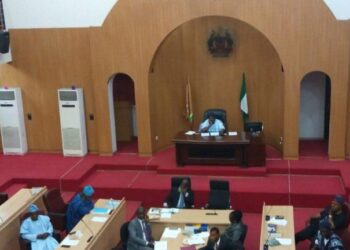
The backdrop to Adelabu’s intervention is a meeting at which the name of Senator Sharafadeen Alli, a sitting senator representing Oyo South, was put forward as a consensus governorship candidate, with proponents invoking the president’s name as justification.
Former Senator Ayo Adeseun, addressing the gathering, framed the president’s preference as central to the party’s decision-making: “Mr. President remains the leader of our party, and his opinion on who flies the party’s flag must be given due consideration.”
It was precisely this invocation of the president’s name without, Adelabu insists, any factual basis that drew his sharp rebuttal. By going public with his own account of the presidential conversation, Adelabu has effectively sought to cut the ground from beneath the Alli camp’s narrative while simultaneously elevating his own candidacy into one that has, at the very least, not been discouraged by the presidency.
For seasoned observers of Oyo State politics, the unfolding drama is familiar in texture, if not in detail. Oyo has long been fertile ground for intra-party turbulence, and the APC, which lost the governorship to Governor Seyi Makinde‘s Peoples Democratic Party (PDP) in both 2019 and 2023, can ill afford another debilitating internal war ahead of what is already shaping up to be a fiercely contested 2027 election.
What is clear from the events of this week is that at least two credible camps are now in motion within the state’s APC: one clustering around Senator Alli and another rallying behind Adelabu. Both are, for now, claiming either the president’s support or, at a minimum, his non-interference.
Adelabu’s warning against misinformation was firm: no endorsement has been issued, consultations are ongoing, and the party faithful should await a legitimate process.
WHAT YOU SHOULD KNOW
The 2027 Oyo State governorship race is already heating up, and it is being fought in the president’s name.
Adebayo Adelabu has resigned from the federal cabinet, secured what he describes as a personal presidential go-ahead from Tinubu, and is now pushing back against a rival APC faction that claimed the president had already endorsed Senator Sharafadeen Alli.
Both sides are invoking Tinubu’s authority to legitimize their candidate—yet the president has, at least publicly, endorsed no one.