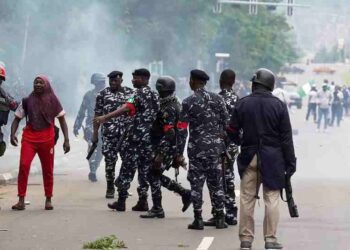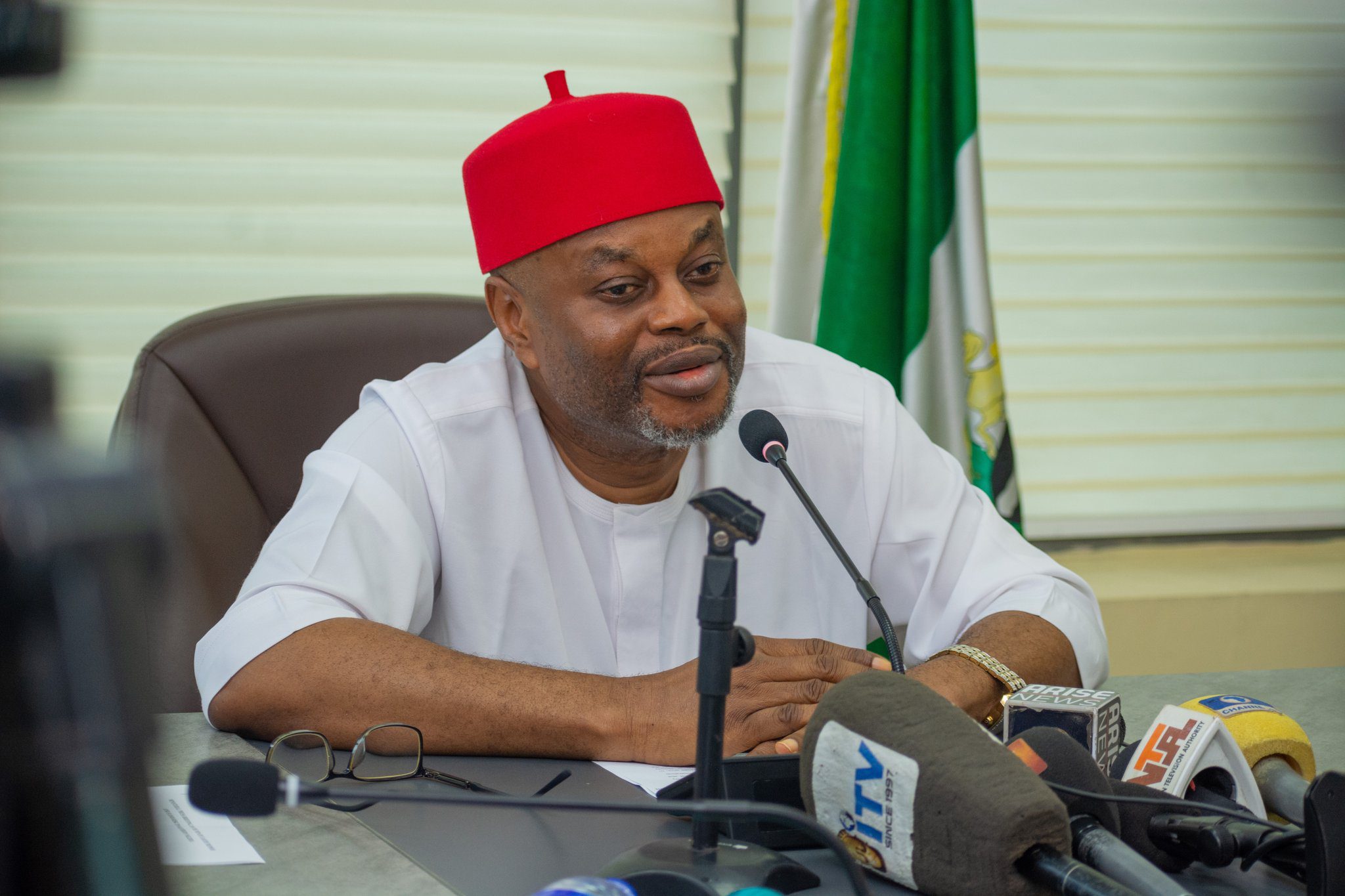
The long-simmering scandal over Uche Nnaji’s academic credentials came to a head on Wednesday morning when the former Minister of Science and Technology was taken into custody at the Nnamdi Azikiwe International Airport.
According to multiple accounts, Nnaji was arrested shortly after arriving in Abuja from Enugu aboard a chartered flight, with airport sources confirming he would be handed over to the Independent Corrupt Practices and Other Related Offences Commission (ICPC) for interrogation.
One report offered a more dramatic account of the operation’s origin, suggesting operatives of the Department of State Services actually arrested him at the Akanu Ibiam International Airport in Enugu, intercepting him as he attempted to board the private jet in the first place, a detail that, if accurate, would mean the drama began well before touchdown in the capital.
Whichever version proves definitive, the outcome was the same: the DSS reportedly acted on the ICPC’s request before handing the former minister over to the anti-graft agency.
The case traces back to dogged investigative journalism rather than a routine audit. The ICPC’s invitation to Nnaji followed a two-year investigation by Premium Times, published in October last year, which found that the then-minister had forged his University of Nigeria, Nsukka, degree and National Youth Service Corps certificates.
Those fabricated documents were not filed away quietly; he had submitted them to President Bola Tinubu and the Nigerian Senate during his ministerial confirmation in 2023, and the same papers were presented to the Office of the Secretary to the Government of the Federation, the State Security Service, and the Senate.
What makes the case unusually clean-cut, as far as such scandals go, is that the former minister later admitted that UNN never issued him a degree certificate, an admission that effectively validated the newspaper’s original reporting.
He resigned from office last year once the investigation’s findings became public, though he has not gone quietly since. Nnaji has consistently denied the allegations, and one report noted his previous dismissal of the court order authorizing his arrest as a “media trial.”
The path to Wednesday’s arrest ran through the courts. In mid-June, a Federal High Court in Abuja ordered the ICPC to arrest Nnaji for investigation into the certificate forgery scandal, and beyond the arrest order, the court also granted the commission leave to declare him wanted through national newspapers, social media platforms, and other media.
Investigators told the court plainly why they needed such extraordinary measures: the ex parte application followed Nnaji’s repeated failure to honor invitations extended to him for “investigative activities” over the forgery allegations.
Nnaji did not accept the ruling without a fight. On June 18, he filed an appeal against the arrest order at the Court of Appeal in Abuja, a legal maneuver that ultimately failed to forestall Wednesday’s events.
As of the time of reporting, the ICPC had yet to issue an official statement on the arrest, and there has been no public response from Nnaji’s legal team.
The former minister is now expected to face the interrogation he had, by the commission’s account, spent months avoiding a reckoning that transforms what began as a newsroom investigation into a formal criminal probe testing the accountability of Nigeria’s ministerial vetting process itself.
WHAT YOU SHOULD KNOW
The arrest of Uche Nnaji marks the culmination of a two-year paper trail that started not with government oversight but with independent journalism, and it ended with the ex-minister admitting the core allegation was true.
A man who forged academic credentials used them to clear presidential, Senate, and security vetting for a ministerial post, and it took sustained investigative reporting, not the system’s own checks, to expose it.
His resignation last year didn’t end the matter; only a court-ordered arrest, after he repeatedly dodged questioning, finally forced accountability.