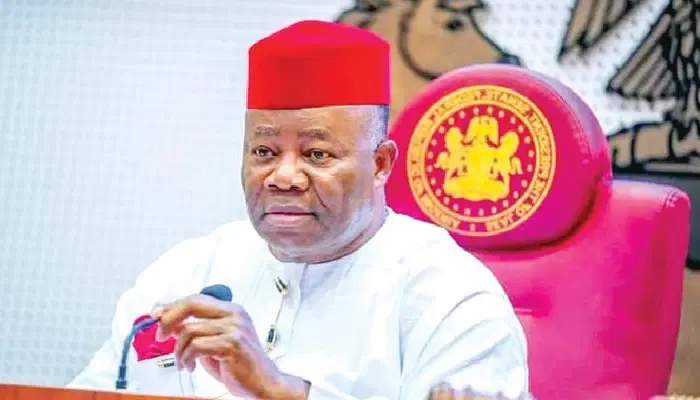
Senate President Godswill Akpabio has voiced strong approval of the newly signed Electoral Act, describing it as a historic and carefully crafted legislation that mirrors the true aspirations of Nigerians.
Speaking at the State House shortly after President Bola Ahmed Tinubu assented to the bill, Akpabio commended lawmakers for what he termed a patriotic and meticulous process.
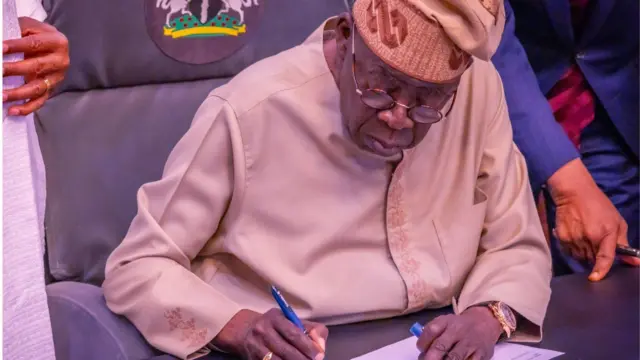
He explained that members of the National Assembly took into consideration the unique realities of the Nigerian environment while resisting what he described as undue external influence.
According to him, the National Assembly was pleased that it had successfully interpreted the desires and expectations of the majority of Nigerians, “not those who are politically motivated, not a few people who make noise. Noise is different from lawmaking.”
Akpabio stated that the new legislation would pave the way for improved transparency, fairness, and prosperity in subsequent elections, assuring Nigerians that every vote cast would now genuinely matter.
He pointed to the formal recognition of the Bimodal Voter Accreditation System result viewer, widely referred to as IReV, as one of the most applauded features of the amended law.

The IReV portal, managed by the Independent National Electoral Commission, serves as a platform for viewing polling unit results.
The Senate President explained that results transmitted electronically, including those from areas experiencing poor network coverage, would eventually appear on the IReV portal once connectivity is restored. This, he noted, would enable citizens to identify any discrepancies or alterations as results move from polling units to collation centres.
Describing the reform as groundbreaking, Akpabio observed that for the first time since Nigeria gained independence in 1960, electronic transmission of election results has received explicit legal backing.

He further highlighted additional changes embedded in the Act, including provisions that allow political party members to directly vote for their preferred candidates during primaries, rather than leaving the process solely in the hands of a limited group of delegates.
Another significant amendment, he said, mandates that a fresh election must be conducted if a leading candidate is disqualified by a court. This provision is designed to prevent situations where a candidate with substantially fewer votes is declared winner by default.
The legislation has sparked intense discussions in recent days, with lawmakers and public figures divided over the appropriate method for transmitting election results ahead of the 2027 general elections.
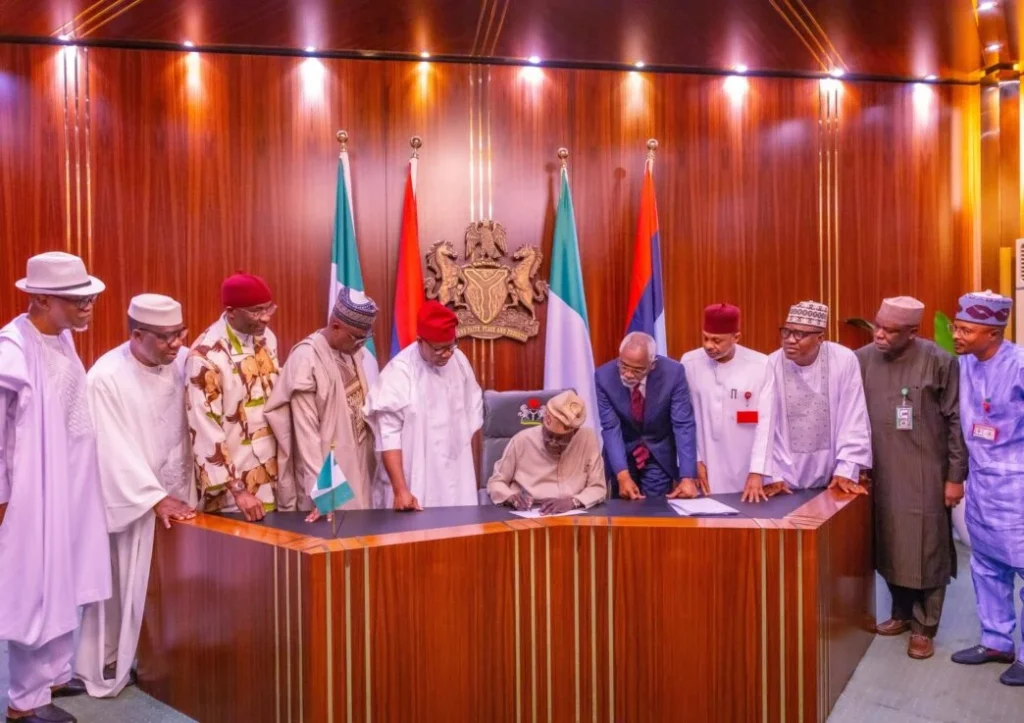
On Tuesday, the Senate approved the Electoral Act, 2022 (Repeal and Re-Enactment) Bill, 2026, after a heated and disorderly session in the upper chamber.
Deliberations were briefly interrupted when Senator Enyinnaya Abaribe (ADC/Abia South) called for a division on Clause 60 as the Senate resumed its consideration of the bill.
What you should know
Senate President Godswill Akpabio has described the newly signed Electoral Act as a historic reform that strengthens transparency and fairness in Nigeria’s elections.
The law formally recognises electronic transmission of results and the IReV portal as verifiable records, a first since independence in 1960. It also introduces direct primaries and mandates fresh elections where leading candidates are disqualified.
Despite heated debates, the Act is expected to shape preparations for the 2027 general elections and redefine Nigeria’s electoral framework.