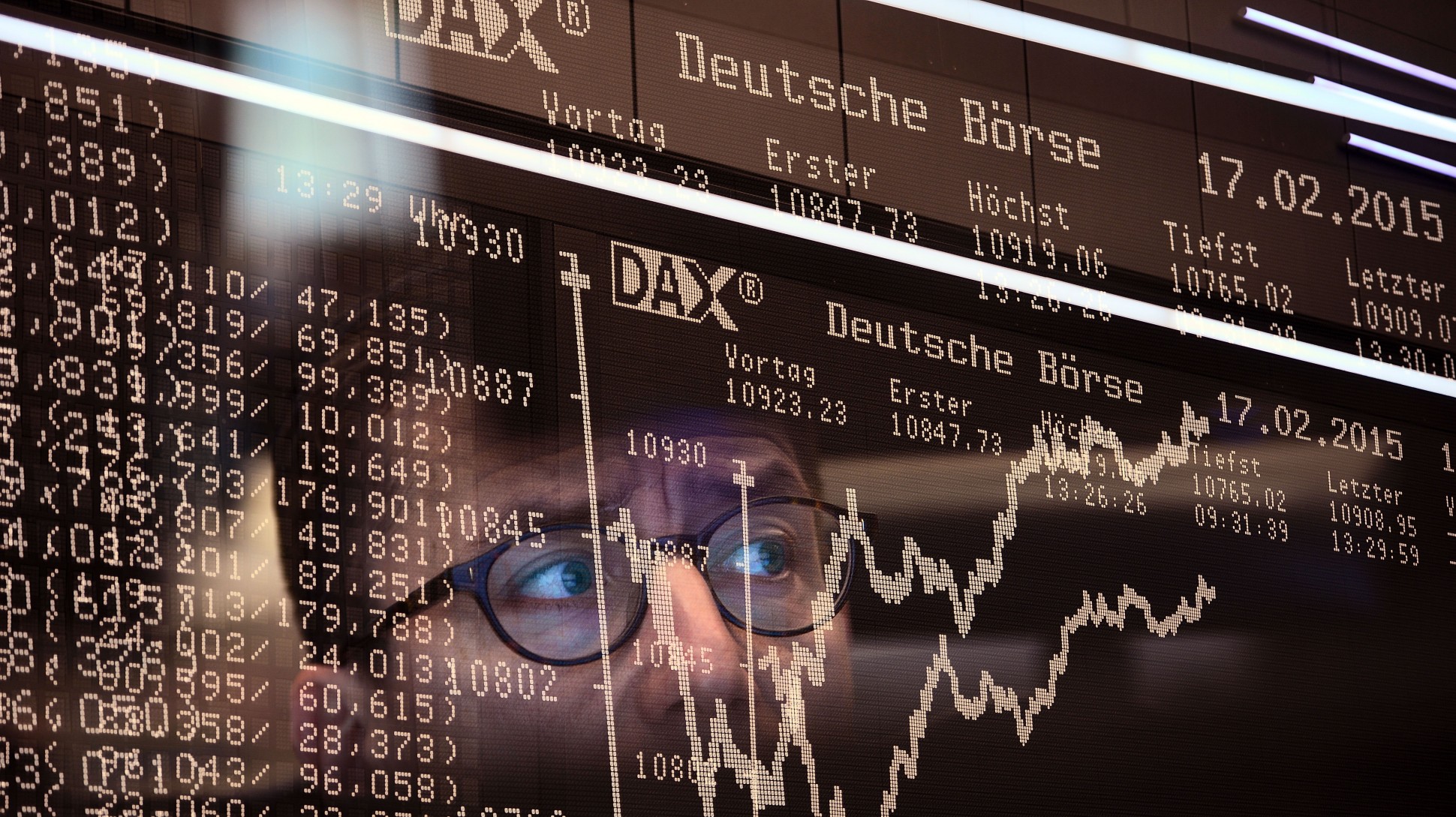
European equity markets treaded water Monday as investors navigated a complex landscape of corporate earnings surprises and mounting uncertainty over transatlantic trade relations, with a critical August deadline looming for potential U.S. tariffs.
The pan-European STOXX 600 index managed only modest gains, advancing a mere 0.03% to 547.15 points by mid-morning trading, reflecting the cautious sentiment pervading European markets as participants weighed competing forces.
At the heart of market concerns lies the precarious state of U.S.-European Union trade negotiations. Commerce Secretary Howard Lutnick’s Sunday assertion that Washington remains “confident” about securing a trade agreement with the EU has done little to calm nerves, particularly given his emphasis on August 1 as a “hard deadline” for tariff implementation should talks collapse.
The European Union, for its part, has already begun preparing retaliatory measures—a clear signal that Brussels is not approaching these negotiations from a position of weakness. This high-stakes diplomatic chess match has left investors in an uncomfortable holding pattern, uncertain whether to position for economic cooperation or prepare for a damaging trade war.
“The market is caught between two competing narratives,” explained Jochen Stanzl, chief market analyst at CMC Markets. “Complete uncertainty dominates one side of the equation regarding tariffs, while cautious optimism persists that cooler heads will prevail and reach a mutually beneficial agreement.”
Sector Performance Reveals Market Fragmentation
Monday’s trading revealed sharp sectoral divergences that underscore the complexity of current market dynamics. Basic resources emerged as the day’s standout performer, surging 3.3% as mining companies benefited from strengthening metals prices. Travel and leisure stocks followed with a 1.7% advance, suggesting some resilience in consumer-facing sectors.
The banking sector, however, told a different story, declining 0.7% amid concerns about the broader economic implications of ongoing trade tensions.
Aviation Sector Soars on Ryanair’s Stellar Results
Dublin-based Ryanair provided one of the session’s most compelling corporate stories, with shares rocketing 6.2% after Europe’s largest budget carrier reported quarterly profits that more than doubled expectations. The Irish airline’s robust performance created a rising tide that lifted other aviation stocks, with Lufthansa gaining 1.3% and EasyJet advancing 1.1%.
This aviation rally comes at a particularly significant time, as the sector continues recovering from pandemic-era disruptions while navigating new challenges, including fuel costs and regulatory pressures.
Mining Sector Capitalizes on Commodity Strength
The resources sector’s strong showing was exemplified by notable gains across major mining operations. Glencore, Anglo American, and Antofagasta all posted advances between 3.3% and 4%, tracking the broader upturn in metals pricing. Swedish miner Boliden stood out with a 5.9% surge following Berenberg’s upgrade to “buy” from “hold,” highlighting how analyst sentiment can amplify commodity-driven momentum.
Corporate Earnings Present Mixed Picture
Beyond the headline-grabbing aviation and mining performances, Monday’s session featured a typical earnings-season mix of winners and losers. Swiss heating and ventilation specialist Belimo climbed 5.5% after delivering better-than-expected half-year profitability, demonstrating that specialized industrial companies can still find paths to growth despite broader economic headwinds.
The session’s most significant disappointment came from automotive giant Stellantis, which tumbled 1.2% after projecting a substantial €2.3 billion net loss for the first half of 2025. This sobering forecast from one of Europe’s largest automakers raises questions about the sector’s ability to navigate ongoing transitions to electric vehicles while managing traditional operational challenges.
Defense contractor Saab experienced Monday’s most dramatic reversal, plunging 7.4% after the previous session’s remarkable 16.4% surge—a reminder of the volatility that can characterize smaller-cap defensive stocks.
Broader Economic Context Emerges
The market’s cautious tone reflects more than just immediate trade concerns. A European Central Bank survey released Monday revealed that while Eurozone firms maintain optimism about growth prospects, they’re simultaneously experiencing significant profit margin pressure—partly attributable to ongoing trade tensions.
This economic backdrop will likely influence the ECB’s upcoming policy meeting, where officials are expected to maintain rates at 2.0% following their recent series of cuts. The central bank’s communication around future policy direction could provide crucial guidance for market participants.
International Developments Add Complexity
Adding another layer to the geopolitical landscape, Chinese foreign ministry officials announced that European Commission President Ursula von der Leyen and European Council President Antonio Costa will meet with Chinese President Xi Jinping on Thursday. This high-level diplomatic engagement occurs as Europe continues balancing its relationship with China amid broader trade tensions with the United States.
Looking Ahead
As European markets closed Monday’s session with minimal movement, attention now shifts to the remainder of the week’s events. Major technology earnings from companies including Alphabet and Tesla will provide insights into global demand patterns, while the ECB’s policy announcement could influence European asset valuations.
The overarching question remains whether U.S.-EU negotiations can produce meaningful progress before the August 1 deadline or if markets must prepare for a more confrontational trade environment that could reshape transatlantic economic relationships for years to come.
For now, European investors appear content to maintain a wait-and-see approach, parsing individual corporate stories while keeping one eye firmly fixed on the diplomatic developments that could ultimately determine the trajectory of European markets in the months ahead.
WHAT YOU SHOULD KNOW
European markets remained essentially flat Monday as investors faced a critical juncture: U.S. Commerce Secretary Howard Lutnick set August 1 as a hard deadline for potential tariffs if no trade deal is reached with the EU, creating significant uncertainty that’s overshadowing otherwise mixed corporate earnings.