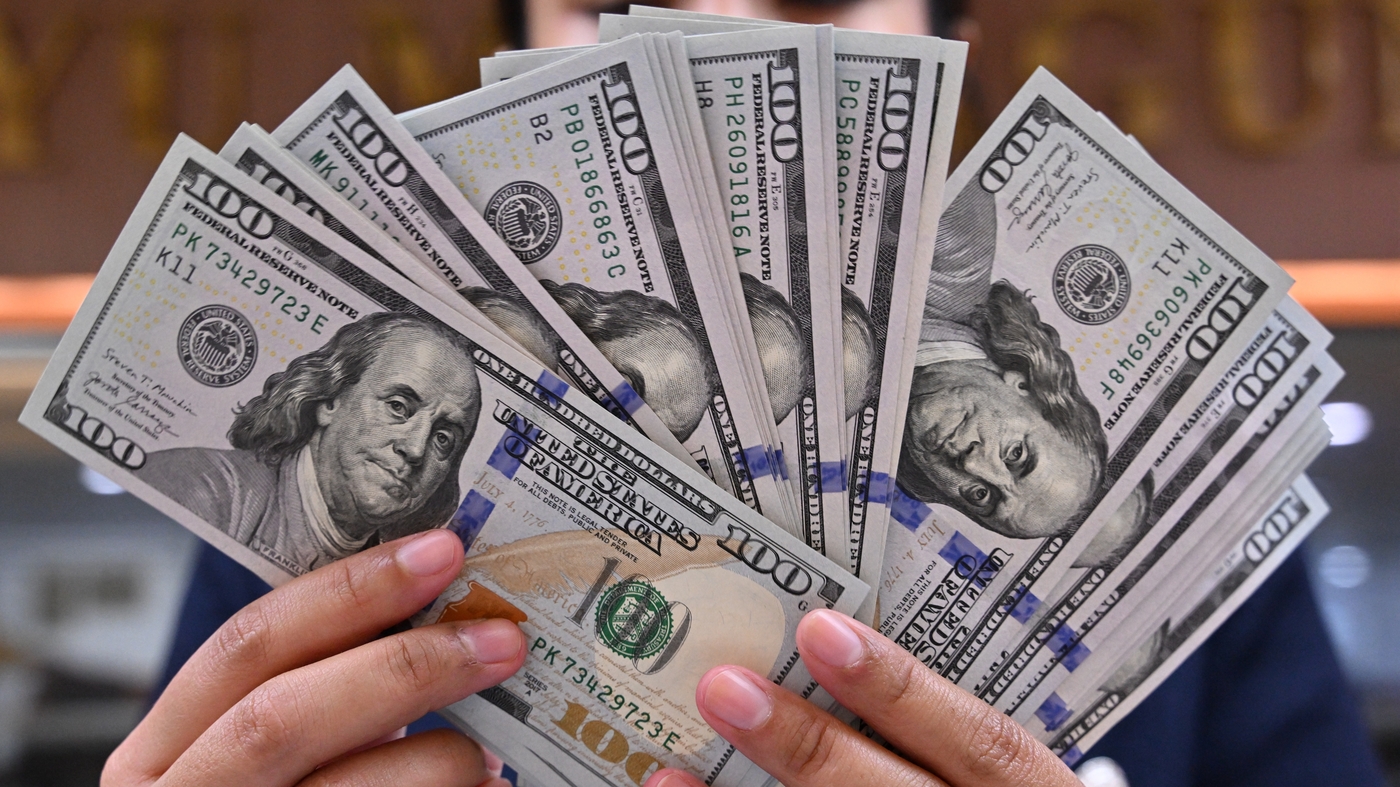
The U.S. dollar continued its downward trajectory against major currencies on Thursday, as mounting expectations of Federal Reserve interest rate cuts combined with heightened concerns about political interference in key American institutions to pressure the greenback.
Market attention has zeroed in on upcoming unemployment data following last week’s deeply disappointing nonfarm payrolls report, which sent the dollar tumbling and raised fresh questions about the health of the U.S. labor market.
The dollar’s weakness has been exacerbated by last week’s dramatic personnel decision, when President Trump fired the head of the Bureau of Labor Statistics hours after the agency released disappointing jobs data, accusing Commissioner Erika McEntarfer of manipulating monthly jobs reports for “political purposes.” This unprecedented move has raised alarm bells among market participants about potential political interference in the collection and reporting of economic data.
“All those things suggest that we’re seeing those political risks around the U.S. dollar increase, and on top of that, you’ve got the weak data coming through,” said Tony Sycamore, a market analyst at IG. The convergence of political uncertainty and economic weakness has created a particularly challenging environment for the greenback.
Fed Rate Cut Expectations Surge
The currency markets have been roiled by sharply rising expectations that the Federal Reserve will be forced to cut interest rates aggressively in response to deteriorating labor market conditions. Fed funds futures traders are now pricing in a 94% probability of a 25-basis-point cut at the Fed’s September meeting, up dramatically from just 48% a week ago, according to the CME Group’s FedWatch Tool. In total, traders are anticipating 60.5 basis points in cuts this year.
This shift in monetary policy expectations comes after Friday’s employment report revealed that job growth was weaker than expected in July, while nonfarm payroll counts for the prior two months were revised down considerably, painting a picture of sharp deterioration in labor market conditions.
Dollar Index Holds Steady After Sharp Decline
The dollar index, which measures the greenback against a basket of major peers, traded virtually unchanged at 98.133 on Thursday after suffering a 0.6% slide in the previous session. Against the Japanese yen, the dollar was little changed at 147.35, while the euro gained modest ground, edging up 0.1% to $1.1671.
European Currencies Gain on Ukraine Optimism
Meanwhile, the euro found support from growing optimism about potential diplomatic progress in the Russia-Ukraine conflict. Market participants are closely watching anticipated talks next week aimed at ending the war, with any breakthrough expected to provide significant support for European assets.
“Any progress in ending the war in Ukraine is going to be a positive driver of the euro,” Sycamore noted. The prospect of reduced geopolitical tensions and improved economic stability in Europe has already begun to lift sentiment toward the single currency.
Sterling Steady Ahead of Policy Decision
The British pound showed resilience, edging up 0.1% to $1.33655 and positioning itself for what would be a five-day advance—the longest winning streak since mid-April. This strength comes ahead of an expected policy announcement from the Bank of England, with markets widely anticipating another interest rate cut. The central bank appears poised to cut rates for the fifth time in 12 months, though nagging concerns about inflation are likely to divide policymakers and create uncertainty about future monetary policy moves.
Political Uncertainty Clouds Fed Outlook
Adding to the dollar’s challenges, President Trump is expected to announce his nominee to replace outgoing Fed Governor Adriana Kugler by the end of this week. The president has also indicated he has narrowed down potential replacements for Fed Chair Jerome Powell to a shortlist of four candidates, creating additional uncertainty about the central bank’s future direction and independence.
The intersection of weak economic data, political interference concerns, and shifting monetary policy expectations has created a perfect storm for dollar weakness, leaving traders cautious about the greenback’s near-term prospects as they await clarity on both economic fundamentals and political developments.
WHAT YOU SHOULD KNOW
The U.S. dollar is under significant pressure due to a toxic combination of weak labor market data and unprecedented political interference in economic institutions. President Trump’s firing of the labor statistics chief after disappointing jobs data has raised serious concerns about the independence of U.S. economic reporting, while traders now expect aggressive Federal Reserve rate cuts with a 94% probability of a September cut.
This political risk premium, combined with deteriorating economic fundamentals, is driving investors away from the dollar and toward currencies like the euro, which is benefiting from optimism about potential Ukraine peace talks. The situation represents a critical test of institutional credibility that could have lasting implications for the dollar’s global reserve currency status.