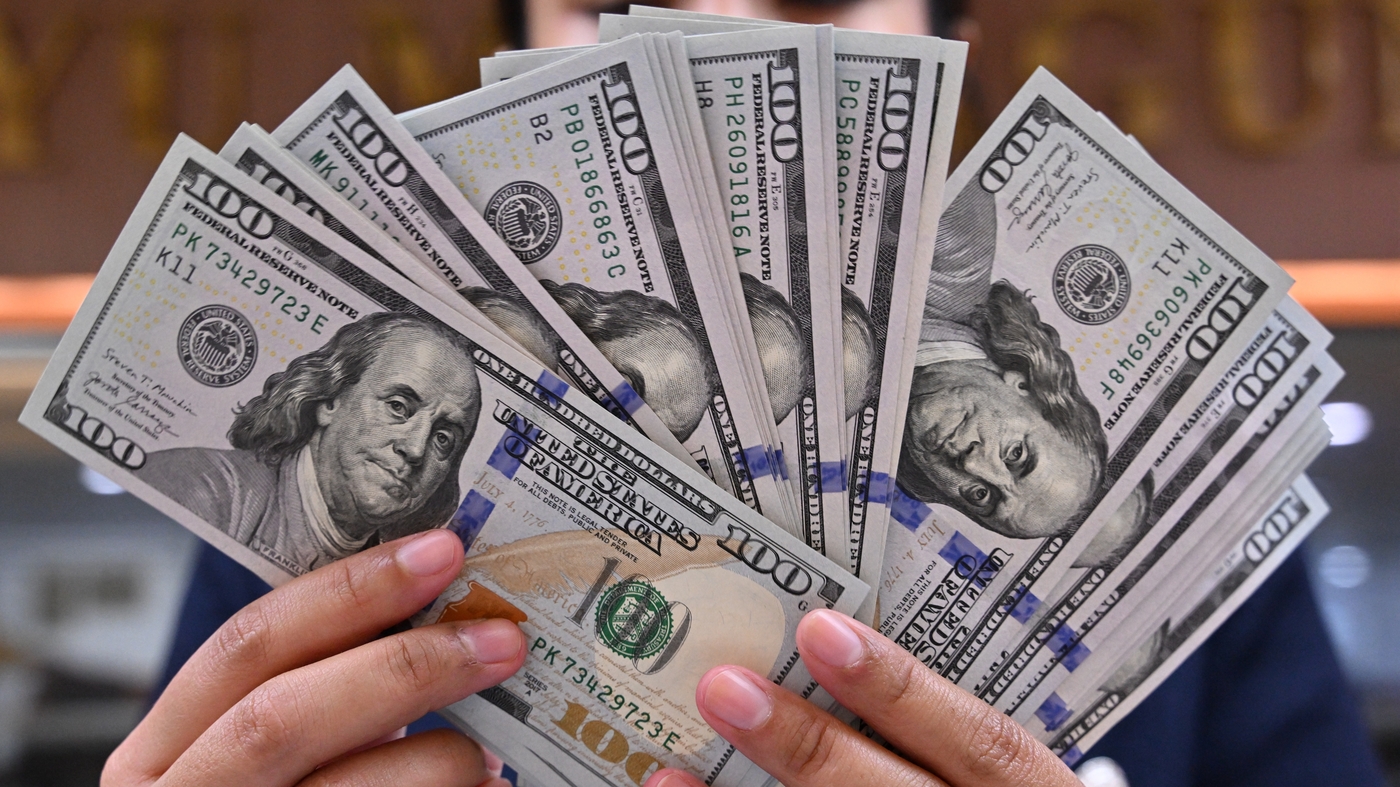
The U.S. dollar experienced a turbulent session in Asian markets on Tuesday, reflecting growing uncertainty over the Federal Reserve’s monetary policy trajectory as officials delivered mixed signals about future interest rate cuts.
Trading in a narrow band, the dollar index settled at 97.326 after snapping a three-day rally, with currency movements reflecting what market analysts characterized as a notably more hawkish tone from Fed policymakers. The shift in sentiment has prompted traders to reassess their expectations for aggressive monetary easing in the coming months.
Fed Officials Pump the Brakes on Rate Cut Expectations
The central bank’s regional presidents delivered a coordinated message of caution that caught markets off guard. St. Louis Fed President Alberto Musalem, a voting member this year, warned the central bank “should tread cautiously,” suggesting the policy rate adjusted for inflation may already be approaching neutral territory.
Atlanta Fed President Raphael Bostic went further in a Wall Street Journal interview, arguing that additional rate cuts this year were unnecessary and emphasizing the need to maintain focus on bringing inflation down to the Fed’s 2% target from current levels roughly a percentage point higher.
Cleveland Fed President Beth Hammack echoed these concerns, advocating for “very cautious” removal of monetary policy restrictions. The hawkish chorus stands in stark contrast to newer Fed Governor Stephen Miran, who warned Monday that the central bank risks damaging the job market without more aggressive rate cuts.
Market Repositioning Underway
The policy debate has triggered a notable shift in market positioning. Fed funds futures now price in just a 10.2% probability of a rate hold at October’s Federal Open Market Committee meeting, up from 8.1% on Friday, according to CME Group’s FedWatch tool. This represents a significant scaling back of dovish expectations.
Treasury markets reinforced this hawkish repricing, with the benchmark 10-year yield climbing to 4.1467%, extending gains after reaching a three-week high of 4.145% Monday. The two-year yield, more sensitive to near-term rate expectations, edged higher to 3.6051%.
Global Currency Ripple Effects
The dollar’s uncertainty reverberated across major currency pairs. Against the yen, the greenback held steady at 147.775, maintaining its established August trading range despite Japanese markets being closed for a holiday.
More dramatic moves emerged in peripheral currencies. The New Zealand dollar weakened 0.3% to $0.5848 ahead of an expected central bank governor announcement on Wednesday, while the Australian dollar slipped to $0.6584 after hitting two-week lows.
Geopolitical Currency Interventions
Perhaps the most striking currency movement came in the Argentine peso, which surged 4.5% against the dollar following Treasury Secretary Scott Bessent’s comments about potential U.S. support measures. Bessent indicated “all options” remained available for stabilizing Argentina’s economy, including currency swaps and direct purchases, pending meetings between senior officials and President Javier Milei at the UN General Assembly.
The Indian rupee suffered a different fate, weakening to a record low of 88.62 against the dollar, pressured by increased U.S. visa fees, tepid foreign investment flows, and elevated hedging activity.
Looking Ahead
All eyes now turn to Fed Chair Jerome Powell’s remarks on Tuesday, which could provide clarity on the central bank’s thinking amid conflicting signals from regional presidents. Additionally, the looming September 30 government funding deadline continues to add another layer of uncertainty to already jittery markets.
With core personal consumption expenditure data due later this week—the Fed’s preferred inflation gauge—traders will be parsing every data point for clues about the central bank’s next moves in what has become an increasingly complex monetary policy landscape.
The dollar’s performance on Tuesday underscores how sensitive currency markets have become to Federal Reserve communications, with even subtle shifts in rhetoric triggering significant repositioning across global financial markets.
WHAT YOU SHOULD KNOW
The U.S. dollar is under pressure as Federal Reserve officials are pumping the brakes on expected interest rate cuts. Multiple Fed presidents warned against aggressive easing, causing traders to dramatically reduce bets on October rate cuts from 8.1% to 10.2% probability of a hold.
This hawkish shift is rippling through global markets, with Treasury yields climbing and currencies from the Indian rupee to the New Zealand dollar weakening. The bottom line: the era of easy money may be ending sooner than markets anticipated, with the Fed prioritizing inflation control over economic stimulus.