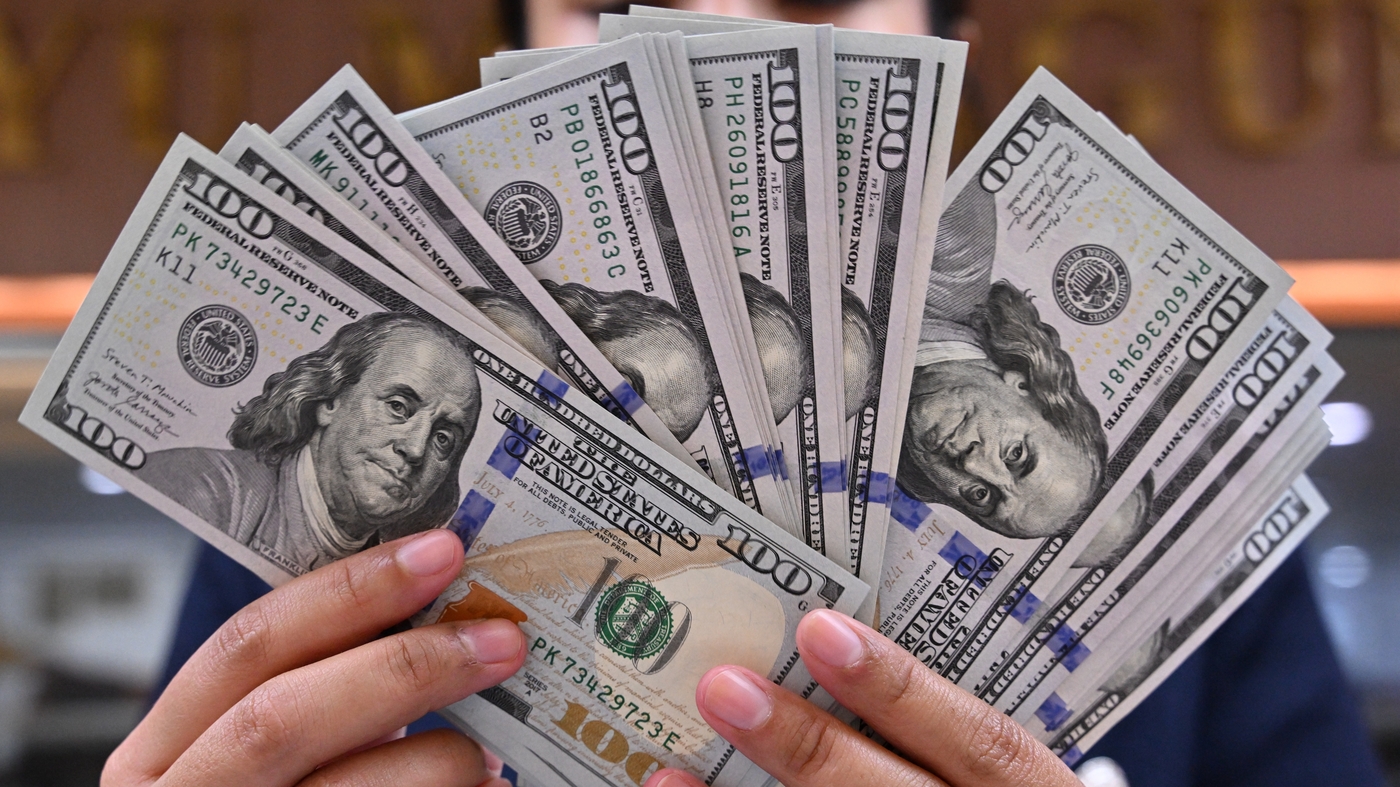
The U.S. dollar weakened in Monday trading as mounting optimism over an imminent end to the federal government shutdown provided relief to investors rattled by recent economic indicators showing consumer distress.
The dollar index, which measures the greenback against six major currencies, declined 0.1% to 99.643 following the Senate’s advancement of a funding measure that would keep the government operational through January. The move comes as the shutdown has now become the longest in U.S. history, taking a visible toll on the American economy.
“This is just in the nick of time,” said Tony Sycamore, market analyst at IG in Sydney, noting that the dollar’s retreat from late last week appears poised to continue.
Economic Data Reveals Shutdown Impact
The political gridlock’s economic consequences became starkly apparent on Friday when the University of Michigan’s consumer sentiment index plummeted to its lowest level in nearly three and a half years. The reading approached the all-time low recorded during previous economic crises, underscoring how deeply the prolonged shutdown has affected American households.
“The consumer confidence data was a shocker and pretty clear evidence that the shutdown was affecting households,” Sycamore explained. “So this does alleviate the damage that’s been done.”
Market sentiment reflected growing confidence in a resolution, with prediction market Polymarket showing a 92% implied probability that the shutdown would conclude before November 15.
Currency Movements and Global Implications
In Asian trading, the dollar strengthened 0.2% against the yen, reaching 153.80, following remarks from Japanese Prime Minister Sanae Takaichi indicating her government would pursue more flexible fiscal targets spanning several years. The policy shift effectively dilutes Japan’s previous commitment to fiscal consolidation, a move that pressured the yen.
The Bank of Japan struck a cautiously optimistic note in its latest summary of opinions, stating that “the fog surrounding Japan’s economic outlook has begun to clear compared with July.”
Trump Policies and Asian Economic Headwinds
Currency traders continue evaluating the broader impact of President Donald Trump’s economic agenda, particularly his tariff policies that triggered anticipatory production surges earlier this year. Recent data from China painted a mixed picture: consumer price inflation accelerated beyond forecasts, even as the country reported its steepest export decline since February.
Eric Robertsen, global head of research and chief strategist at Standard Chartered Bank, warned of challenging times ahead for Asia. “We expect a renewed downshift in Asia’s economic growth now that export front-loading has largely run its course,” he wrote in a research note. “And with the region’s rate-cutting cycle nearly complete, we expect inflows to local assets to slow.”
Robertsen also flagged longer-term concerns about global liquidity conditions. “We also see a risk that the abundant global liquidity that has supported global assets in 2025 could become less supportive in 2026,” he added, suggesting this dynamic “may suggest further gains for the U.S. dollar over the next 12 months.”
Interest Rate Outlook Shifts
The Treasury market reflected changing expectations for Federal Reserve policy, with benchmark 10-year yields climbing 4.26 basis points to 4.1356%, up from Friday’s close of 4.093%.
Fed funds futures trading indicated a 63% probability of a 25-basis-point rate cut at the central bank’s December 10 meeting, down from 67% on Friday, according to CME Group’s FedWatch tool. The shift suggests investors are tempering expectations for monetary easing amid persistent economic uncertainties.
Elsewhere in currency markets, the euro slipped 0.1% to $1.1559, while the British pound traded 0.1% lower at $1.3148. The offshore yuan held steady at 7.1204 against the dollar in Asian hours.
Among commodity-linked currencies, the Australian dollar gained 0.4% to $0.6520, while New Zealand’s dollar edged 0.1% higher to $0.5632, suggesting some risk appetite among traders despite broader uncertainties.
WHAT YOU SHOULD KNOW
The U.S. dollar weakened as the Senate moved to end the historic government shutdown, which had driven consumer confidence to near-record lows.
While this provided immediate relief to markets, analysts warn that fading export momentum in Asia and tightening global liquidity could strengthen the dollar over the next year, even as traders scale back expectations for Federal Reserve rate cuts.
The shutdown’s resolution comes just in time to prevent further economic damage, with prediction markets showing 92% odds it ends before mid-November.
Short-term relief from the shutdown is being tempered by concerns about slowing Asian growth and shifting Fed policy—factors that could support a stronger dollar through 2026.