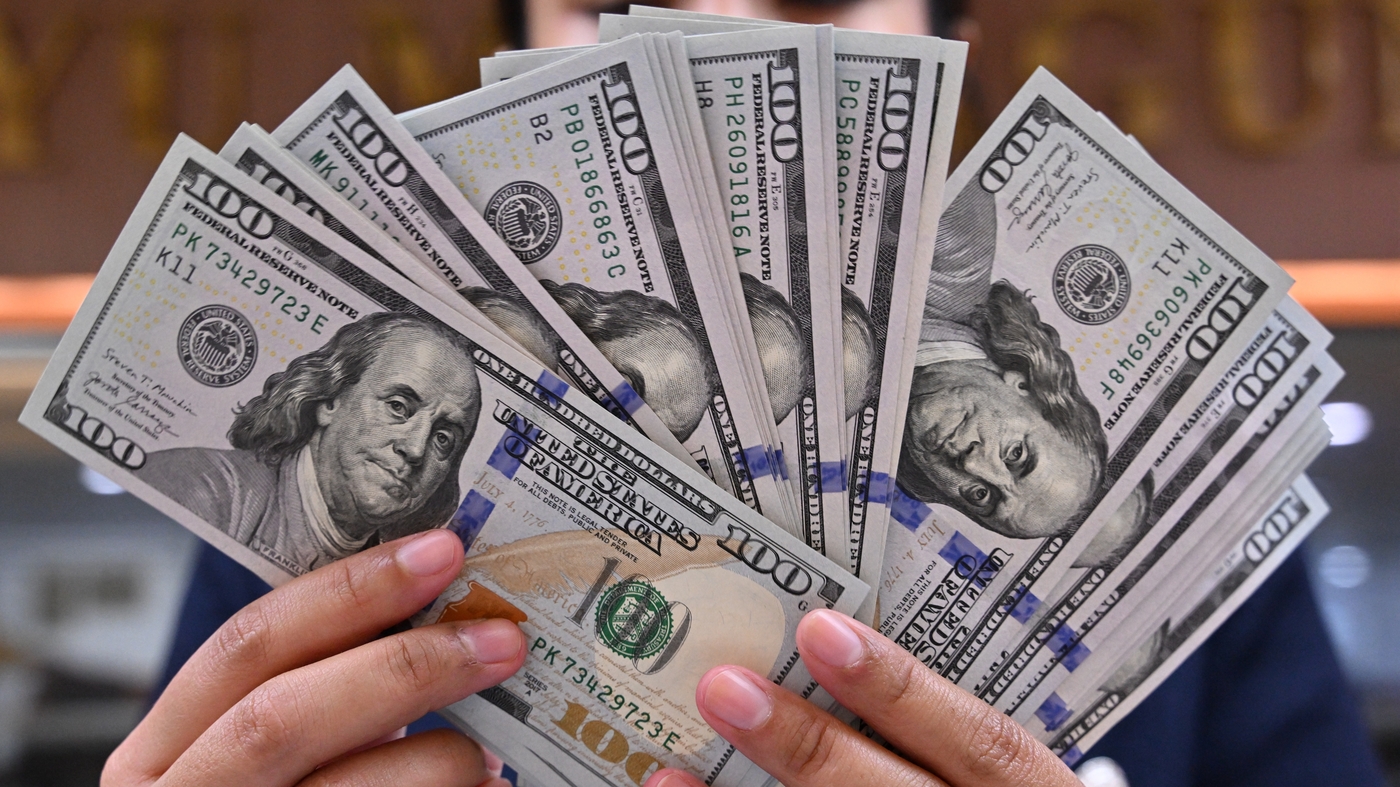
The U.S. dollar suffered its steepest decline in months on Friday, tumbling against major currencies as weaker-than-expected employment data sent shockwaves through financial markets and dramatically altered expectations for Federal Reserve policy.
The greenback’s sharp retreat came after the Labor Department reported that U.S. employers added just 73,000 jobs in July—a figure that fell well short of the 110,000 economists had anticipated. Making matters worse, June’s job gains were slashed from an initially reported 147,000 to a mere 14,000, painting a picture of an economy losing considerable momentum in the labor market.
“It’s worse than anyone expected, and the kicker is that downward revision for the prior month too,” said Helen Given, director of trading at Money USA in Washington, capturing the market’s dismay at the double blow of current weakness and historical revisions.
The dollar index, which tracks the greenback against a basket of major currencies, plummeted 1.06% to 98.97—marking its largest single-day decline against both the euro and yen since April. The euro surged 1.16% to $1.1547, while the dollar weakened a substantial 2.01% against the Japanese yen to 147.7.
The employment disappointment has fundamentally shifted trader expectations regarding Federal Reserve policy. Fed funds futures markets saw a dramatic recalibration, with traders now pricing in 58 basis points of rate cuts by year-end, up sharply from just 34 basis points on Thursday. The probability of a September rate cut has increased significantly.
This reversal in sentiment comes just days after Fed Chair Jerome Powell struck a notably hawkish tone on Wednesday, offering little indication that rate cuts were imminent and expressing concerns about potential inflationary pressures from President Trump’s tariff policies.
The timing is particularly significant given the political backdrop. Trump’s administration has been implementing aggressive trade measures, with new tariff rates imposed on dozens of trading partners. Switzerland faces a punishing 39% rate, while Canada received a 35% tariff—somewhat less than the threatened 25% but still substantial enough to pressure the Canadian dollar.
Currency analysts are now reassessing their dollar forecasts. Jonas Goltermann, deputy chief markets economist at Capital Economics, noted that their prediction for dollar strength in the second half of the year was predicated on economic resilience and Fed policy remaining on hold until 2026.
“That now looks less probable,” Goltermann warned. “In a recession scenario, the dollar is likely to weaken against lower-yielding currencies such as the yen and the euro, even if it may rally against other, riskier currencies.”
The employment data has elevated the importance of the next jobs report, scheduled for release on September 5—just ahead of the Fed’s September 16-17 meeting. This timing creates a critical decision point for monetary policymakers who must balance concerns about economic cooling against persistent inflation concerns.
The currency market volatility extended beyond traditional forex pairs, with Bitcoin dropping 2.01% to $114,180.54, reflecting broader risk-off sentiment as investors grappled with the implications of a potentially weakening U.S. economy.
As markets head into the weekend, the fundamental question facing investors is whether this jobs report represents a temporary softening or the beginning of a more serious economic deceleration that could force the Federal Reserve’s hand on interest rates sooner than previously anticipated.
WHAT YOU SHOULD KNOW
The U.S. dollar crashed to its worst day since April after July jobs data showed only 73,000 new positions (versus 110,000 expected), and June’s numbers were slashed from 147,000 to just 14,000. This double disappointment has traders now betting heavily on Federal Reserve rate cuts, with the first likely coming in September.
The weak employment picture suggests the U.S. economy may be cooling faster than expected, potentially forcing the Fed to abandon its hawkish stance despite inflation concerns from Trump’s new tariff policies. The next jobs report on September 5 will be critical in determining whether this signals a broader economic slowdown.