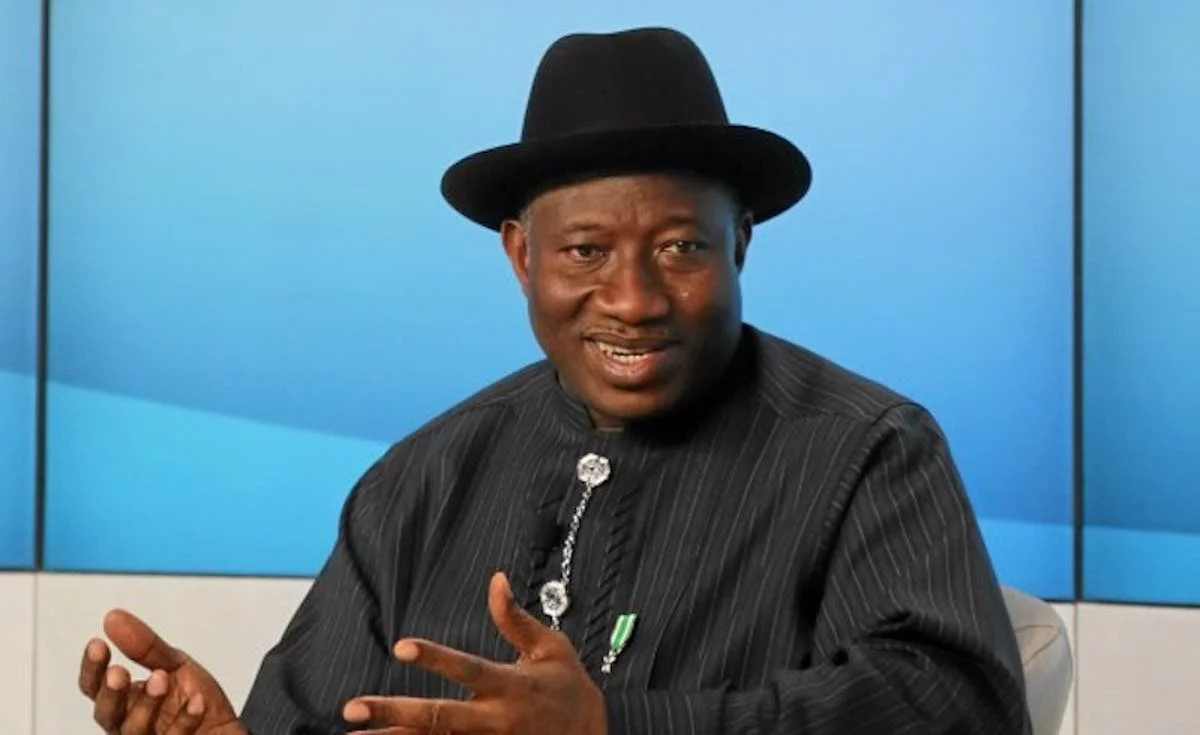
A Federal High Court in Abuja has set May 15 as a final deadline for hearing in the suit challenging former President Goodluck Jonathan‘s eligibility to contest the 2027 presidential election after Monday’s proceedings were disrupted by unexplained absences.
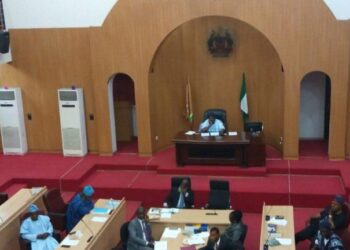
Justice Peter Lifu, who presides over the matter, expressed clear frustration at the courtroom scene before him, a nearly empty gallery on a day meant for meaningful legal engagement.
The plaintiff, lawyer Johnmary Jideobi, who himself is a legal practitioner and the architect of the suit, was nowhere to be found. Neither was his counsel.
To compound the disruption, two of the three defendants, the Independent National Electoral Commission (INEC) and the Attorney General of the Federation (AGF) and minister of justice, were also absent.
Only one party stood ready to argue: the legal team of former President Jonathan, led by the seasoned Chief Chris Uche, Senior Advocate of Nigeria.
Uche wasted no time pressing his client’s advantage. With characteristic courtroom assertiveness, the senior advocate moved the court to strike out the suit entirely, citing a lack of diligent prosecution.
He argued that the plaintiff had effectively abandoned the case, describing the serial absences as a sign that Jideobi had “run away upon sighting the preliminary objections” filed against his suit.
Jonathan’s legal team had earlier, on May 5, filed a letter of conditional appearance, a notice of preliminary objection, a counter-affidavit, and a written address, praying the court to dismiss the case, arguing that the same constitutional question had already been decided by the Federal High Court and upheld by the Court of Appeal.
In his submissions on Monday, Uche insisted the suit deserved not just to be struck out but dismissed outright, with a punitive cost of N5 million to be awarded against the plaintiff and paid directly to Jonathan.
The matter, he told the court pointedly, had been fully joined between the parties, and the bench of the nation’s courts is no place for what he characterized as unserious litigation.
Justice Lifu, however, was not yet prepared to slam the door shut. Delivering a measured response to Uche’s forceful application, the judge noted a critical procedural gap: there was no evidence on record that INEC and the AGF had been properly served with hearing notices directing them to appear.
On those grounds, Justice Lifu declined to strike out the suit and instead chose, in his own words, to “bend backward” to accommodate all parties for what he explicitly described as the last time.
Hearing notices are now to be formally served on Jideobi and his legal team, as well as on INEC and the AGF, ahead of the May 15 date, a date the judge has now framed as a final opportunity rather than a routine adjournment.
At the core of the lawsuit lies a question with profound implications for Nigeria’s democratic architecture: can Goodluck Jonathan, having already served portions of two presidential terms, legally contest the 2027 election?
The suit, marked FHC/ABJ/CS/2102/2025 and filed on October 6, 2025, seeks a perpetual injunction restraining Jonathan from presenting himself as a presidential candidate for any political party. It also asks the court to bar INEC from accepting or publishing his name as a nominated candidate.
The plaintiff’s argument rests on a straightforward constitutional reading. Jonathan assumed the presidency on May 6, 2010, following the death of President Umaru Musa Yar’Adua, completing the remainder of that term before going on to win a full four-year term at the 2011 general election.
According to Jideobi, those two tenures, one inherited and one mandated, collectively exhaust the two-term constitutional limit enshrined in Sections 1(1), (2), (3), and 137(3) of the 1999 Constitution.
A supporting affidavit filed by Emmanuel Agida contends that if Jonathan were to contest and win the 2027 election, he would be taking the presidential oath of office for a third time, a scenario the plaintiff argues would represent a direct violation of the Constitution. The suit, the affidavit declares, was filed in the public interest and to preserve the integrity of Nigeria’s constitutional order.
The lawsuit did not emerge in a vacuum. It was born against a backdrop of swirling political speculation. Jonathan’s legal team acknowledged that they first learned of the suit through media reports.
Jonathan himself has done little to douse the speculation. He has acknowledged consulting with various stakeholders on whether to enter the 2027 presidential race, a statement that, while non-committal, has been enough to set Nigeria’s political circles abuzz and, evidently, to motivate at least one lawyer to seek a judicial pre-emption.
For Jonathan’s legal team, the constitutional argument is a settled matter. One that courts have already weighed and resolved in his favor at both the Federal High Court and Court of Appeal levels.
They have characterized the present suit as a rehashing of decided law, filed by a fellow legal practitioner who, in their view, ought to know better.
With May 15 now looming as a hard deadline, all eyes will be on whether the plaintiff and the two absent defendants make their appearance before Justice Lifu.
The judge has signaled, in language that leaves little room for ambiguity, that another no-show will carry consequences, most likely the dismissal that Jonathan’s team has been pushing for.
If the case does proceed, the court will first need to rule on Jonathan’s preliminary objection, which challenges the very foundation of the suit. Only if that objection fails would the judge proceed to hear the substantive constitutional arguments.
Either way, the outcome of this case, whether it ends in a dismissal, a withdrawal, or a full hearing, will feed into the broader national conversation about Jonathan’s future, the sanctity of constitutional term limits, and the judiciary’s role as the last line of defense for Nigeria’s democratic norms.
The clock is now ticking
WHAT YOU SHOULD KNOW
A Federal High Court in Abuja has issued a final warning, setting May 15 as a do-or-die hearing date in the lawsuit seeking to constitutionally bar former President Goodluck Jonathan from contesting the 2027 presidential election.
The case, built on the argument that Jonathan has already exhausted his two-term constitutional limit, has been plagued by the unexplained absence of the plaintiff and key defendants.
With Jonathan’s legal team aggressively pushing for dismissal and the judge’s patience visibly worn thin, May 15 will either breathe life into this constitutional challenge or bury it permanently.