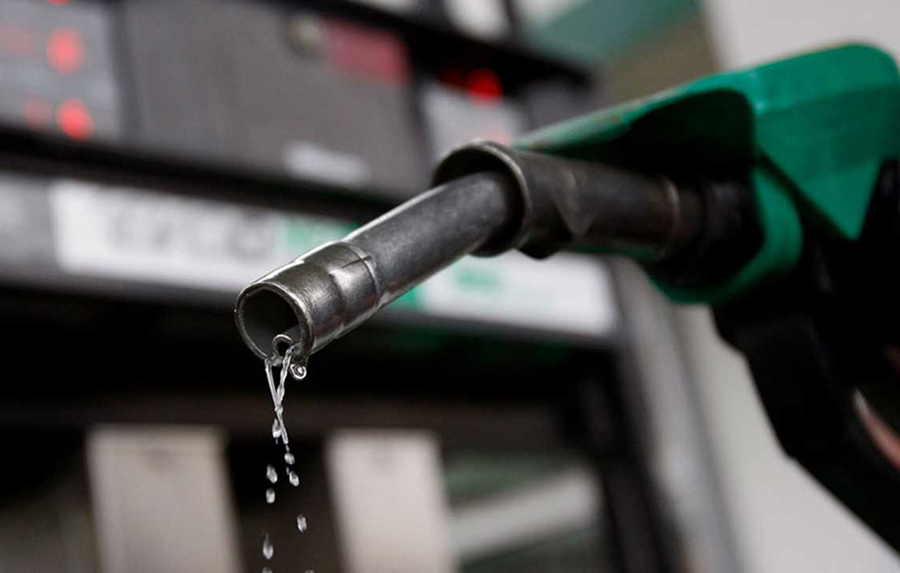
Independent petroleum marketers have urged the Federal Government (FG) to restore their right to import petroleum products, saying the pump price of Premium Motor Spirit (PMS), also known as petrol, could drop below N800 per litre if the right market conditions are created.
The call was made on Monday by the National President of the Independent Petroleum Marketers Association of Nigeria (IPMAN), Abubakar Maigandi, during a stakeholders’ meeting on cost-reflective petrol pricing held at the headquarters of the Nigerian Midstream and Downstream Petroleum Regulatory Authority (NMDPRA) in Abuja.
The Federal Government convened the meeting following concerns that the recent drop in global crude oil prices has not led to a corresponding reduction in petrol prices across Nigeria.
Maigandi asked the government to allow independent marketers to import petrol directly while continuing to support local refineries, including the Dangote Petroleum Refinery.
He said, “Our major concern is that if products are to be distributed, let IPMAN buy products directly from the Dangote refinery and then, if we request importation, let IPMAN import by themselves. What we are trying to encourage is our local refinery. Let the government allow the local refinery to function properly and assist those who intend to refine products too.”
According to him, independent marketers have already reduced petrol prices by about ₦125 per litre nationwide and are ready to cut prices further if supply costs continue to decline.
He stated, “The price of the product is coming down bit by bit. Even when the price was increased, it was not increased at the same time. Likewise, now, as the price is coming down, we too are bringing the price down. If you check prices all over the country, you will see that independent petroleum marketers are reducing their prices gradually. Presently, we have reduced by N125 per litre nationwide.”
Maigandi added, “At any time when there is a reduction in price, we are ready to reduce the price to even below N800 per litre, not even N900.”
He explained that the final pump price depends on the cost of buying products from private depot owners and the Dangote Refinery.
He said, “It depends on the way we buy the product from the private depot owners and the Dangote refinery.
“I thank God that the Dangote refinery has accepted independent petroleum marketers to start purchasing products directly. It is a plus, and very soon the populace will see the change in terms of price.”
Speaking after the meeting, the Minister of State for Petroleum Resources, Heineken Lokpobiri, said the Federal Government is concerned that petrol prices have not fallen in line with the drop in global crude oil prices.
According to him, discussions with marketers focused on ensuring that lower crude oil prices translate into cheaper petrol for Nigerians.
Lokpobiri said, “The engagements are ongoing. We had very fruitful and frank discussions with the marketers and the leaders of the downstream sector of the petroleum industry with a view to driving down the price of PMS.
“My own opinion is that the petrol prices are not cost-reflective; they are not reflective of the cost of crude oil. But the marketers are also saying that crude oil prices are still high.
“In fact, somebody told us right there that the crude oil price for a month is still over $90 per barrel. But we are saying that when Brent crude was over $118 per barrel, the price was rapidly going up. Now that the price has come down drastically, why has petrol not come down correspondingly? That is a worry.”
According to The PUNCH, the minister said the government has informed marketers about consumers’ concerns and asked them to come up with practical solutions to reduce petrol prices.
He said, “We have said that these are the issues of concern to the government. They have also said they will go back and think about what they can put together with a view to addressing the issue of the high cost of PMS that is not reflective of the price of crude in the market.
“We told them the concern of the Nigerian consumer, and they have also said they will go back and think of what concrete steps can be taken with a view to ensuring that the price drops.”
When asked when Nigerians should expect lower petrol prices, Lokpobiri said discussions were still ongoing and declined to give a specific date.
He added, “As we called you today, we will call you as soon as possible. But the important thing is that discussions are ongoing.”
Earlier, the Chief Executive of the NMDPRA, Rabiu Umar, said deregulation should not be used to distort the market or exploit consumers.
He said, “Just two weeks ago, many of us gathered in a similar forum to discuss the domestic gas sector. The candid dialogue and the actionable wins we secured during that session are already bearing fruit. Notably, we have seen LPG prices coming down significantly across the market, and we look forward to seeing even more reduction within the next two weeks.
“It is exactly this kind of tangible success that inspired today’s gathering. When regulators and industry operators sit at the same table, we do not just debate challenges; we engineer solutions.”
Umar acknowledged that global crude oil prices have dropped in recent weeks but said retail petrol prices in Nigeria have not reflected that change.
He said, “As a responsible regulatory authority, it is our duty to step in alongside you, our valued partners, to interrogate the market forces, understand the operational bottlenecks, and directly address this disconnect between falling replacement costs and sustained retail prices.
“Deregulation is not a licence for market distortion or unfair consumer pricing. It is intended to drive efficiency, maximise value, and protect the public interest. Sustainable profitability for marketers and consumer welfare are not mutually exclusive. We need to build a transparent ecosystem where the benefits of market improvements are passed down to the Nigerian consumer in a timely and fair manner.”
The meeting brought together representatives of the Federal Competition and Consumer Protection Commission (FCCPC), IPMAN, the Major Energy Marketers Association of Nigeria (MEMAN), the Depot and Petroleum Products Retailers Association of Nigeria (DAPPMAN), the Depot and Petroleum Products Marketers Association of Nigeria (DAPPMA), the Nigerian Association of Road Transport Owners (NARTO), officials of the NMDPRA, executives of TotalEnergies, Eterna Plc, Matrix Energy Group, and representatives of the Dangote Refinery.