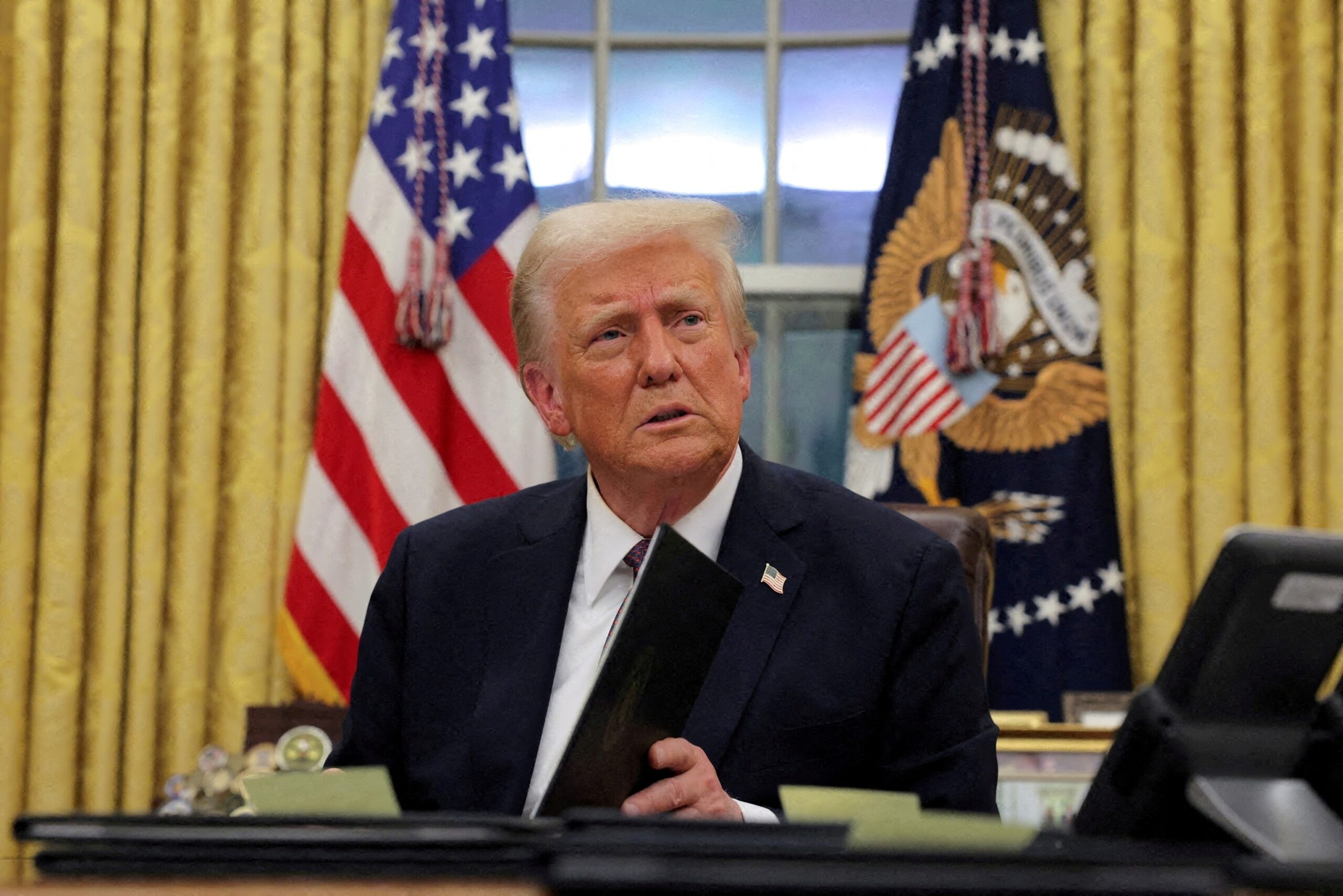
Fresh accusations of a renewed cover-up surrounding the Jeffrey Epstein files intensified on Sunday, with Democrats alleging that President Donald Trump is deliberately resisting full disclosure in order to protect himself, despite a legal mandate requiring the complete release of records connected to the convicted sex offender.
The controversy deepened after victims of Epstein voiced outrage over the documents released on Friday. Although the records related to cases involving the late financier were made public, many pages were heavily redacted, with entire sections blacked out and photographs obscured. Some images were later withdrawn after briefly appearing online, including a photograph that featured Trump.

Democratic congressman Jamie Raskin suggested that the controversy points to a broader effort at concealment. Speaking on CNN’s “State of the Union,” he said the situation was “all about covering up things that, for whatever reason, Donald Trump doesn’t want to go public either about himself, other members of his family, friends.”
The batch of documents released by the Department of Justice included images of former president Bill Clinton as well as other high-profile figures such as Mick Jagger and Michael Jackson. However, the extensive redactions and claims that some key documents were not released have only intensified long-standing demands for accountability in a case that has repeatedly fueled conspiracy theories, particularly among Trump’s right-wing supporters.
In response to criticism, the Justice Department said the redactions were necessary to protect victims and defended the decision to remove certain files after publication. In a statement, the DOJ explained that “Photos and other materials will continue being reviewed and redacted consistent with the law in an abundance of caution as we receive additional information.”

Concerns about incomplete disclosure were not limited to Democrats. Republican congressman Thomas Massie, a long-time advocate for full transparency in the Epstein case, echoed the call for complete release of the files. Appearing on CBS’s “Face The Nation,” he said authorities were “flouting the spirit and the letter of the law” and stressed that he would not be satisfied “until the survivors are satisfied.”
Massie further alleged that a 60-count indictment implicating influential individuals had not been made public, describing the situation as “selective concealment.” His concerns were reinforced by Senator Rand Paul, another Republican critic of Trump, who warned on ABC’s “This Week” that any indication of incomplete disclosure would continue to haunt the administration for months.
Trump had spent months attempting to prevent the release of Epstein-related files before ultimately yielding to mounting pressure from Congress, including members of his own party, and signing the law mandating publication. Although Trump once moved in the same social circles as Epstein, he severed ties with him years before Epstein’s arrest and has not been accused of wrongdoing in the case.
Democratic House Minority Leader Hakeem Jeffries also weighed in, saying on ABC’s “This Week” that justice officials must provide Congress with a written explanation within 15 days detailing why any documents were withheld. According to Jeffries, the initial release “is inadequate” and “falls short of what the law requires.”
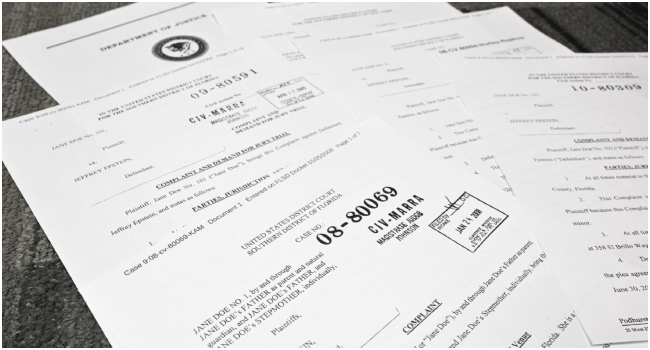
Some of the released materials included dozens of censored images depicting naked or partially clothed individuals. Other previously unseen photographs showed disgraced former Prince Andrew lying across the legs of several women. Additional images depicted Clinton relaxing in a hot tub with part of the photograph obscured, as well as swimming beside a dark-haired woman believed to be Epstein’s associate, Ghislaine Maxwell.
Maxwell, Epstein’s former girlfriend, remains the only person convicted in connection with his crimes. She is currently serving a 20-year prison sentence for recruiting underage girls for Epstein, whose death in a New York jail in 2019 while awaiting trial on sex-trafficking charges was officially ruled a suicide.
What you should know
The release of the Jeffrey Epstein files has reignited political tension in the United States, with both Democrats and Republicans questioning whether the Trump administration is complying fully with the law.
While the Justice Department insists redactions are meant to protect victims, critics argue that key documents and images remain concealed.
The controversy underscores lingering mistrust surrounding the Epstein case, the demand for transparency, and fears that powerful interests may still be shielding damaging information from public view.