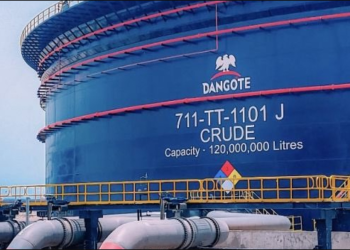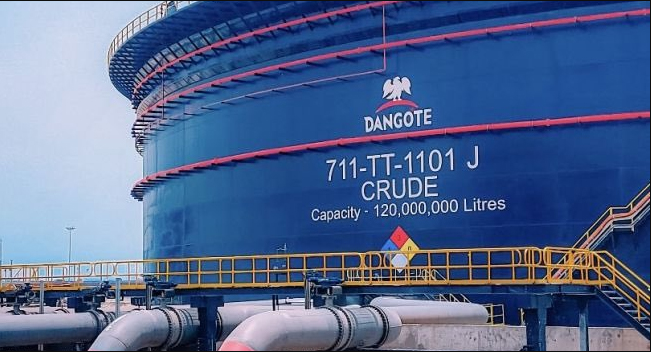
The standoff between Nigeria’s Dangote Petroleum Refinery and the Nigerian Union of Petroleum and Natural Gas Workers (NUPENG) has intensified, with the private refinery launching a counteroffensive by questioning the union’s silence over alleged massive government waste in the oil sector.
In a sharp escalation of rhetoric, the Dangote Group demanded Friday that NUPENG explain the fate of approximately $18 billion reportedly spent on rehabilitating Nigeria’s three government-owned refineries in Port Harcourt, Warri, and Kaduna—facilities that remain non-operational despite decades of promised turnaround maintenance.
The Core Dispute
The conflict centers on Dangote Refinery’s deployment of 4,000 compressed natural gas-powered trucks for petroleum distribution. NUPENG alleges the company is preventing newly recruited drivers from joining the union and instead forcing them into a company-created association—the Direct Trucking Company Drivers Association.
The union’s grievances escalated Monday when it shut down fuel depots across the country, bringing petroleum distribution to a virtual standstill. While a temporary truce was brokered on Tuesday through a memorandum of understanding facilitated by the Ministry of Labour, the agreement collapsed within 48 hours.
According to NUPENG leadership, Dangote management instructed drivers on September 11 to remove union stickers from their trucks and replace them with those of the company-controlled association, directly violating the September 9 agreement. In response, the union blocked the refinery’s main entrance on Thursday, halting fuel loading operations.
Historical Context and Corporate Response
Dangote’s counterattack draws on historical precedent, reminding NUPENG of its fierce opposition to the 2007 privatization of the Port Harcourt and Kaduna refineries—a consortium deal that included Dangote as a member. The company suggests the union’s current stance represents a pattern of resistance to private sector efficiency in petroleum operations.
“When the Port Harcourt and Kaduna refineries were privatized to a consortium Dangote was a member of in 2007, the same NUPENG were amongst the town criers against the privatization,” the company stated, questioning who was responsible for the alleged $18 billion expenditure without results.
The refinery maintains it operates within Nigeria’s deregulated market framework under the oversight of the Nigerian Midstream and Downstream Petroleum Regulatory Authority, dismissing monopolistic allegations as “both legally and factually incorrect.”
Government Intervention
Recognizing the dispute’s potential to disrupt national fuel supply, the Ministry of Labour convened an emergency meeting on Friday at the Department of State Services headquarters in Abuja. The session, led by Alhaji Sayyu Dantata of MRS Oil for Dangote and NUPENG President Williams Akporeha, aimed to restore the collapsed agreement.
Following the meeting, Akporeha confirmed both parties were instructed to honor the Tuesday memorandum of understanding, though he provided no details on specific compliance mechanisms or enforcement measures.
Broader Implications
The dispute highlights the tensions inherent in Nigeria’s petroleum sector deregulation, where private efficiency meets organized labor’s traditional influence. NUPENG’s warning against Dangote’s “Greek gift” of free nationwide petroleum delivery suggests deeper concerns about market consolidation and worker displacement in the evolving energy landscape.
The union has called on the international community to monitor the situation, warning against any harm to its leadership during the struggle—a statement that underscores the high stakes involved.
With Nigeria heavily dependent on petroleum products and the Dangote refinery representing the country’s largest private investment in refining capacity, the outcome of this dispute could significantly impact both fuel availability and labor relations across the sector.
The Ministry of Labour faces the challenging task of balancing private sector operational autonomy with constitutionally protected workers’ rights to association and unionization—a delicate equilibrium that will likely influence future industrial relations in Nigeria’s critical energy sector.
WHAT YOU SHOULD KNOW
Nigeria’s largest private refinery is locked in a dangerous standoff with petroleum workers that could disrupt the national fuel supply. While the union fights for drivers’ right to unionize, Dangote has turned the tables by demanding answers about $18 billion allegedly wasted on government refineries that still don’t work.
This dispute exposes the messy transition from failed government-run oil infrastructure to private sector control, with workers caught in the middle. If not resolved quickly, Nigerians could face fuel shortages while the country’s energy future hangs in the balance between union power and corporate efficiency.