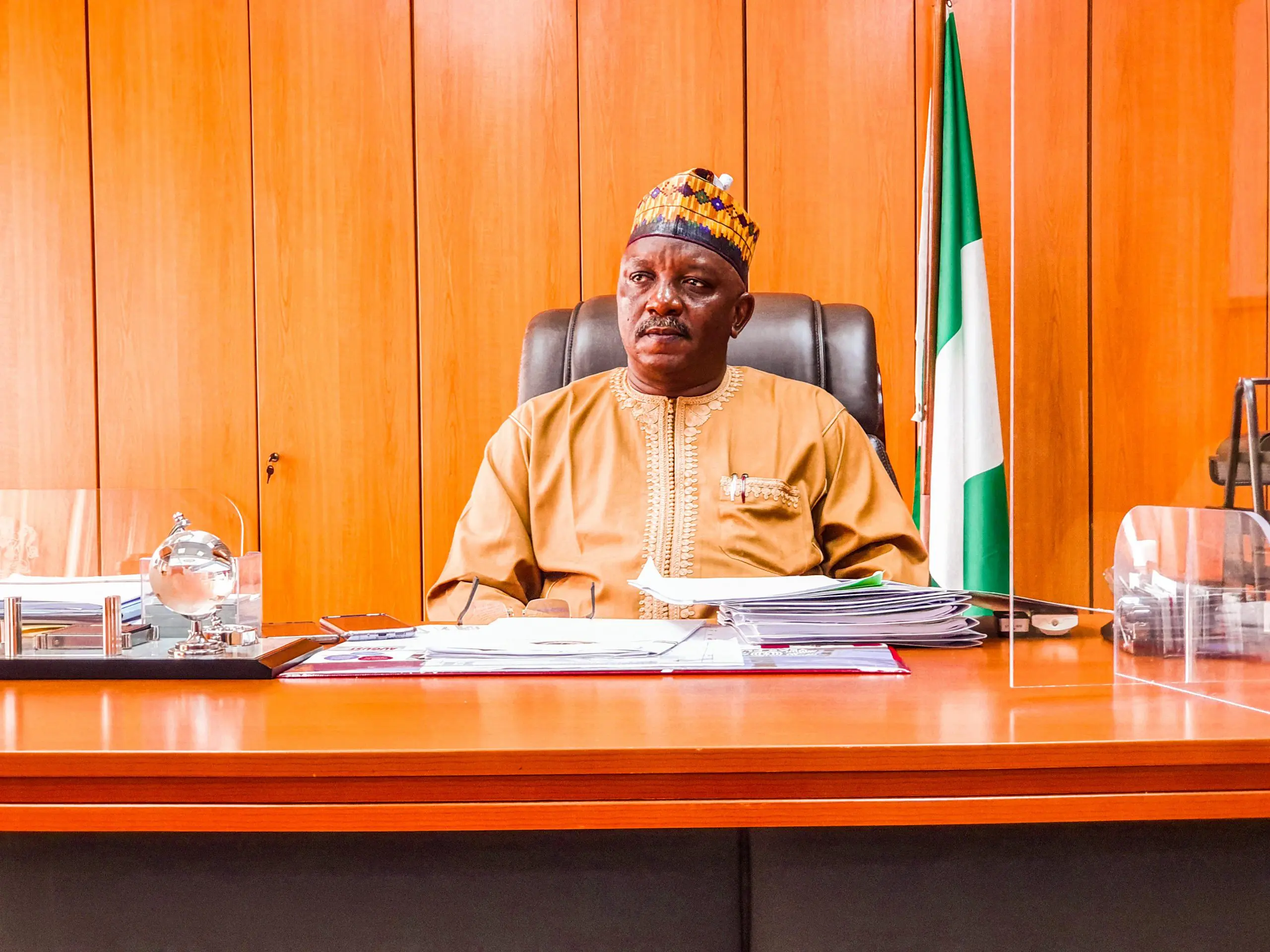
Justice James Omotosho of the Federal High Court in Abuja has rejected a no-case submission filed by former Minister of Power, Saleh Mamman, ruling that the Economic and Financial Crimes Commission has established enough grounds requiring the former official to respond to the allegations.
The decision was delivered on Thursday, with the judge stating that the evidence presented by the prosecution demanded explanations from Mamman, given the severity of the claims. He stressed that despite the ruling, Mamman remains presumed innocent until a final judgment is reached.
The EFCC earlier filed a 12-count amended charge against Mamman as the sole accused. The agency had, in July 2024, arraigned him on allegations of money laundering and conspiracy with ministry officials and private contractors to “indirectly convert” ₦33.8 billion allocated to the Zungeru and Mambilla Hydro Electric Power projects.
Mamman pleaded not guilty to all the accusations. To build its case, the anti-graft body called 17 witnesses and submitted 43 exhibits before closing its presentation.
Mamman, through his lawyer, moved a no-case submission on November 19, insisting that the prosecution had not offered credible evidence sufficient to warrant his conviction or compel him to enter a defence.

However, the EFCC countered this position in its written address dated November 25, arguing that the testimonies of PW-1 to PW-17, alongside the admitted exhibits, clearly established a prima facie case requiring the defendant’s response.
In his ruling, Justice Omotosho directed Mamman to proceed with his defence in accordance with Section 36 of the 1999 Constitution, noting that certain pieces of evidence tendered by the EFCC required clarification from the defendant.
He emphasised that the court’s decision did not suggest guilt but simply ensured the defendant had the opportunity to address unresolved matters lingering before the court. The judge further restated that the right of an accused person to defend themselves is a constitutional guarantee that cannot be removed unless explicitly relinquished.
Justice Omotosho noted that in a criminal trial, an accused person may choose to rely on the prosecution’s case, present their own defence, or file a no-case submission. Since Mamman had not waived his right to defend himself and his no-case submission had been dismissed, the court instructed him to respond to the allegations.
The judge maintained that the arguments of counsel cannot substitute for actual evidence and stressed that a fair hearing, as enshrined in Section 36, must be upheld. He therefore overruled the no-case submission and ordered the former minister to present his defence.
The matter has been adjourned to February 23, 2026, for Mamman to begin his defence before the court.
What you should know
Saleh Mamman, a former Minister of Power, is facing a multi-billion-naira corruption case linked to major national hydroelectric projects.
The court ruled that the evidence tendered by the EFCC is substantial enough to require him to defend himself, even though he remains legally presumed innocent. The judge’s ruling does not determine guilt but ensures that the unresolved issues raised by the prosecution must be addressed.
The case forms part of broader investigations into financial mismanagement within previous administrations, placing a spotlight on accountability in the power sector and Nigeria’s anti-corruption efforts.