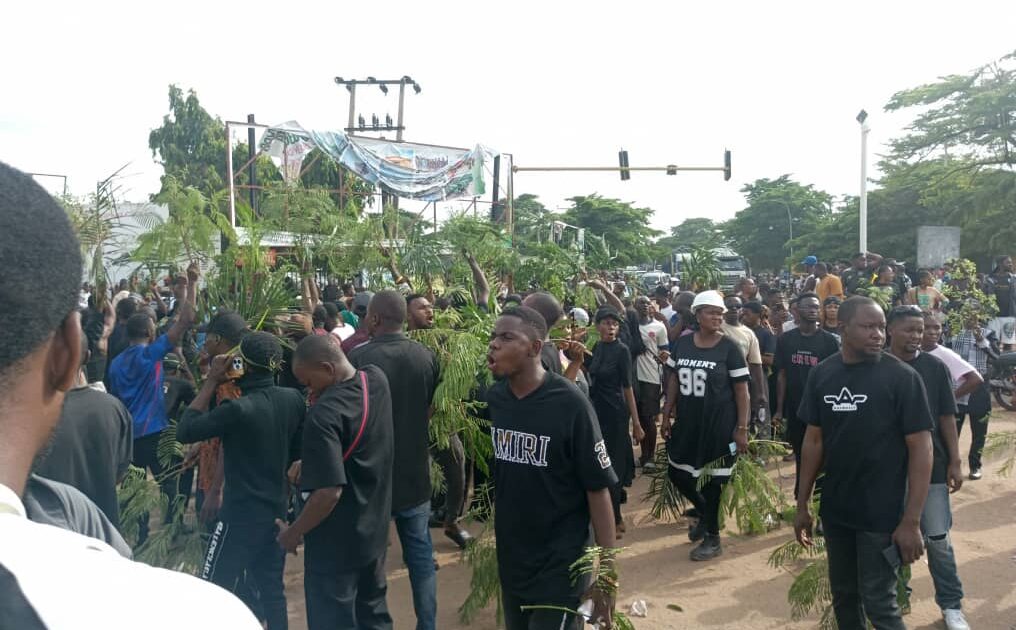
Displaced residents from the violence-stricken Yelwata community in Guma Local Government Area of Benue State took to the streets of Makurdi on Thursday, decrying the appalling conditions at the makeshift camp provided by the state government.
Their protest, fueled by growing frustration and worsening humanitarian concerns, centered around allegations of neglect, starvation, and the diversion of relief materials meant to sustain them.
These internally displaced persons (IDPs), who were relocated to the International Market in Makurdi after armed herders reportedly launched coordinated attacks on their community—killing several residents and burning homes—expressed their dissatisfaction by blocking the major entrances to their camp on George Akume Way.
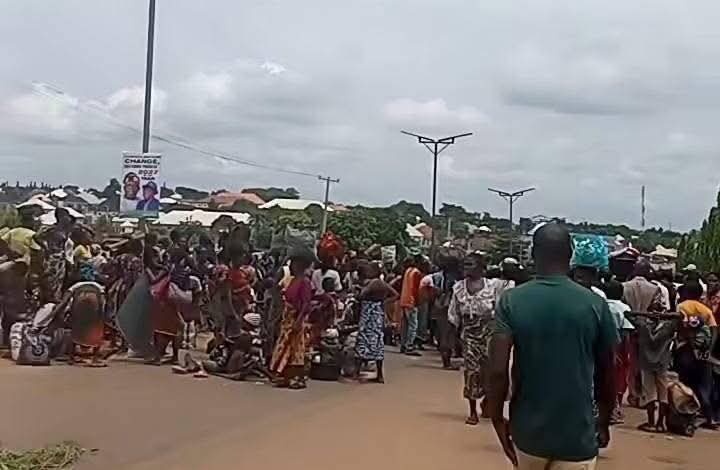
According to the aggrieved IDPs, the temporary shelter has become a place of continued suffering rather than refuge.
President Bola Tinubu had visited Benue State just a day before the protest, joining governors from North-Central states in a high-level stakeholder meeting aimed at addressing the persistent hostilities.
While the president visited victims undergoing treatment at a local hospital, he was unable to access the actual site of the Yelwata attacks due to the poor state of the roads.
However, that high-profile visit offered little relief to the displaced, who now accuse camp officials of withholding or hoarding donated aid. Fidelis Igban, one of the displaced individuals, voiced his anguish over the situation, recounting instances where donated food and essential supplies from dignitaries, including the Secretary to the Government of the Federation, George Akume, and the Senior Pastor of Dunamis International Gospel Centre, Dr. Paul Enenche, never reached the intended recipients.
“People come and donate food items and other relief materials, but once these are handed over to the officials, we don’t see them again,” Igban lamented. “We are starving and dying here. We want to go back to our homes. There’s no food, we sleep on bare floors, and mosquitoes are almost killing us. We are suffering.”
Another IDP, Erdoo Targa, shared her ordeal as a pregnant woman trapped in the dire conditions. “I was six months pregnant when I got here. There’s no medical care, and we’ve been abandoned. Our children are getting sick every day,” she said.
The protesters also claimed that despite repeated visits by humanitarian groups and individuals who brought items meant to improve their living conditions, very little has been distributed among the displaced. This, they said, further underlined a breakdown in transparency and accountability within the camp’s management.
Efforts to get official responses were largely unsuccessful. Calls and messages to the Commissioner for Humanitarian and Disaster Management, Aondoaseer Kude, and the Executive Secretary of the Benue State Emergency Management Agency (SEMA), Dr. James Iorpuu, went unanswered.
The agency’s information officer, Tema Ager, declined to comment, citing a lack of authorization and directing inquiries to higher authorities.
As the humanitarian crisis deepens, the IDPs’ protest stands as a desperate plea to both government and the public to intervene swiftly. For many of these individuals, the fear and trauma of displacement are now compounded by hunger, neglect, and a sense of abandonment by those tasked with protecting them.
What You Should Know
Displaced persons from Benue’s Yelwata community have raised alarm over starvation and alleged hoarding of relief materials at their camp in Makurdi.
Despite visits and donations from prominent figures, many IDPs say they’ve received no aid and are living in worsening conditions, prompting a protest to draw attention to their plight.