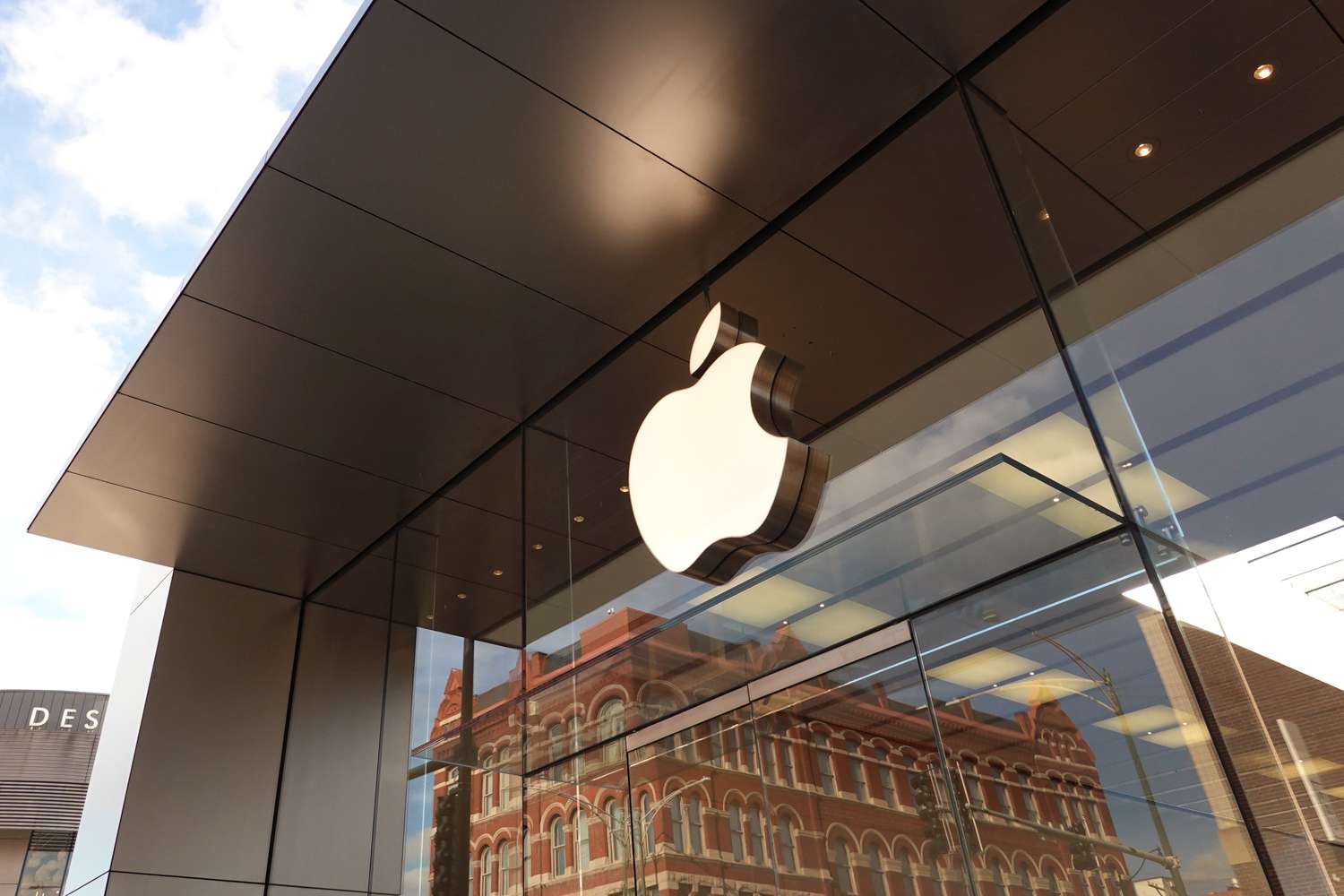
For the first time in more than a year, Apple Inc. is once again the most valuable company on Earth.
The iPhone maker overtook Nvidia on Friday, closing with a market capitalization of $4.88 trillion against the chipmaker’s $4.86 trillion, after Nvidia shares slid 3.5% in a single session, a decline that wiped out roughly $173 billion in market value in a matter of hours.
It is Apple’s first time back at the summit since it last held the title in April 2025, ending a reign that began when Nvidia surpassed Microsoft to claim the top spot in June 2025.
The reversal caps a dramatic run for both companies. Nvidia became the first company in history to cross the $5 trillion threshold in October 2025, at a time when Wall Street’s enthusiasm for artificial intelligence was almost entirely channeled into the infrastructure layer: the chips, servers, and data centers powering the AI boom.
Apple, by contrast, spent much of that stretch cast as a bystander to the AI revolution, criticized for a slow-moving Siri overhaul and a comparatively modest capital expenditure profile.
That narrative has now flipped. Apple shares have surged nearly 23% so far this year, comfortably outpacing the tech-heavy Nasdaq, while Nvidia has managed a far more modest gain of roughly 7-9% over the same period as the market pivots toward what analysts are calling the next phase of the AI buildout.
Investors have increasingly rotated toward memory and infrastructure names such as Micron and Sandisk, leaving pure-play chip designers like Nvidia relatively stalled.
The pain hasn’t been confined to Nvidia alone the Philadelphia Semiconductor Index has fallen almost 19% from its all-time highs, putting chip stocks on pace for their worst weekly performance in more than a year.
Toni Meadows, head of investment at BRI Wealth Management, frames the shift as less about Apple suddenly winning the AI race and more about the market recalibrating what “winning” looks like.
Apple’s relatively light capital spending, long seen as a liability, is now viewed as an asset, positioning the company to monetize AI through services revenue, its walled-garden ecosystem, and the hardware upgrade cycle rather than through speculative infrastructure bets.
Wall Street’s sell side is warming to that thesis. HSBC upgraded Apple to a buy rating this week, with analysts writing that the timing lines up with what they view as one of Apple’s most innovative product pipelines in years. The stock notched fresh highs in the run-up to Friday’s session, part of a broader climb that has left it up double digits over the past month alone.
Regulators in Beijing, the Cyberspace Administration of China, have cleared Apple to roll out Apple Intelligence features in the country, built on models developed with local partners Baidu and Alibaba, though no launch date has been set.
The approval matters because China remains one of Apple’s largest and most competitive markets, where the company posted $20.5 billion in Greater China sales last quarter, a 28% jump from a year earlier.
Regaining momentum with Chinese consumers, many of whom have gravitated toward domestic phone brands already loaded with homegrown AI assistants, is central to Apple’s broader AI story.
Underpinning the market’s newfound optimism is a bet that Apple’s upgraded Siri, rolled out last month after repeated delays, can begin closing the gap with rivals whose assistants have moved faster and further.
The stakes go beyond Siri itself. Some analysts argue Apple’s deepest AI advantage isn’t a model at all; it’s the sheer volume of personal data sitting on more than a billion iPhones, from messages and calendars to location and health data, any of which could sharpen a genuinely personalized assistant.
The catch is that this same data has been locked down for years under Apple’s privacy commitments, leaving the company to find a way to unlock its value without unwinding the trust it has spent a decade building with consumers.
The timing carries symbolic weight for Tim Cook, who is set to hand the CEO title to hardware chief John Ternus in September after more than a decade running the company.
Reclaiming the world’s most valuable company title in Cook’s final months is likely to color how his tenure and the smooth transition to Ternus is ultimately judged by investors and industry watchers alike.
Still, Friday’s crown may prove fleeting. Trading was volatile throughout the session: Nvidia’s shares briefly fell as much as 3.9% before paring losses to around 2.2%, and some intraday snapshots showed the two companies swapping the lead more than once.
Benjamin Hall, a portfolio strategist at Segal Marco Advisors, cautioned that the story may be less about a two-company duel and more about a broadening AI trade. New entrants to the market could spread investor focus away from the “Magnificent Seven” and toward a wider set of companies altogether.
For now, though, after a year in which Nvidia’s ascent seemed almost unstoppable, Apple is back on top, and both companies remain within striking distance of the once-unthinkable $5 trillion mark.
WHAT YOU SHOULD KNOW
Apple reclaimed the title of the world’s most valuable company from Nvidia on Friday, July 18, 2026 ($4.88T vs. $4.86T), not because it suddenly won the AI race, but because investors are betting on durable AI monetization over speculative infrastructure spending.
Nvidia’s chip-driven AI boom is cooling as capital rotates toward memory and consumer-facing AI plays, while Apple’s low-capex model, services, ecosystem lock-in, a revamped Siri, and fresh access to the Chinese market are being rewarded as the safer, more sustainable AI bet.
This is a re-rating of how AI value gets captured, not a verdict on who’s “winning” AI outright, and the lead itself remains fragile, with the two giants trading places within hours of each other.