Biography and Early Life
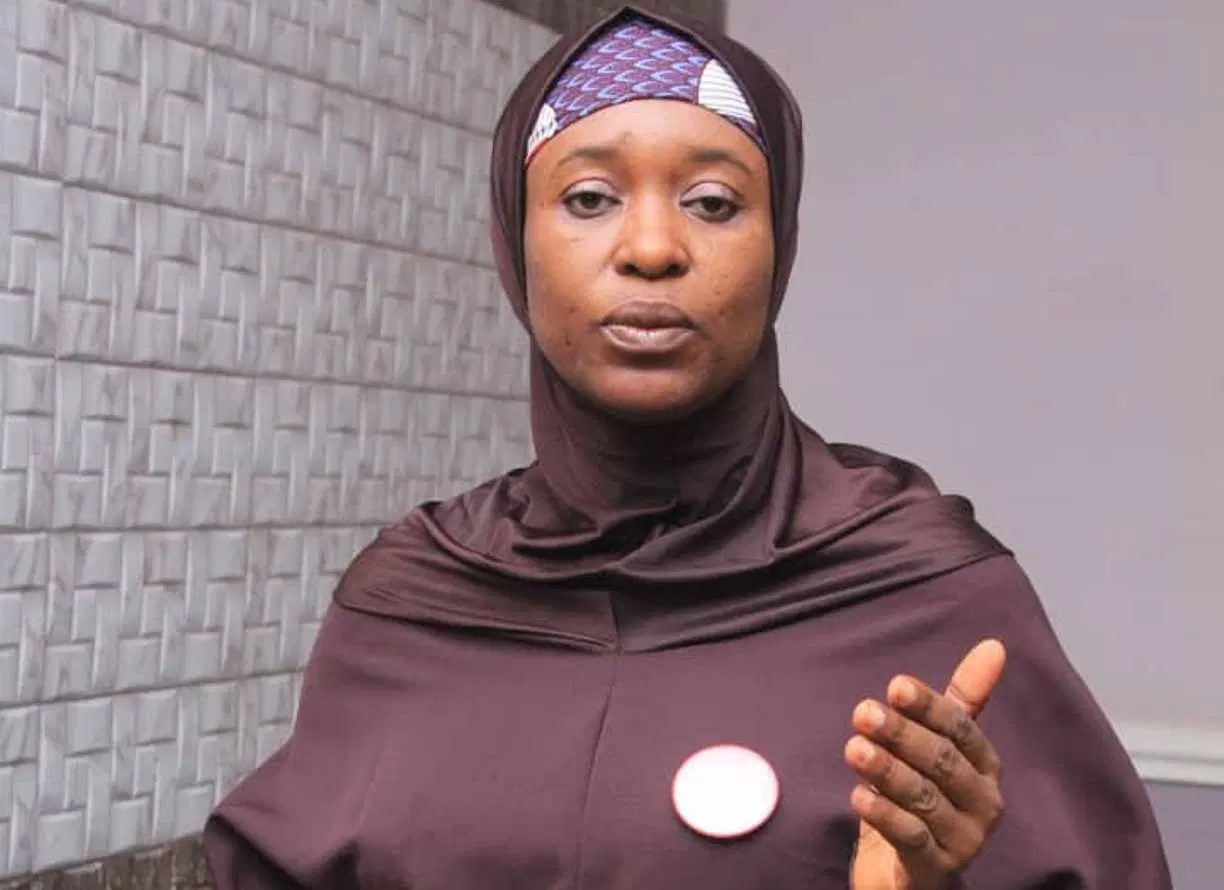
Aisha Yesufu was born on December 12, 1973, in Kano State, Northern Nigeria. She hails from a Muslim family in one of Nigeria’s most conservative regions, where traditional expectations often limit women’s public participation and activism. Her upbringing in Kano, a major commercial and cultural center of Northern Nigeria, exposed her to the complexities of religion, culture, and gender dynamics in Nigerian society.
Growing up in Northern Nigeria during periods of religious and political tension shaped Yesufu’s understanding of social justice issues. Her eventual emergence as a fearless activist would challenge many stereotypes about Muslim women in Northern Nigeria, demonstrating that faith and activism could coexist powerfully.
Educational Background
Yesufu attended school in Kano State, where she received her primary and secondary education. She later pursued higher education, studying at Yaba College of Technology in Lagos, though she has been relatively private about specific academic credentials, preferring to let her activism and achievements speak for themselves.
Her education exposed her to diverse perspectives beyond her Northern Nigerian upbringing, particularly during her time in Lagos, Nigeria’s most cosmopolitan city. This exposure would contribute to her progressive views on governance, rights, and social justice.
Professional Career
Before gaining national prominence as an activist, Yesufu worked in various professional capacities:
Business and Entrepreneurship: She has been involved in business ventures and entrepreneurship, though she maintains relative privacy about her business activities.
Human Capital Development: Yesufu has worked in human resources and organizational development, bringing professional expertise to issues of institutional capacity and governance.
Her professional background provided financial independence that would later enable her activism without compromising her ability to speak truth to power—a luxury many Nigerian activists lack.
Activism and Social Justice Advocacy
#BringBackOurGirls Movement
Yesufu’s rise to national and international prominence came through the #BringBackOurGirls movement, which began in April 2014 after Boko Haram terrorists kidnapped 276 schoolgirls from Chibok, Borno State.
Key Role in the Movement:
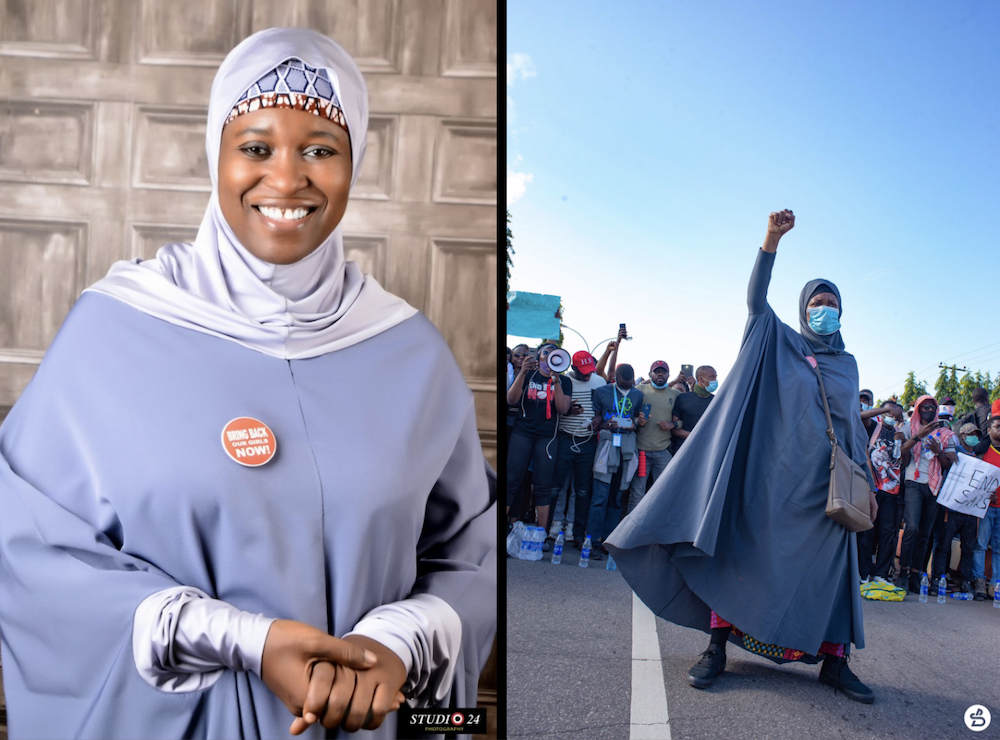
Co-Convener: Alongside other activists, including Oby Ezekwesili, Yesufu became one of the movement’s most visible faces, organizing daily sit-ins at Unity Fountain in Abuja, demanding government action.
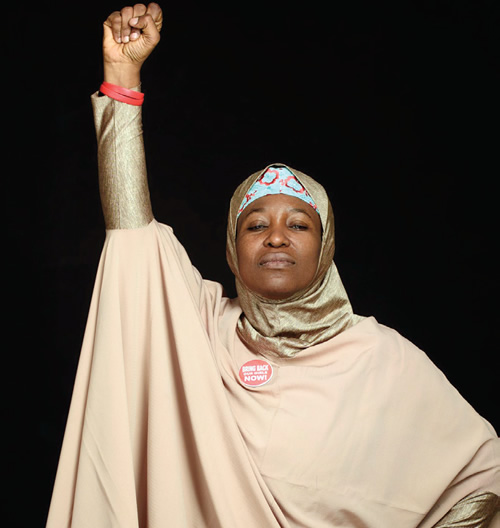
Iconic Image: A photograph of Yesufu, dressed in hijab with her fist raised in protest, became one of the movement’s most iconic images, challenging stereotypes about Muslim women and activism.
Sustained Advocacy: Unlike many who moved on when media attention waned, Yesufu and fellow activists maintained pressure on the government for years, meeting daily to demand accountability.
International Attention: The movement garnered global attention, with celebrities, world leaders, and international organizations supporting the cause. Yesufu played a crucial role in maintaining this pressure.
Impact: While not all the Chibok girls were recovered, the movement forced government action, kept the issue in public consciousness, and demonstrated the power of sustained citizen activism.
#EndSARS Movement (2020)
Yesufu emerged as one of the most prominent voices during the October 2020 #EndSARS protests against police brutality:
Ground Mobilization: She was physically present at protest sites, particularly in Abuja, providing logistical support and encouragement to young protesters.
Strategic Communication: Yesufu used her significant social media following to coordinate activities, counter disinformation, and maintain momentum during the protests.
Fearless Leadership: Even as government crackdown intensified, she remained visible and vocal, refusing to be intimidated by threats or arrest attempts.
Post-Massacre Advocacy: After the Lekki Tollgate shooting on October 20, 2020, Yesufu became one of the most persistent voices demanding justice and accountability, challenging official denials and cover-ups.
Youth Empowerment: She emphasized youth leadership in the movement while providing strategic guidance and amplifying young voices.
Other Advocacy Work
Beyond these major movements, Yesufu has been consistently active on numerous issues:
Electoral Reform: She has been a vocal advocate for electoral integrity, transparency, and reforms to Nigeria’s electoral system.
Anti-Corruption: Regularly speaks against corruption in government and advocates for accountability in public office.
Women’s Rights: Challenges patriarchal structures and advocates for women’s participation in politics, business, and public life.
Religious Freedom: Despite being a practicing Muslim, she advocates for religious tolerance and challenges religious extremism.
Good Governance: Consistently holds government officials accountable regardless of party affiliation, refusing to be co-opted by any political faction.
Education: Advocates for quality education, particularly for girls in Northern Nigeria.
Youth Empowerment: Mentors young activists and encourages youth participation in governance and civic engagement.
Political Involvement
While Yesufu is primarily an activist rather than a politician, she has engaged with electoral politics:
2023 Presidential Election
Labour Party Support: Yesufu became one of the most prominent supporters of Peter Obi’s 2023 presidential campaign under the Labour Party.
Campaign Strategy: She served as a key figure in the “Obidient Movement,” providing strategic direction, mobilizing support, and articulating the campaign’s message.
Social Media Influence: Her massive social media following (particularly on Twitter/X) made her one of the campaign’s most effective communicators.
Youth Mobilization: She played a crucial role in mobilizing young voters, connecting Obi’s campaign with the #EndSARS generation.
Post-Election Advocacy: Following the controversial 2023 election results, Yesufu remained vocal in demanding electoral justice and transparency.
Political Philosophy
Yesufu’s political engagement is characterized by:
Issue-Based Activism: She focuses on issues rather than blind party loyalty, willing to criticize any government or politician failing to deliver good governance.
Non-Partisan Accountability: While she supported Obi in 2023, she maintains that her loyalty is to Nigeria, not any political party.
Democratic Values: Strong commitment to democratic principles, rule of law, and citizen participation.
Progressive Politics: Advocates for progressive policies on education, healthcare, women’s rights, and social welfare.
Communication Style and Public Persona
Social Media Presence
Yesufu is one of Nigeria’s most influential social media voices:
Twitter/X Dominance: With hundreds of thousands of followers, her tweets regularly shape national conversations and trend on Nigerian Twitter.
Direct Communication: She employs straightforward, unambiguous language, avoiding political correctness when addressing injustice.
Rapid Response: Quick to respond to breaking news, government policies, or social issues, often setting the tone for public discourse.
Meme-Worthy Moments: Her quotable statements and fearless confrontations have generated countless memes and viral moments.
Public Speaking and Media
Television Appearances: Regular guest on news programs, where she provides sharp analysis and holds anchors accountable for soft questioning of politicians.
Public Lectures: Frequently invited to speak at universities, conferences, and civic gatherings about activism, governance, and social justice.
Confrontational Style: Known for direct, sometimes aggressive confrontation of those she perceives as defending injustice or corruption.
Emotional Intelligence: Balances fierceness with strategic thinking, knowing when to push and when to build coalitions.
Personal Life
Aisha Yesufu is married to Aliu Yesufu, and they have children together. Her husband has been supportive of her activism, which is notable given the conservative environment of Northern Nigeria, where traditional gender roles often prevail.
Faith and Activism: Yesufu is a practicing Muslim who wears hijab, yet she challenges interpretations of Islam that oppress women or justify injustice. She represents a progressive Muslim voice, demonstrating that faith and feminist activism are not contradictory.
Family Balance: She has spoken about balancing family responsibilities with activism, challenging the notion that women must choose between family and public engagement.
Personal Security: Given her high-profile activism, Yesufu has faced threats, harassment, and intimidation attempts, yet she continues her work undeterred.
Recognition and Awards
Yesufu has received numerous recognitions for her activism:
International Recognition: Featured by international media, including BBC, CNN, Al Jazeera, and major publications worldwide.
Awards: Received various awards for activism, leadership, and courage from Nigerian and international organizations.
Honorary Positions: Serves on boards and advisory councils of various civil society organizations.
Global Influencer Lists: Regularly appears on lists of influential African women and global activists.
Challenges and Controversies
Government Harassment
Surveillance and Intimidation: Yesufu has faced government surveillance, with authorities monitoring her activities and occasionally attempting intimidation.
Arrest Threats: During protests, she has faced threats of arrest, though her high profile has provided some protection.
Frozen Accounts: Following the #EndSARS protests, several activists had accounts frozen; Yesufu faced similar threats as authorities sought to stifle dissent.
Criticism and Opposition
Political Partisanship Accusations: Her strong support for Peter Obi in 2023 led some to accuse her of abandoning non-partisan activism for political alignment.
Elitism Claims: Critics argue that her activism, while passionate, doesn’t always connect with grassroots realities or the lived experiences of ordinary Nigerians.
Confrontational Style: Her aggressive communication style sometimes alienates potential allies or overshadows substantive issues.
Religious Criticism: Conservative Muslims have criticized her progressive interpretations of Islam and her challenges to traditional gender norms.
Online Harassment
As a prominent woman activist, Yesufu faces:
- Misogynistic attacks online
- Religious-based harassment
- Attempts to discredit her through misinformation
- Threats of violence and sexual assault
She has consistently confronted this harassment publicly rather than retreating from public engagement.
Impact and Legacy
Redefining Activism in Nigeria
Yesufu has helped redefine what activism looks like in Nigeria:
Digital Activism: Demonstrated the power of social media for social mobilization and accountability.
Sustained Engagement: Showed that effective activism requires consistent, long-term commitment, not just viral moments.
Women’s Leadership: Challenged narratives about women’s capabilities in leadership, particularly for Muslim women in Northern Nigeria.
Fearless Example: Inspired countless young Nigerians to speak up against injustice without fear.
Influence on Nigerian Civil Society
Movement Building: Contributed to building and sustaining various movements for social change.
Accountability Culture: Helped establish a culture where citizens demand accountability from leaders.
Youth Empowerment: Mentored and inspired a generation of young activists who see activism as a viable path for change.
Bridge Building: Despite being from Northern Nigeria, she has built coalitions across regional, religious, and ethnic lines.
Continuing Work
As of 2025, Yesufu remains actively engaged in:
Electoral Advocacy: Continuing to push for electoral reforms and transparent elections.
Government Accountability: Holding the current administration accountable regardless of political considerations.
Social Justice: Advocating for marginalized groups and speaking against all forms of injustice.
Youth Mentorship: Training and encouraging the next generation of activists and change-makers.
Women’s Empowerment: Pushing for greater women’s participation in politics and challenging patriarchal structures.
Significance in Contemporary Nigeria
Aisha Yesufu represents something significant in Nigerian society:
The Power of Citizen Voice: She embodies the principle that ordinary citizens can hold powerful governments accountable.
Challenging Stereotypes: As a Northern Muslim woman activist, she challenges multiple stereotypes simultaneously, about Muslims, about women, about Northern Nigerians, and about the possibilities for citizen engagement.
Moral Courage: In a society where many intellectuals and activists are co-opted by power, Yesufu has maintained independence and moral clarity.
Bridge Between Generations: She connects the struggles of past democratic activists with contemporary youth movements.
Conscience of the Nation: She has positioned herself as a moral voice calling Nigeria back to its better ideals.
Assessment and Perspectives
Admirers See Her As:
- A fearless voice for the voiceless
- A model of citizen activism and engagement
- A bridge-builder across Nigeria’s divides
- An inspiration for women and girls
- A keeper of the democratic flame in dark times
Critics Argue:
- She has become too partisan, particularly during the 2023 elections
- Her confrontational style sometimes undermines coalition-building
- Her activism is more performative than strategic
- She doesn’t offer enough concrete solutions beyond criticism
- Her urban, educated background limits her connection with the grassroots masses
Balanced View: Aisha Yesufu is undoubtedly one of contemporary Nigeria’s most significant activist voices. While her confrontational style and occasional political alignments invite criticism, her sustained commitment to justice, her courage in the face of intimidation, and her amplification of marginalized voices have made undeniable contributions to Nigerian democracy. She represents the best of citizen activism, refusing to be silenced, maintaining moral clarity, and inspiring others to engagement.
Aisha Yesufu’s journey from a relatively private life to becoming one of Nigeria’s most recognizable activists illustrates the power of ordinary citizens to effect change. Whether standing with her fist raised at #BringBackOurGirls protests, coordinating #EndSARS demonstrations, or holding government officials accountable through social media, Yesufu embodies the spirit of engaged citizenship. In a nation where cynicism and resignation often prevail, she offers an alternative vision that citizens can and must hold power accountable, that justice is worth fighting for, and that change, though difficult, remains possible. Her legacy, still being written, is one of courage, consistency, and an unwavering commitment to a better Nigeria.