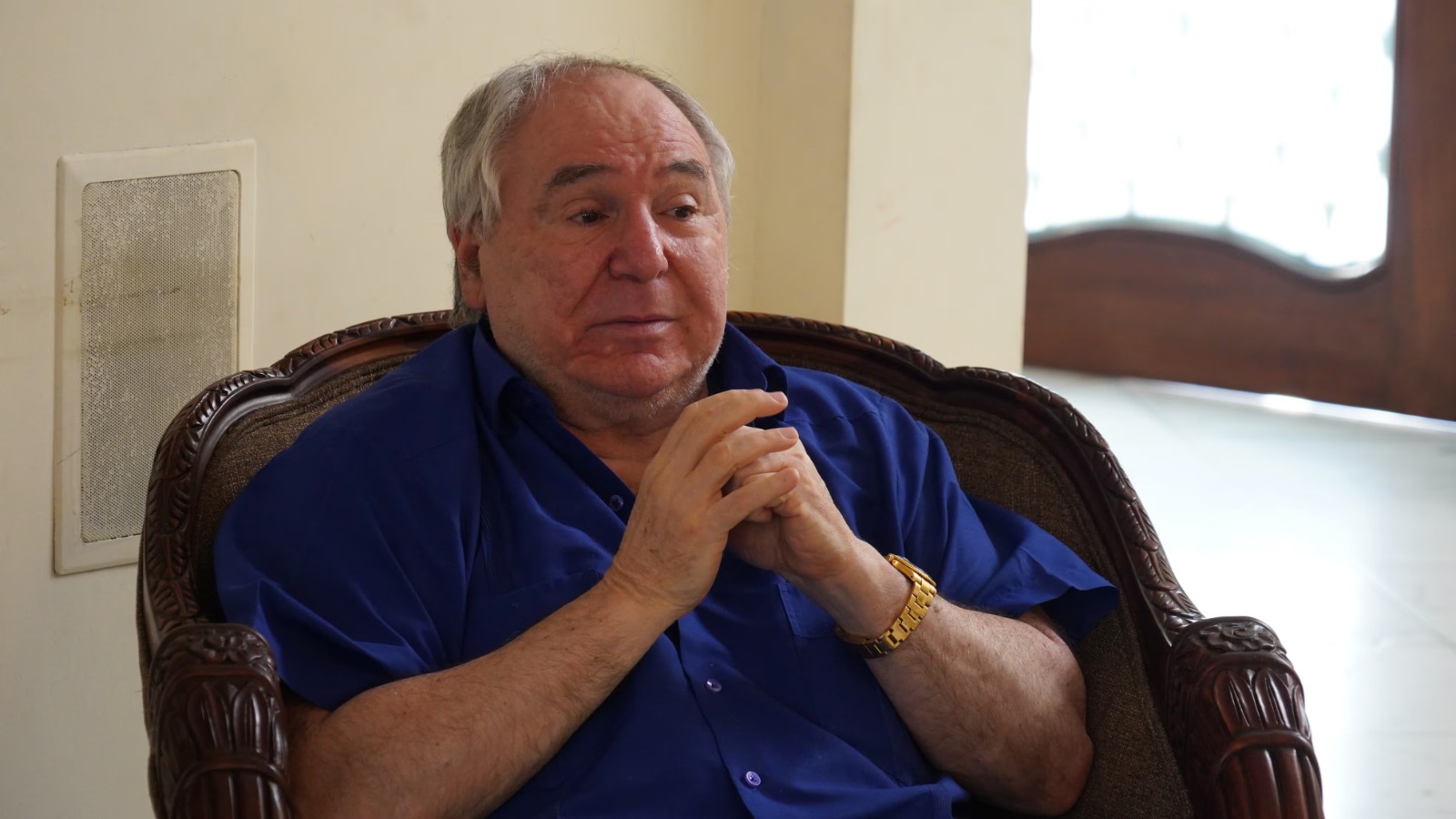
An Ecuadorean court sentenced former president Abdala Bucaram and his son Jacobo to nine years and four months in prison on Wednesday, closing a six-year legal battle over the fraudulent sale of medical supplies during the early months of the COVID-19 pandemic.
The 74-year-old former leader, who governed Ecuador for just six months in 1996-97, did not appear in court in person. He heard the decision remotely from a clinic in Guayaquil where he was receiving treatment for heart problems, with police officers stationed outside the facility.
Authorities had in fact ordered his arrest days earlier after a previous hearing collapsed, instructing police to keep permanent watch on the clinic and take him into custody once he was discharged.
In the hours before the ruling, Bucaram took to social media to protest his medical condition, claiming he had requested a medical discharge despite facing a risk of sudden death, citing thousands of ventricular arrhythmias, and vowing to clear his name.
Given his age, Ecuadorean law may allow him to serve the term under house arrest rather than behind bars, a provision available to elderly defendants under the country’s legal code.
Prosecutors said Bucaram and his son were designated as “collaborators” in an organized criminal network, in a case that centered on the irregular procurement of coronavirus test kits and other medical equipment at the height of Ecuador’s outbreak in 2020, a period when Guayaquil became one of the first Latin American cities overwhelmed by the virus.
The attorney general’s office accused four individuals of profiting from the purchase of roughly 21,000 rapid COVID-19 tests and other supplies between March and August 2020.
Court documents named additional co-defendants beyond Bucaram and his son, including an Israeli citizen, Oren Sheinman, and a former transit officer, Leandro Berrones. The two men identified as the scheme’s main perpetrators received harsher sentences of thirteen years and four months.
The case also carried a violent postscript: another person implicated in the affair was murdered inside a prison in August 2020.
The prosecution traces back to a wave of raids at the start of the pandemic. In June 2020, investigators charged into Bucaram’s Guayaquil home as part of a broader probe into embezzlement at a public hospital, finding an unlicensed firearm along with thousands of masks and coronavirus test kits.
That same day, prosecutors carried out 37 raids across Guayaquil and Quito, detaining 17 people suspected of overcharging for supplies, influencing peddling, and running a criminal organization. Chief prosecutor Diana Salazar said at the time that investigators had uncovered a large cache of medical goods at the property.
The case, however, nearly collapsed. A judge dismissed the charges against Bucaram and his son in 2021, before an appeal from the attorney general’s office succeeded in reopening the trial. Wednesday’s first-instance ruling can still be appealed, and Bucaram’s legal team has not yet commented publicly on the outcome.
Wednesday’s sentence adds another chapter to one of Ecuadorean politics’ most colorful and controversial careers. Bucaram was removed from office by Congress in February 1997, just six months into his term, on grounds of “physical and mental incapacity.”
He subsequently spent roughly two decades in exile in Panama before returning home. Over the years, he has faced repeated allegations of embezzlement, defamation, and corruption; he was previously convicted of embezzlement in the so-called Mochila Escolar case and twice convicted of criminal defamation, though a statute of limitations on the embezzlement penalty expired in 2017 before he served any time.
He has also faced a separate, unresolved case involving alleged illicit trafficking of firearms and ammunition.
The COVID-era procurement scandal was not confined to Ecuador. Corruption investigators across the region flagged a surge in pandemic-linked graft, from overpriced body bags to inflated contracts for ventilators and protective gear, as officials in multiple Latin American countries came under scrutiny for exploiting the health emergency for personal gain.
For now, the question of where and how Bucaram will serve his sentence remains tied to his medical status, with police continuing to guard the Guayaquil clinic as the case moves toward a possible appeal.
WHAT YOU SHOULD KNOW
Ecuador’s judiciary has held former president Abdala Bucaram and his son Jacobo accountable, sentencing them to over nine years in prison for orchestrating a criminal scheme that profited from the fraudulent sale of COVID-19 test kits and medical supplies during the pandemic’s deadliest early months, a verdict that took six years, a collapsed prosecution, and a successful appeal to secure.
Even a former head of state, shielded for years by legal delays and now by ill health, was not able to escape accountability for exploiting a public health crisis for personal profit.