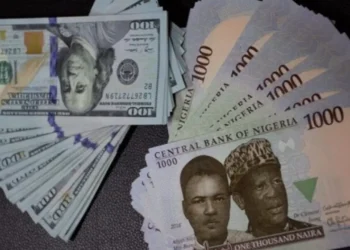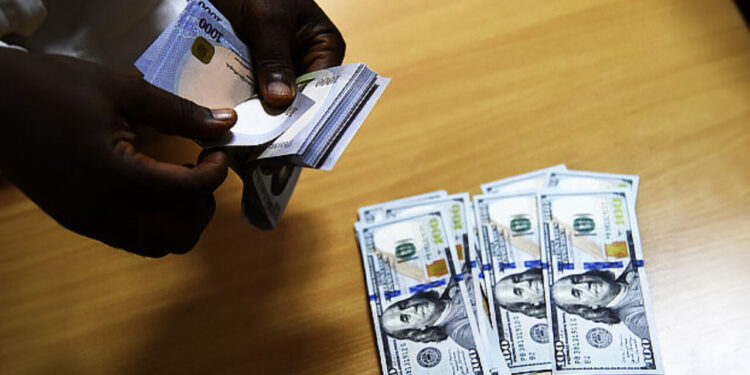
The naira is trading near ₦1,321.37 to the dollar officially, while street traders still price it above ₦1,380, a gap showing Nigeria’s FX market remains split between a firming official rate and a persistently costly parallel market.
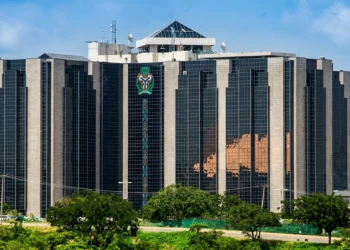
Figures from the Central Bank of Nigeria’s Nigerian Foreign Exchange Market (NFEM) portal, the platform the apex bank treats as the authoritative record of each day’s official rate, currently list September 4 as its most recent dated entry, at ₦1,321.2160 per dollar.
That means today’s widely quoted ₦1,321.37 figure should be read as a live reference rate rather than a confirmed CBN closing price for September 9. The distinction matters for anyone relying on the number for contracts, invoicing, or accounting purposes, since the CBN’s own dated record has not yet caught up to the live tape.
It is a pattern that has recurred through the first two weeks of September. The suggested US dollar trade rate stood at ₦1,320.2469 on September 8, according to the Central Bank of Nigeria, after opening the week at ₦1,320.5574 on September 7, a run of figures clustered tightly around the ₦1,320-to-₦1,321 band that today’s reading extends.
The official rate’s relative firmness is not a one-day story. The naira had strengthened to around ₦1,326.69 per dollar by early September, a two-year high for the currency, before easing slightly to ₦1,329.12 on September 3.
Analysts have linked the gains to improved dollar liquidity, stronger external reserves and a pickup in formal remittance inflows. Nigeria’s external reserves climbed to about $53.51 billion in August, while remittances channelled through licensed money-transfer operators hit a record $947 million in July, both cited as underlying support for the naira’s official-market performance heading into September.
Monetary policy has, for now, stayed on hold. The CBN’s Monetary Policy Committee kept the benchmark interest rate at 26.50 percent at its last scheduled meeting, leaving the tight-money stance that has underpinned much of the naira’s recent stability unchanged.
Parallel-market trackers cited alongside today’s official figure show a spread: NairaToday quotes dollars changing hands at ₦1,385 to buy and ₦1,410 to sell, while AbokiForex puts the same pair at ₦1,385 to buy and ₦1,395 to sell, a difference that itself illustrates how fragmented and locally negotiated Nigeria’s street currency trade remains, with rates shifting by dealer, location and the size of the transaction.
That divergence is not new. Street traders were quoting the dollar at roughly ₦1,395 to ₦1,405 in early September, with several trackers showing the rate firming further by September 4 to around ₦1,400 on the buy side and ₦1,410 to ₦1,415 on the sell side.
Measured against the official NFEM level, that implied a premium of roughly ₦85 to ₦100 per dollar, a spread of about 6 to 7 percent, narrower than in past years.
A tightening gap of that kind is typically read as a sign that dollar demand outside the banking system is easing or that official-market supply has improved enough to pull street rates back toward the CBN’s benchmark.
The arithmetic is straightforward but consequential for anyone converting currency today:
- At the official rate (₦1,321.37/$): $100 is worth about ₦132,137; $1,000 is worth about ₦1,321,370.
- At NairaToday’s buying quote (₦1,385/$): someone selling $100 for naira would receive roughly ₦138,500.
- At Naira Today’s selling quote (₦1,410/$): buying $100 on the street would cost roughly ₦141,000.
- At AbokiForex’s selling quote (₦1,395/$): the same $100 purchase would cost roughly ₦139,500.
Set against the official benchmark, the gap between the ₦1,321.37 NFEM figure and NairaToday’s ₦1,410 street-selling quote works out to approximately ₦88.63 per dollar, a premium that, while narrower than the levels seen in some of Nigeria’s more turbulent FX years, still represents a real cost for importers, travellers and families paying school fees or settling dollar-denominated obligations outside the formal banking channel.
For now, Nigeria’s currency market continues to tell two stories at once: an official rate hovering just above ₦1,320 that has held remarkably steady through the first week and a half of September, and a parallel market that, despite a narrowing premium, still charges a meaningful markup over the CBN’s benchmark.
Analysts will be watching whether the official-market gains underpinned by reserve buffers and remittance flows continue to pull street rates lower, or whether the roughly ₦85-to-₦90 gap becomes the market’s new normal.
As always, anyone transacting outside the official window is advised to confirm live rates with their dealer before completing a trade, given how much rates can move within a single day and across locations.
WHAT YOU SHOULD KNOW
The naira’s official rate is holding steady near ₦1,321/$ thanks to stronger reserves and remittance inflows, but the parallel market still charges a premium of roughly ₦85–₦90 per dollar.
Anyone converting cash outside a bank should expect to pay noticeably more than the official rate. Always confirm the live quote with your dealer before transacting, since rates shift by location and transaction size.