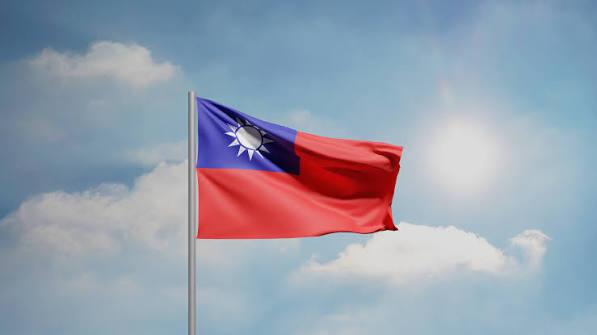
Taiwan has stepped up its diplomatic campaign for a seat at the international table, calling on the world community to embrace the principles of inclusiveness and fairness as it pushes for “meaningful participation” in United Nations affairs, a status it has been denied for more than five decades.
The appeal came in a statement issued Tuesday by Taiwan’s Minister of Foreign Affairs, Dr. Lin Chia-lung, titled “Restoring Trust: Taiwan’s Rightful Place in the Free World.” In it, Lin framed Taiwan’s exclusion not merely as a bilateral grievance but as a structural flaw undermining the credibility of the UN itself.
“Restoring confidence in the United Nations must begin with treating members of the international community fairly and justly,” Lin said, arguing that Taiwan’s inclusion is central to building what he called a more inclusive, secure, resilient, and rules-based international order.
The minister’s remarks come against the backdrop of intensifying great-power rivalry and mounting anxiety over the erosion of postwar international norms. Lin was direct in naming what he sees as the source of that erosion: authoritarian states seeking to weaken multilateral safeguards and rewrite global rules in their own favour.
He singled out violations of two bedrock UN Charter principles: the peaceful settlement of disputes and the prohibition on the threat or use of force, describing them as having been “openly challenged and flagrantly flaunted.”
For Lin, the moment amounts to a fork in the road for the international system. “Either we act together to uphold justice, defend the rule of law, and maintain peace and security, or we watch the world order steadily crumble away, taking freedom, self-determination, and democracy with it,” he warned, language that pointed, without naming names, toward the Indo-Pacific as a flashpoint region where he said the strain on peace and stability is most visible.
Woven through the statement was a practical case for engagement, not just a moral one. Lin argued that Taipei’s cooperation would deliver tangible dividends for the wider international community in security cooperation, technology, supply-chain resilience, and democratic solidarity areas where Taiwan, as a major semiconductor producer and Indo-Pacific democracy, has increasingly positioned itself as indispensable.
“The free world needs Taiwan, and a stronger, more credible United Nations needs Taiwan’s meaningful participation,” he said, repeating the line for emphasis.
Lin also sought to align Taiwan’s aspirations with the agenda of the incoming presidency of the UN General Assembly. He credited Khalilur Rahman, who is set to lead the 81st session, with prioritizing the restoration of trust in the UN and the management of institutional transformation goals. Lin said Taiwan “shares” and “stands ready to help realise.”
The statement is the latest in a long-running effort by Taipei to chip away at its international isolation, a campaign that has gained fresh urgency amid Beijing’s intensified military and diplomatic pressure on the island.
Taiwan has not held a UN seat since 1971, when General Assembly Resolution 2758 transferred China’s representation to the People’s Republic of China. A resolution Taipei and its allies argue has been misapplied by UN bodies to bar Taiwanese officials, journalists, and civil society representatives from UN premises and programmes altogether.
Beijing, for its part, maintains that Taiwan is part of China and has consistently opposed any move to grant the island a role in UN-affiliated bodies, framing such efforts as a challenge to the “one-China” principle it says underpins the 1971 resolution.
Whether Lin’s latest appeal gains traction remains uncertain. Taiwan’s bids for even limited observer status at bodies such as the World Health Assembly have repeatedly stalled in the face of opposition from Beijing and its diplomatic partners.
But the statement signals that Taipei intends to keep pressing the argument that its absence from the UN system is, in Lin’s words, a gap the “transformation of the international order cannot be complete” without addressing.
WHAT YOU SHOULD KNOW
Taiwan’s latest appeal is a bid to reframe its exclusion from the UN not as a settled diplomatic matter, but as an active flaw in the international system that Taipei argues weakens global security, supply-chain resilience, and the rules-based order at a moment when authoritarian pressure is rising, particularly in the Indo-Pacific.
Taiwan is positioning itself as a democratic and technological asset the “free world” cannot afford to keep sidelined, even as China’s opposition continues to make that inclusion politically unlikely in the near term.