Roughly 600,000 NYC schoolchildren return to classrooms under the strictest AI policy any major U.S. school system has adopted, and the controversy it’s already sparked suggests it will be watched as closely as it’s enforced.
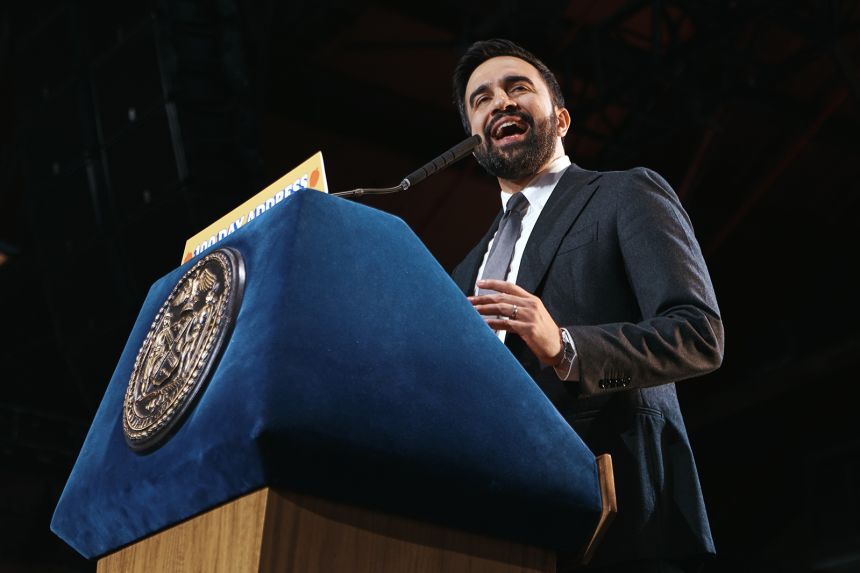
Mayor Zohran Mamdani unveiled the rules Wednesday alongside Schools Chancellor Kamar Samuels, describing the measure as a one-year pause covering students from 2-K through eighth grade, roughly two-thirds of the entire public school system’s enrollment.
City Hall’s own framing left little room for ambiguity about its ambitions: officials described the policy as the most expansive prohibition of its kind in the country.
The mechanics go beyond a simple prohibition. Mamdani said the district will discontinue or disable the AI functions embedded in more than three dozen previously approved programs that don’t meet the city’s new safety and oversight standards, a detail that hints at how deeply generative tools had already been woven into classroom software before Wednesday’s announcement.
Younger children face restrictions that extend well past AI itself. The city is recommending screen-time caps of 30 minutes a day for third through fifth graders and 45 minutes for sixth through eighth graders, while students in second grade and below will have their one-on-one screen time restricted altogether.
High schoolers get a different bargain: exposure, but on a short leash. The city plans to pilot five vetted educational AI programs, capped at 45 minutes of use per week under direct teacher supervision, paired with the twice-yearly literacy sessions already flagged in initial reporting. Companion chatbots AI built to simulate emotional relationships are off-limits at every grade level, no exceptions.
Mamdani framed the decision as a rejection of inevitability narratives pushed by AI developers, arguing the industry treats early adoption as a foregone conclusion rather than a choice.
He went further at Wednesday’s news conference, saying he had yet to see independent research demonstrating AI’s benefit for elementary and middle schoolers, with the exception, he noted, of studies funded by the very companies positioned to profit from broader adoption.
Notably, the mayor didn’t dismiss AI’s relevance to teenagers’ lives. He acknowledged that today’s teenagers are coming of age in a world saturated by the technology and said preparing them for it is a matter of responsibility, not preference, the rationale behind carving out high schoolers for supervised exposure rather than an outright ban.
Governor Kathy Hochul, who appeared alongside city officials this week on unrelated budget business, lent the policy her public backing, framing it as part of the state’s broader obligation to ensure fast-moving technology serves children rather than displaces the fundamentals of how they learn.
Wednesday’s announcement arrives as a course correction. An earlier framework floated in March, which would have let students use AI for research and creative projects, drew public criticism from parents and educators who viewed it as too permissive.
Chancellor Samuels has since acknowledged the rollout of that initial plan fell short on communication, and his office said it would fold the public feedback into the policy that ultimately emerged this week, a rare instance of a major school district publicly walking back a tech policy after backlash rather than defending it.
New York’s relationship with generative AI in schools has been anything but linear. The city’s education department actually banned ChatGPT from school devices and networks back in 2023, only to reverse that decision months later as the technology’s classroom potential seemed more promising.
Wednesday’s moratorium effectively swings the pendulum back, though city officials are framing it as a more deliberate, evidence-gathering pause rather than a reflexive crackdown.
Because New York City runs the largest public school system in the United States, its choices tend to ripple outward, and this one is landing amid a broader national reckoning over AI’s place in the classroom.
Los Angeles Unified, the country’s second-largest district, is separately blocking generative AI tools on student devices across all grades this year while it develops its own permanent policy, having already moved in June to bar school-issued devices for its youngest students as part of a wider screen-time crackdown.
At least 37 states now have some form of official AI guidance for schools, though no shared definition of “AI literacy” or consensus on how it should be taught has emerged nationally, underscoring how much New York’s approach could set an informal template or serve as a cautionary tale, depending on what the city’s task force finds.
The policy isn’t meant to be permanent. Throughout the 2026-2027 school year, a task force combining students, teachers, parents, elected officials, and industry representatives will track the moratorium’s effects before issuing findings that could reshape or extend the rules.
For now, teachers retain latitude; the students don’t. They can keep using AI for lesson planning and administrative work, provided it clears the city’s safety standards, though the tools remain off-limits for grading and crisis intervention.
Whether that carve-out holds and whether the ban itself survives past its one-year expiration will likely depend on what that task force reports back and on how loudly parents, teachers, and the tech industry itself weigh in along the way.
WHAT YOU SHOULD KNOW
New York City just enacted the country’s toughest school AI policy: a one-year ban on generative AI and companion chatbots for nearly 600,000 students through eighth grade, while high schoolers get limited, supervised access plus AI literacy classes.
The core message from Mayor Mamdani is that human connection and unstructured struggle, not AI shortcuts, are what young children need to actually learn.
Teachers keep using AI for planning, but a task force will spend the year studying the ban’s real impact before deciding what comes next. Given NYC’s size, this policy will likely shape how the rest of the country approaches AI in classrooms.