The Ebola outbreak tearing through the Democratic Republic of Congo has crossed a grim new threshold, with the United Nations confirming on Friday that the death toll has surpassed 2,500 and that the virus is now spreading “exponentially” across an area larger than mainland France.
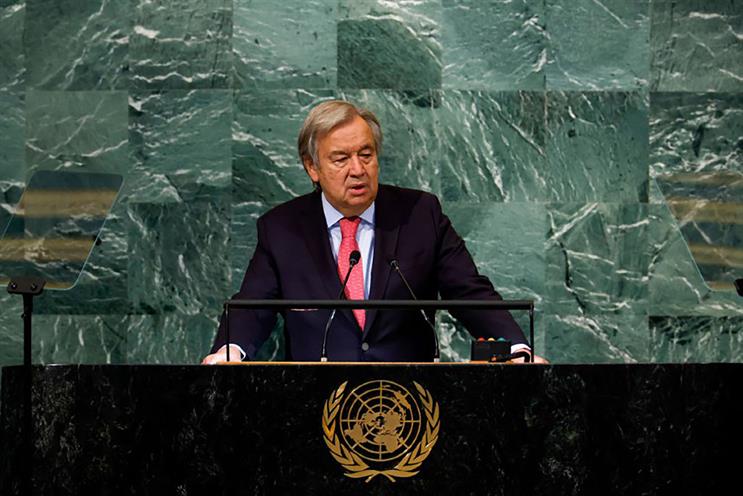
Speaking via video link from Bunia, the Ituri province city at the epicenter of the crisis, UN Senior Ebola Coordinator Julien Harneis painted a picture of an epidemic that has slipped beyond the control of the response effort tasked with containing it.
Health authority data published on Friday showed 5,290 people infected and 2,516 dead since the outbreak was declared on May 15. Roughly half of those deaths, Harneis said, have come in just the last three weeks, a trajectory that underscores how rapidly the situation is deteriorating.
Congo’s 17th Ebola epidemic became the biggest in the country’s history in terms of case numbers in late July, surpassing the previous worst outbreak recorded between 2018 and 2020.
By early August, it had become the fastest-growing Ebola outbreak on record and the second-largest overall. It is caused by the Bundibugyo ebolavirus, a strain that complicates treatment because the therapies developed for previous outbreaks were certified against a different species, the Zaire ebolavirus.
The case fatality rate in the DRC is now estimated at a staggering 47 percent, well within, or even above, the historical range for this strain.
The World Health Organization declared the outbreak a public health emergency of international concern on May 16, but the disease had likely been circulating undetected for weeks before it was formally identified.
Harneis was blunt about the scale of the challenge on the ground. In the six eastern provinces where the virus is spreading, basic social services are almost nonexistent, and he described a region where “the banking system barely functions,” leaving responders unable to pay the tens of thousands of frontline workers involved in the fight.
Banking services collapsed further after the government suspended commercial flights, cutting off one of the main channels used to physically deliver cash to local banks.
Funding is also running dry. Harneis warned that the existing pool of emergency money is set to be exhausted within weeks, even as aid cuts over the past two years have already reduced the operating capacity of humanitarian organizations by more than 30 percent.
The United States has contributed $80 million to the Congolese government to expand treatment-bed capacity and support safe burial practices, and agencies including the WHO, the World Food Programme, UNICEF, the International Organization for Migration and Médecins Sans Frontières remain active in the response.
Logistics alone has become a battle. Harneis recounted trying to reach an Ebola hotspot the previous week, a 60-kilometer drive that took three hours.
Compounding the medical crisis is a wave of hostility toward the very people trying to stop it. Three months into the outbreak, 160 healthcare workers have contracted Ebola themselves, and 43 of them have died.
More than 260 attacks on health workers have been reported over the past six months, with eight killed.
Harneis described ambulances being burned and stoned and treatment facilities coming under assault from frightened and angry residents, a dynamic aid workers attribute in part to conspiracy theories that the outbreak is a hoax and to resentment over health protocols that prevent families from personally burying their dead.
“Fear translates into angry young men who start throwing stones at their object of fear, the ambulance,” Harneis said, describing a cycle of mistrust that has made an already dangerous mission more perilous still.
Harneis noted that all of this is unfolding in an area that has endured three decades of conflict and is already generating enormous humanitarian need, a landscape of weak state presence, threadbare health infrastructure, and numerous armed groups that have operated there for years.
Cases have now been reported across six DRC provinces, including areas near the border with South Sudan, and the virus has also crossed into neighboring Uganda, though Uganda, which recorded two deaths among 20 cases, declared itself Ebola-free last month.
Unlike the more familiar Zaire strain, there is no approved vaccine or specific treatment for the Bundibugyo strain driving this surge, although several clinical trials are now underway.
Still, the WHO announced Thursday that the DRC will receive 70,000 doses of the Ervebo vaccine, which has proven effective against the Zaire strain, after vaccine experts recently recommended its use as a stopgap measure.
Doctors Without Borders echoed the UN’s warnings. MSF president Javid Abdelmoneim said the epidemic “continues to spread, moving faster than the response can keep up,” describing the situation as advancing “at an alarming rate.”
Despite the grim numbers, Harneis insisted the trajectory is not yet irreversible. Additional staffing and resources funnelled into the remote reaches of eastern DRC, he said, could slow and eventually halt transmission within months.
He was equally clear about the cost of inaction: without that investment, the epidemic will grow more lethal, spread further, and carry a real risk of crossing into additional neighboring countries.
For now, in a region where roads swallow hours, banks barely function, and fear has turned some communities against their own rescuers, the outbreak’s exponential curve shows no sign of bending.
WHAT YOU SHOULD KNOW
DRC’s Ebola outbreak has become the deadliest and fastest-spreading in the country’s history, with over 2,500 dead, doubling in just three weeks, across an area larger than France.
The core issue isn’t just the virus itself but a response starved of funding and staff, operating in a conflict-scarred region where mistrust has turned communities against the very health workers trying to save them.
Experts say the outbreak can still be brought under control within months but only with an urgent surge in resources. Without it, it will spread further and grow deadlier.