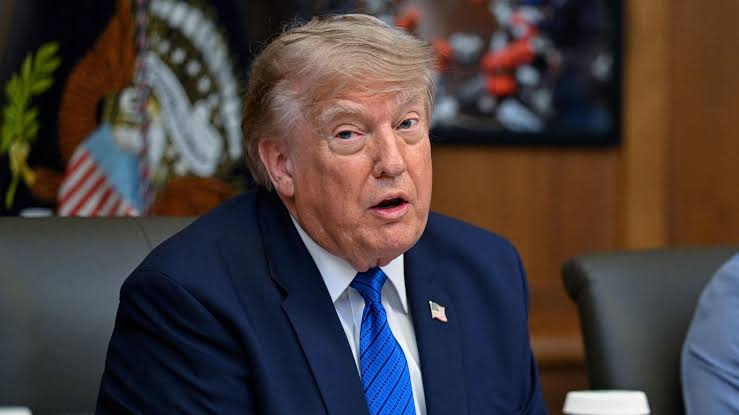
President Donald Trump announced late Tuesday that he was pausing planned 50% tariffs on Canadian imports for three days, saying the delay would give negotiators time to finalize the paperwork on a trade agreement both governments have reportedly reached.
Writing on Truth Social just before a midnight deadline, Trump said the tariffs scheduled to take effect the following morning had been paused for three days because Canada and the U.S., subject to finalizing documents, had reached a deal. He offered few specifics on the substance of the agreement itself.
What stood out most in Trump’s announcement was his suggestion that the long-dormant Keystone XL pipeline, the Alberta-to-Nebraska project canceled during Joe Biden’s administration, could be revived as part of the broader deal.
Trump wrote that the pipeline, “long ago killed by Sleepy Joe Biden,” might be “awoken from the grave.” He did not explain how or when such a revival might unfold, and it remains unclear whether he was referring to concrete steps already underway or a broader ambition for the project.
Notably, this is not the administration’s first pipeline-related move this year. In April, Trump approved the separate South Bow-Bridger project, which could reuse pipe originally intended for Keystone XL, though that venture follows a different route and still faces regulatory and commercial obstacles.
To underscore the point, the president shared an AI-generated image of himself pulling an oil pipeline from the ground, complete with a gravestone reading “Buried by Biden.”
The tariffs Trump paused stemmed from an order he signed targeting a range of Canadian goods, including wine, dairy, cement, furniture, and ice hockey gear.
To impose them, the administration invoked Section 338 of the Tariff Act of 1930, a rarely used Depression-era provision allowing tariffs of up to 50% on countries deemed to be discriminating against U.S. goods, which would have been the first-ever use of that authority.
The White House accused Canada of discriminating against American cars, alcohol, and dairy products.
Trade officials pointed to Canada’s own retaliatory measures as justification. Provincial bans on American alcohol in particular became a major sticking point in negotiations, with Trump officials repeatedly noting that Canada and China were the only two countries to retaliate against U.S. tariffs rather than negotiate.
U.S. Trade Representative Jamieson Greer had defended the tariffs days earlier, saying Washington would not tolerate retaliation and expressing hope that Canada would take a more conciliatory approach.
Canadian Prime Minister Mark Carney struck a notably more measured tone than his American counterpart. In an official statement, Carney said substantial progress had been made, though important work remained.
Carney indicated the tariff postponement would run through the end of the day Friday. Canadian negotiators, for their part, stayed in Washington through the weekend and into Tuesday for the eleventh-hour talks, after Trump and Carney had spoken earlier in the week without reaching a breakthrough.
Beyond scrapping the Section 338 tariffs entirely, Canadian officials were also pushing to lower separate Section 232 tariffs on industrial products such as steel and aluminum, according to Canadian and other reporting.
Business groups had warned of significant fallout had the tariffs taken effect. The U.S. Chamber of Commerce cautioned that higher tariffs would damage both economies, raise costs for American families, disrupt supply chains, and put at risk millions of American jobs tied to North American trade.
The Office of the U.S. Trade Representative offered a preview of what the eventual agreement might include, saying it would cover comprehensive market access for American goods, economic security commitments, digital trade alignment, and provisions to protect U.S. workers alongside Canadian partners.
For now, both sides have a three-day window through Friday to turn what Trump calls a done deal into a signed one. Whether that window also reopens the door for Keystone XL remains, like much of the agreement’s fine print, an open question.
WHAT YOU SHOULD KNOW
Trump has paused the 50% tariffs on Canadian goods for three days, not canceled them, while both sides rush to finalize a trade deal that remains undocumented and unconfirmed by Canada.
The real story to watch isn’t the tariff pause itself, but whether the “DEAL” actually materializes by Friday’s deadline; if it doesn’t, the tariffs are back on the table.
Keystone XL’s revival is being floated as a bargaining chip, but with zero concrete details on how or when to treat it as political theater until proven otherwise.