Travellers passing through Nigeria’s major airports are once again bearing the brunt of a long-simmering turf war over who gets to ferry them home, and this time, the fallout is hitting their wallets and their patience in equal measure.
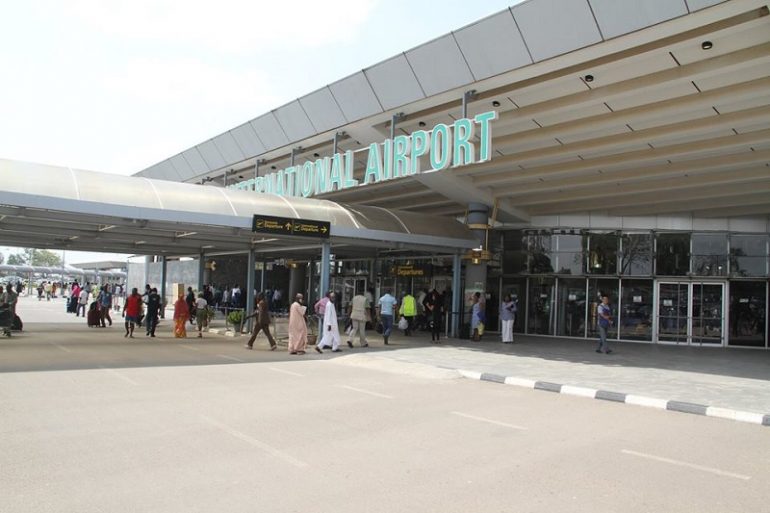
The Federal Airports Authority of Nigeria (FAAN) has moved to suspend ride-hailing operations by Bolt within its terminals, effectively squeezing out one of the most affordable transport options available to passengers arriving at some of the country’s busiest gateways.
The directive, issued by FAAN’s Director of Commercial and Business Development, Adebola Joy Agunbiade, ordered the company to cease all commercial activity at FAAN-managed airports “with immediate effect,” pending the finalization of a new concession agreement.
This is hardly the first time e-hailing operators have found themselves at odds with the airport authority. The relationship dates back to 2022, when FAAN first opened a framework allowing ride-hailing companies to operate from designated parking areas within its premises.
Bolt was the only company to complete that process, securing a concession that came bundled with a host of conditions: drivers were required to pay steep access fees, don Bolt-branded uniforms, undergo biometric verification, and obtain police character certificates before earning security clearance from the Directorate of Aviation Security.
Those terms proved unpopular almost from the start, with drivers repeatedly complaining about the cost and bureaucracy involved in simply picking up a fare.
Now, with the concession agreement due for renewal and reports suggesting Bolt itself has grown lukewarm on the arrangement’s commercial value, FAAN has pulled the plug entirely, insisting that no operator may run commercial activities on its premises without a properly executed agreement in place.
For passengers, the immediate consequence is a shrinking pool of transport choices at the exact moment they need one most: after a long flight, luggage in hand, with few good options left beyond the airport’s own taxi fleet.
Those government-approved taxi operators have long been accused of charging premium, often exorbitant fares a grievance that fuelled the original demand for ride-hailing access in the first place.
With Bolt sidelined and Uber never having secured a comparable concession of its own, many travellers now find themselves funnelled back toward the very taxi arrangement they had hoped to avoid.
The timing compounds an already difficult year for airport users. The suspension lands against the backdrop of FAAN’s broader push to overhaul ground transport standards, including a controversial hike in the operational tariff charged to airport cab operators, from ₦500 to ₦1,500, and a looming October 2026 deadline for taxis to upgrade to newer, air-conditioned vehicles.
Passengers have also weathered a bruising rollout of FAAN’s cashless payment policy earlier this year, which triggered hours-long gridlock at terminal tollgates before being partially suspended.
FAAN maintains that its actions are about enforcing regulatory compliance, not punishing travelers, and that operations will resume once Bolt’s concession paperwork is finalized.
But the episode revives a debate that has trailed Nigerian aviation authorities for years: how to balance airport security and commercial interests against the basic expectation that passengers can get a fair, affordable ride home.
For now, that balance has tipped decisively against the travelling public. Until a new agreement is signed and there is no firm timeline for that, passengers moving through Nigeria’s federal airports will have to make do with fewer options, longer waits, and higher fares.
WHAT YOU SHOULD KNOW
FAAN suspended Bolt’s airport operations over an unresolved concession agreement, and with Uber never having secured similar access, travellers are now largely left with the airport’s own taxi operators, the pricier option riders were trying to avoid in the first place.
The suspension stays in effect until Bolt finalises new terms with FAAN, with no confirmed timeline for resolution.