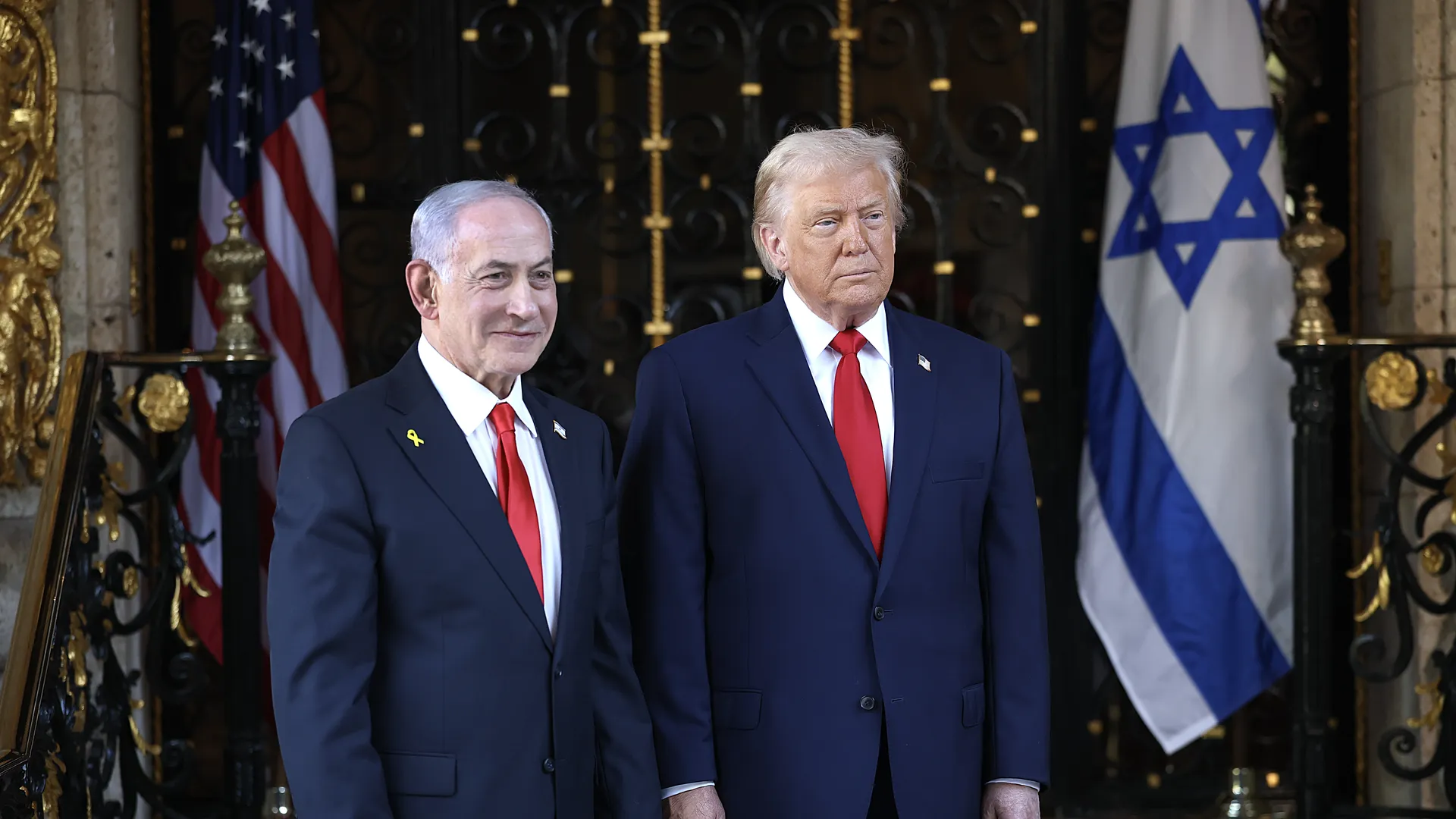
Israeli Prime Minister Benjamin Netanyahu has publicly broken with Washington over the future of Gaza, telling his cabinet on Sunday that Israel will not withdraw a single soldier from the territory until Hamas hands over its weapons for good, not as a symbolic gesture, but as a verified, complete disarmament.
“Israel rejects the 15-point document,” Netanyahu declared at the opening of the weekly cabinet session, according to multiple outlets present. “The military will not make any withdrawal until Hamas is truly disarmed and will continue to thwart threats against our forces and citizens.”
The comments mark the most direct Israeli repudiation yet of a peace framework that President Donald Trump has repeatedly held up as one of his signature foreign-policy achievements.
Netanyahu’s remarks come just over a week after Trump said his Board of Peace had reached what he called a historic agreement with Hamas to give up its weapons.
The 15-point roadmap was published on July 31 and envisioned Israel’s withdrawal from Gaza and Hamas’s disarmament unfolding together, in phases, rather than requiring full Hamas disarmament as a precondition for any Israeli pullback.
That sequencing is precisely what Netanyahu now says he cannot accept. “We are talking about genuine disarmament, not a fictitious one,” he told ministers, underlining that Israel considers cosmetic or partial handovers of weaponry insufficient to justify a troop drawdown.
Netanyahu was careful to frame the rupture as a matter of ongoing negotiation rather than a final break. “We are now discussing this with the Americans. They have ideas, some of which are acceptable to us and some are not, and we know how to stand up to those things,” he said.
He added a pointed aside about Israel’s willingness to act independently of its closest ally when it judges its security to be at stake, saying Israel would “stand our ground even against our best friends when necessary.”
The friction is playing out against a backdrop of domestic political pressure. Netanyahu is currently fighting for his political survival ahead of elections set for October, with the trajectory of both the Gaza and Iran conflicts likely to prove decisive.
His hardline finance minister, Bezalel Smotrich, welcomed the rejection, writing online that he was pleased the prime minister had responded to pressure from the right and “clarified” Israel’s position unequivocally, according to reporting cited by NBC News.
Netanyahu also used the moment to reaffirm a separate, long-standing red line, telling ministers that there would be no Palestinian state as long as he remains prime minister.
For its part, Hamas insists it has not walked away from the process. In a statement published on Telegram, the group said it remained committed to fully implementing the plan and called on mediators and guarantor countries to prevent any violations that could derail it.
But Hamas has consistently tied any handover of heavy weapons to reciprocal Israeli steps, an end to strikes and a pullback to the so-called “yellow line” established under last October’s ceasefire, a position Israeli officials have dismissed as unrealistic given the scale of disarmament they are demanding.
The stakes attached to failure are steep. The overall death toll in Gaza since October 2023 stands at more than 73,000, with over 174,000 wounded, underscoring why mediators and Washington alike are anxious to see the ceasefire evolve into something more durable rather than collapse.
WHAT YOU SHOULD KNOW
Trump’s plan pairs Israeli withdrawal with phased Hamas disarmament, while Netanyahu now demands full, verified disarmament before any troop pullback.
This gap, sharpened by Netanyahu’s election pressures and Hamas’s counter-conditions, is what threatens to derail the ceasefire, with over 73,000 already dead; the cost of failure is measured in lives, not just diplomacy.