The Confederation of African Football (CAF) has become the latest and most measured voice in the growing storm over FIFA’s proposal to bring private investors into ownership of its flagship competitions, including the World Cup.
In a statement released Wednesday evening, CAF said its president, Dr. Patrice Motsepe, would convene the confederation’s Executive Committee next week specifically to pore over the details of the newly unveiled FIFA Forward Enterprise (FFE) initiative.
The continental body stopped short of criticizing the plan outright, instead framing its response as part of an ongoing consultation process it intends to pursue “in accordance with CAF and FIFA’s regulations and established procedures.”
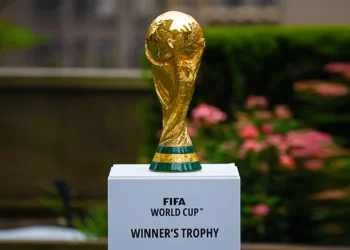
The proposal at the center of the controversy was announced by FIFA on Tuesday. Under the plan, football’s governing body would spin off a commercial subsidiary, the FFE, to oversee its most lucrative properties, among them the men’s and women’s World Cups and the Club World Cup.
FIFA intends to retain majority control but would sell minority, non-controlling stakes to a select group of long-term investors. The target: raising as much as $4.2 billion, based on a valuation that pegs the new entity at roughly $20 billion.
FIFA has sweetened the pitch to its 211 member federations with direct financial incentives. Should the plan gain approval, each federation would reportedly receive a one-off payment described in some reports as $20 million, though other accounts on the plan’s rollout have cited figures as high as $40 million tied to a September 19 deadline for federations to back the sale.
Federations would also see their FIFA Forward funding allocation for the 2027–2030 cycle rise from $8 million to $20 million.
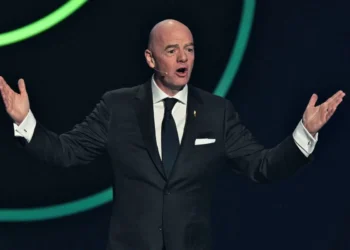
FIFA president Gianni Infantino has championed the initiative in unusually bold terms, casting it Wednesday as a chance to “turbocharge the development of the game globally.” Reporting elsewhere has suggested Infantino himself could take on a commissioner-style role within the new entity once his current FIFA presidency concludes.
But the reaction from much of the rest of the football world has been sharply different from CAF’s cautious, cooperative tone. UEFA has been openly hostile, describing the plan as crossing a line footballing institutions should never cross, and its officials have convened emergency meetings to coordinate a response.
Several leading European federations and European Union officials have voiced similar alarm, framing the move as a dangerous escalation in the commercialization of the sport, with pointed concerns about conflicts of interest given Infantino’s potential future role in the very entity being created.
CONCACAF and the Asian Football Confederation have raised a related but distinct objection: that FIFA went public with the plan before securing buy-in from its full membership, undermining the very consultation process the governing body claims to be running.
Football Australia, for its part, has asked FIFA for more time and detail before staking out a position, saying it wants to weigh the strategic, commercial, and governance implications before responding.
CAF’s comparatively conciliatory posture and some observers have noted the confederation is regarded as one of Infantino’s most reliable bases of support, setting it apart from confederations pushing back hardest against the sale.
In its statement, CAF said it remains “committed to continuing to consult and work together with its Member Associations, FIFA, other Football Confederations, and stakeholders in support of increasing financial and other resources for the development and growth of football in Africa and worldwide.”
Whether that spirit of cooperation survives contact with next week’s Executive Committee meeting and whether it puts CAF at odds with a UEFA-led opposition bloc may become one of the more consequential subplots in what is shaping up to be one of the most contentious governance battles in FIFA’s modern history.
WHAT YOU SHOULD KNOW
FIFA wants to sell minority stakes in the World Cup and its other flagship events to private investors, raising to $4.2 billion at a $20 billion valuation, with member federations getting cash payouts in return for their backing.
UEFA and other major confederations are fighting the plan, warning it commercializes the sport and creates conflicts of interest, but CAF, seen as a key Infantino ally, is taking a softer “wait and assess” approach rather than opposing it outright.
The real story to watch is this split: whether football’s governing bodies stay united against the sale, or whether CAF’s cooperative stance helps FIFA push the deal through despite the backlash.