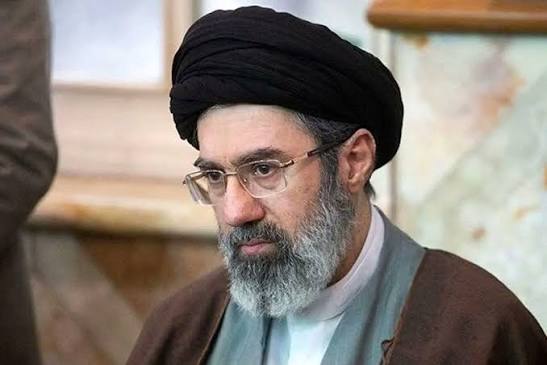
Iran’s army spokesman delivered a pointed warning to Washington on Sunday, cautioning that renewed American military action against the Islamic Republic would drag the wider Middle East deeper into conflict, just as Israeli Prime Minister Benjamin Netanyahu prepares to travel to the US capital.
Speaking to state television, army spokesman Mohammad Akraminia accused Israel of trying to manipulate US decision-making and cautioned that continued American strikes would cause the conflict to spread geographically. His remarks came after a second consecutive night without US strikes on Iran.
Akraminia pointed to the Bab al-Mandab Strait, at the mouth of the Red Sea, as evidence the conflict has already metastasized beyond Iran’s borders, a reference to the recent clash between Yemen’s Houthi movement, long backed by Tehran, and Saudi Arabia.
He went further, asserting that Iranian-aligned operations now stretch from American installations in Jordan to nations ringing the Persian Gulf, and said Tehran was ready for whatever scenario unfolds next.
The spokesman characterized Washington’s position in the region as precarious, suggesting the Trump administration is now searching for a fresh approach.
The renewed rhetoric follows a period of on-again, off-again de-escalation. The United States had resumed attacks on Iran in an effort to end Tehran’s control of the strait, following a June memorandum of understanding that had briefly eased tensions.
Diplomatic efforts have continued in parallel: Iranian Foreign Ministry spokesman Esmaeil Baqaei said several rounds of talks were held in Tehran on Friday and Saturday between Iranian and Omani deputy foreign ministers, focused on securing safe passage for shipping through the strait while respecting both nations’ sovereignty.
Netanyahu’s trip to Washington, planned for Tuesday, is set to combine a meeting with President Donald Trump with attendance at the funeral of Senator Lindsey Graham, a longtime ally of Israel.
Netanyahu’s office said he would meet Trump at the White House on Tuesday and depart for Washington on Monday. The two leaders have already met six times since Trump returned to office, most recently on February 11 in Washington, though friction between them over the conduct of the Iran war has occasionally become public.
Akraminia’s comments underscore Tehran’s strategy of signaling deterrence ahead of high-level US-Israel talks, using state media to warn that any escalation will not stay contained.
With backchannel diplomacy in Oman running alongside intermittent strikes, the coming days and Netanyahu’s Washington visit in particular are likely to be closely watched as a bellwether for whether the fragile truce holds or the region tips further into open conflict.
WHAT YOU SHOULD KNOW
Iran is signaling that any US strikes going forward won’t stay contained to Iran itself; the conflict has already spread to the Bab al-Mandab Strait and now threatens US positions across Jordan and the Persian Gulf.
This warning lands at a delicate moment, with Washington and Tehran quietly negotiating in Oman even as strikes continue on and off, and with Netanyahu about to sit down with Trump.
The region is one misstep away from a much wider war, and this week’s Washington meeting could tip it either way.