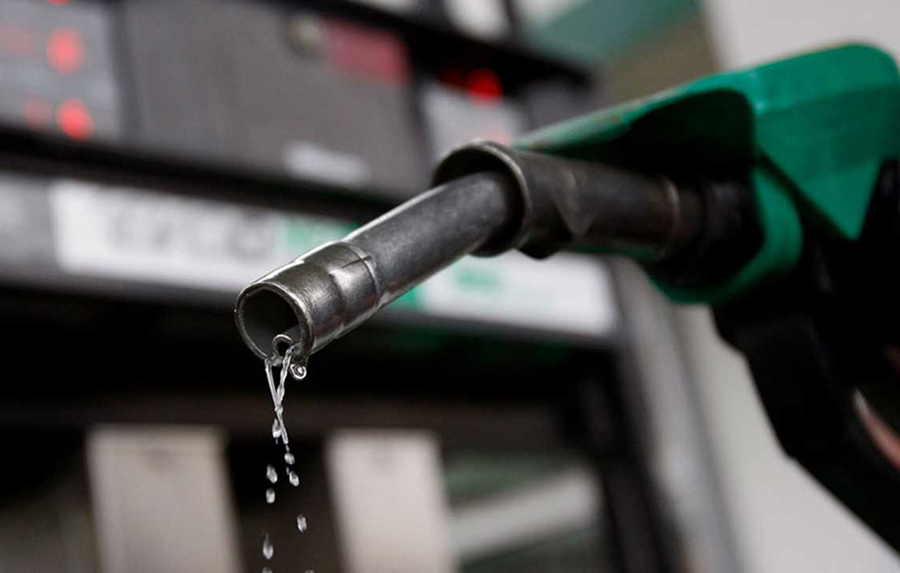
Transport fares have started increasing in several parts of Nigeria as the pump price of Premium Motor Spirit (PMS), also known as petrol, climbed to as high as ₦1,400 per litre following a fresh rise in global crude oil prices.
The latest increase has raised concerns among commuters, commercial drivers and small business owners, who fear it will further worsen the country’s rising cost of living.
The increase follows a surge in international crude oil prices, with Brent crude climbing above $100 per barrel amid renewed tensions in the Middle East and concerns over possible disruptions to global oil supply.
Loading data from petroleum marketers showed that ex-depot petrol prices also increased in Lagos, Warri and Calabar.
In Lagos, A.A. Rano raised its ex-depot price from ₦1,275 to ₦1,279 per litre, while African Terminal, Ascon, Gulf Treasure, Integrated and T.Time increased their prices to ₦1,275 per litre.
Aiteo, Heyden and Nipco maintained their prices at ₦1,275 per litre, while Emadeb reduced its price slightly from ₦1,278 to ₦1,274 per litre.
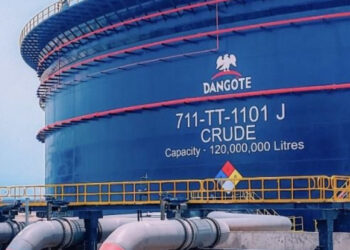
Dangote Petroleum Refinery also resumed gantry loading of petrol in naira after suspending the service for one week. However, the refinery increased its ex-depot price from ₦1,075 to ₦1,215 per litre, representing a ₦140 increase.
The refinery had suspended both gantry and coastal loading on July 15 after introducing a dollar-based pricing system for refined petroleum products. It explained that the temporary switch to dollar sales was due to challenges in accessing enough crude oil under the Federal Government’s naira-for-crude arrangement.
Under the temporary pricing system, petrol sold for $0.779 per litre, diesel for $1.087 per litre and Jet A1 aviation fuel for $0.942 per litre.
The latest fuel price increase has sparked frustration among many Nigerians, who complained that transport fares rise immediately whenever petrol becomes more expensive but rarely come down when global crude oil prices fall.
Before the latest Middle East crisis, Brent crude had traded around $70 per barrel. Despite that decline, petrol prices in Nigeria remained above ₦1,000 per litre.
Although the Federal Government had earlier met with oil marketers and other stakeholders to ensure local fuel prices reflected falling global crude prices, many residents said they saw little or no reduction before the latest increase.
In Abuja, residents said transport costs now consume a significant part of their monthly income.
A civil servant, Grace Okeke, said, “My salary has not changed, but I now spend much more just getting to work and back. It is becoming impossible to survive in Abuja.”
Another resident, Musa Ibrahim, said the increase would affect food prices and other essential goods.
“Transportation affects everything. Farmers, traders and transporters will simply transfer the additional cost to consumers. Ordinary Nigerians are the ones paying the price,” he said.
Commercial drivers also expressed concern over the frequent changes in fuel prices.
A taxi driver, Emmanuel Ujah, said, “You don’t know what petrol will cost tomorrow. That uncertainty affects our business and our families.”
Another driver, Ganiyu Jide, added, “If we don’t adjust transport fares, we cannot maintain our vehicles or even feed our families.”
While transport fares have not increased uniformly across Abuja, many commuters said they now pay between 20 and 40 per cent more on some routes than they did a few weeks ago.
In Lagos, some transport operators have started increasing fares on busy routes, although competition among commercial bus operators has prevented a general increase across the state.
Fuel prices also vary among filling stations depending on their location and supply source, creating uncertainty for transport operators who often buy petrol several times a day.
In Ibadan, transport fares have remained relatively stable despite petrol selling between ₦1,260 and ₦1,300 per litre. BOVAS sold petrol at ₦1,260 per litre, while Amazing Filling Station sold it at ₦1,300.
Commercial driver Kamoru Iyanda said, “It is difficult to adjust fares every time because passengers cannot afford it. Sometimes we absorb the losses.”
Another driver, Amoo Saheed, said unstable fuel prices have continued to reduce the earnings of transport operators.
In Ilorin, several filling stations increased their prices by between ₦35 and ₦85 per litre. AP sold petrol at ₦1,290 per litre, BOVAS and Abanik at ₦1,260, NIPCO at ₦1,300, NNPCL stations at ₦1,305, Optimal at ₦1,255, External at ₦1,298, Shafa and Atgris at ₦1,300, Total at ₦1,285 and Olak at ₦1,260 per litre.
Residents warned that the increase would affect transport fares and the prices of food and other goods.
One resident, Ola Yemi, said, “It’s very disturbing, and some of the policies of this government are really disappointing. I am beginning to think seriously that it is because of the forthcoming election. I believe they are trying to raise enough funds without considering the condition of the masses.
“Initially, we were told that the increase was because of the tension in the Middle East, but the situation appears different now.”
In Kaduna, petrol was selling for about ₦1,350 per litre after dropping below ₦1,200 only a few weeks earlier.
Commercial driver Hassan Ya’u Kanti said, “A few days ago we bought fuel at about ₦1,190. Now it is ₦1,350. We don’t know what tomorrow will bring.
“We are only trying to survive.”
In Adamawa State, NNPCL stations sold petrol at ₦1,310 per litre, while AA Rano, Eterna and other independent marketers sold between ₦1,360 and ₦1,370 per litre.
The Commercial Manager of Adamawa Sunshine Transport Company, Aminu Muhammad, said, “We don’t rush into increasing transport charges. We usually monitor developments for several weeks before taking any decision.”
In Kano, transport fares have remained largely unchanged despite higher fuel prices. Tricycle operators said they were waiting to see whether petrol prices would stabilise before increasing fares.
A tricycle operator, Hayatu Usman, said the latest increase was not enough to justify an immediate fare hike.
A Bayero University Kano student, Mujahid Aminu, also confirmed he still paid ₦300 for his daily journey from Zawaciki to the university’s New Campus.
In Maiduguri, independent filling stations sold petrol between ₦1,370 and ₦1,390 per litre.
The increase also affected inter-state transport, with fares from Maiduguri to Kano rising from ₦20,000 to ₦25,000.
The Chairman of the Independent Petroleum Marketers Association of Nigeria (IPMAN) in Borno State, Mohammed Kuluwu, said fluctuating prices were making many marketers reluctant to buy fuel.
“Sometimes you buy at a high price only for prices to fall before the product reaches Maiduguri. Many marketers are now afraid to buy,” he said.
Small business owners also expressed concern over the rising cost of petrol.
A barber, Chinedu Nwafor, said, “If this continues, I will have no option but to increase the prices of my services.”
An energy law expert at the University of Lagos, Professor Dayo Ayoade, said the increase reflects the realities of Nigeria’s deregulated petroleum market.
He explained that local fuel prices now depend largely on international crude oil prices and exchange rates.
According to him, “When price of crude oil is high, that price will be passed on to consumers. You can see that Dangote at one point was talking about Nigerian marketers paying for its products in dollars because the vast majority of its expenditure is in dollars and it’s spending a lot of money to import crude oil into Nigeria. This means that the crude oil for Naira has, I don’t want to say failed, but it has been of limited use to Dangote refinery.”
He added, “As such, we find that the exposure of our local PMS markets to the vulnerabilities of an oil shock and increasing prices due to the US-Iran war will be ongoing. So long as the war continues, the price will go up and Nigeria will be unable to protect itself against that higher cost.”
Ayoade also said, “The Petroleum Industry Act provides for a market price, so it’s the market that now determines the price in Nigeria. Unfortunately, the federal government and NMDPRA have limited capacity to intervene and insulate consumers from crude oil.
“One way we could have done it is to expand Naira for crude, but if you go and check, Nigeria has mortgaged the overwhelming majority of its crude oil cargoes for cash and because it has done this, the amount of barrels available is so small and that it’s embarrassing.”
Industry analyst Abdullahi Shehu urged the Federal Government to subsidise crude supplied to Dangote Refinery and other local refineries.
“He can subsidise ₦700 per litre to all the local refineries so Nigerians can buy petrol at ₦500 per litre. This is better for Nigerians than seeing the savings from subsidy removal being looted mercilessly,” he said.
Economist and oil and gas expert, Dr Marcel Okeke, said the government’s economic reforms had not improved the welfare of Nigerians.
“The truth is whatever you claim you have achieved and it doesn’t reflect in the well being, welfare and standard of living of the people, what are you talking about?
“Many Nigerians have been made worse off by the reforms. Look at the situation of petrol alone, as of May 2023, the price per litre was below N200 per litre. At that time it came to N800. But since the Middle East war started, everything has gone haywire, moving around N1,300 and N1,400 and now it is going to N1,500.”
He also alleged that the government’s failure to revive local refineries had encouraged continued dependence on imported fuel.
“They want to continue the importation so as to continue the super profits they are making,” he said.