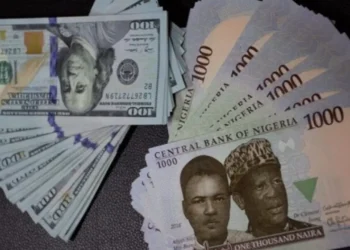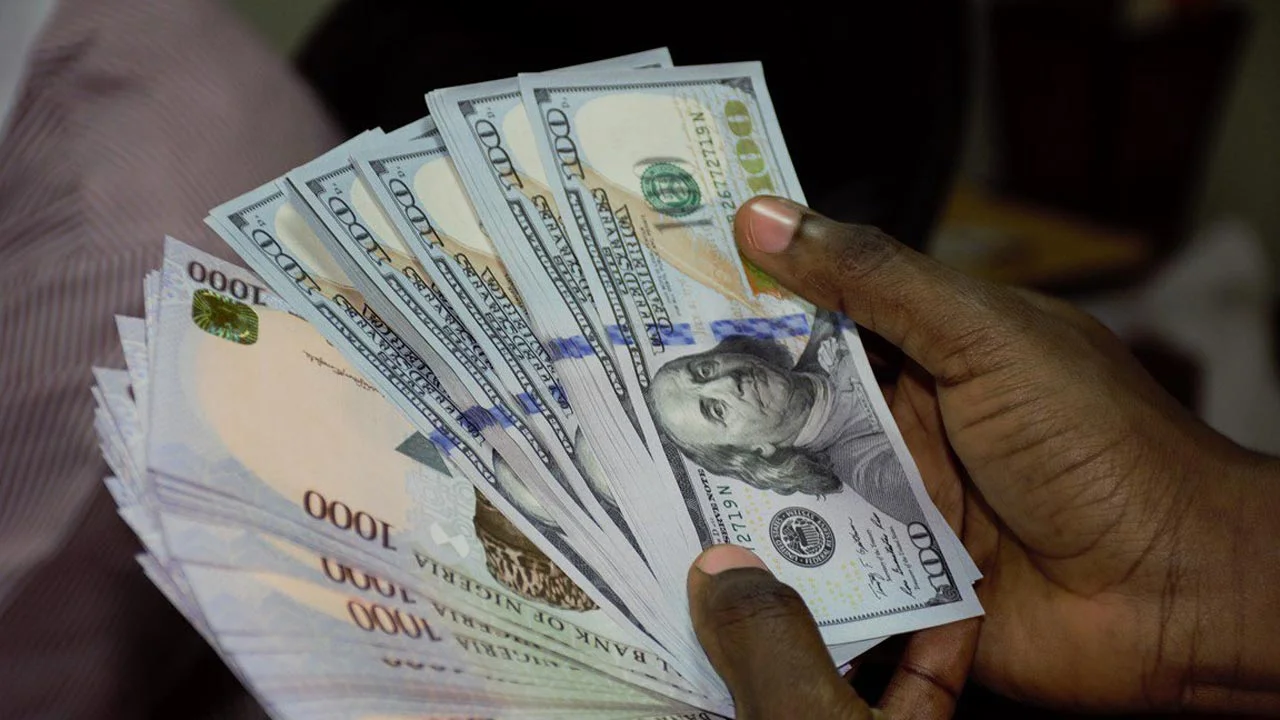
The Nigerian naira traded at approximately ₦1,382.33 per United States dollar on the official Nigerian Foreign Exchange Market (NFEM) on Monday, extending a run of relative calm that has characterized the currency’s performance in the formal market in recent weeks.
According to data drawn from the Central Bank of Nigeria’s NFEM platform, the naira’s opening position this week represents only a modest movement from the ₦1,379.62 per dollar rate recorded in the last published session on Friday, July 10, a shift of roughly ₦2.71, or about 0.2 percent.
The NFEM rate for that Friday session had been reported at ₦1,375.94 per dollar by some tracking outlets, underscoring the small day-to-day variances that occur across different reporting snapshots of the volume-weighted average rate the CBN publishes daily.
The NFEM, introduced as part of the central bank’s broader push to unify Nigeria’s foreign exchange windows and improve price transparency, continues to serve as the benchmark rate for government transactions and formal financial dealings.
The rate is derived as a volume-weighted average and stands as the official exchange rate for the day, a methodology designed to reflect actual trading activity rather than administratively set pegs, a legacy of Nigeria’s earlier, more fragmented multiple-exchange-rate regime.
Zooming out, the currency’s trajectory this month tells a story of gradual, contained depreciation rather than sharp volatility. Earlier in July, the naira had traded closer to the ₦1,367 to ₦1,380 range, with one mid-month reading placing it as low as ₦1,367.29 to the dollar.
The slight softening to ₦1,382 by Monday suggests mild but persistent depreciation pressure, even as the broader pattern remains one of stability compared to the sharp swings Nigeria’s currency markets have experienced in past years.
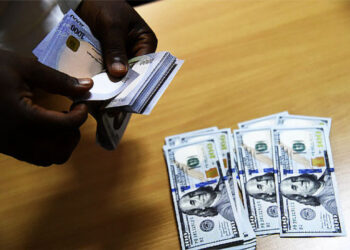
Away from the official window, the parallel market commonly referred to as the black market continued to price the dollar higher, with street rates on Monday quoted at around ₦1,410 for buying and ₦1,425 for selling. That leaves a gap of roughly ₦40–43 between the official and unofficial rates, a premium that has hovered in a similar band through much of July.
This persistent spread points to an enduring reality in Nigeria’s currency landscape: businesses and individuals who cannot access dollars through licensed banks and official channels are still turning to street dealers, sustaining demand and pricing power in the informal segment.
Analysts tracking the market have noted that this gap, while narrower than the chasm that once separated Nigeria’s official and black-market rates during earlier periods of currency crisis, remains a barometer of how much further liquidity reforms need to travel before the two markets fully converge.
Market watchers point to a familiar set of forces shaping the naira’s near-term path: the volume of dollar inflows from crude oil receipts, the health of the country’s external reserves, the pace of CBN interventions in the official window, and broader investor sentiment toward Nigerian assets.
With Nigeria’s economy still heavily reliant on oil earnings to fund its dollar needs, any fluctuation in crude prices or export volumes tends to ripple quickly through to what traders are willing to pay for hard currency both on and off the official platform.
For now, traders and analysts say the coming sessions will likely hinge on whether the central bank maintains its current pace of liquidity support to the official market, which has, for the moment, helped keep the naira on a relatively even keel even as the parallel market continues to price in a persistent, if moderate, risk premium.
WHAT YOU SHOULD KNOW
The naira remains broadly stable in the official market, holding near ₦1,382/$1 with only marginal movement from the previous session, while the parallel market continues to trade at a noticeably higher premium around ₦1,410–1,425/$1.
The persistent ₦40-plus gap between official and street rates is the real story to watch, as it signals that dollar liquidity in the formal banking system still isn’t fully meeting demand, pushing many Nigerians toward informal channels.
Until that spread narrows meaningfully, the “stability” in the official rate tells only part of the picture.