The Senate on Wednesday declined to open its own investigation into the Presidential Foreign Intervention Promotion Council (PFIPC), a body the presidency insists never legally existed but which somehow secured billions of naira in the 2026 federal budget.
The rejected motion came from Senator Suleiman Kawu, representing Kano South under the All Progressives Congress, who rose on a point of order during Wednesday’s plenary.
Invoking Order 9 and Rule 9(c) of the Senate’s 2026 Standing Orders, Kawu sought to compel a sweeping inquiry into the council’s budgetary allocation, its operations, and the swirling scandal that has engulfed it in recent weeks.
Kawu titled his motion “Urgent Need to Investigate the Budgetary Allocation, Operations, and Controversy Surrounding the Purported Presidential Foreign Intervention Promotion Council (PFIPC) to Safeguard the Integrity of the Senate and the Federal Government.”
In presenting it, he described the controversy as a matter of “grave institutional concern,” arguing that the allegations directly threaten the credibility of the National Assembly and its oversight powers.
At the heart of the matter is a striking anomaly: despite the presidency’s repeated denials, the PFIPC was captured in the 2026 Appropriation Act under Budget Code 0111062001, with an allocation of N1,302,978,784 comprising N802,978,784 for personnel costs, N200 million for overhead, and N300 million for capital expenditure.
Kawu noted that although early media reports pegged the scandal at N2 billion, official budget documents put the actual figure at roughly N1.3 billion.
He urged the Senate to condemn what he characterized as administrative lapses, internal collaboration, or possibly fraudulent schemes that allowed a purportedly non-existent agency to be inserted into the national budget and proposed that the Committees on Ethics, Code of Conduct, and Public Petitions, alongside the Appropriations Committee, be mandated to investigate, including tracing whether any funds tied to the budget line had already been released or disbursed.
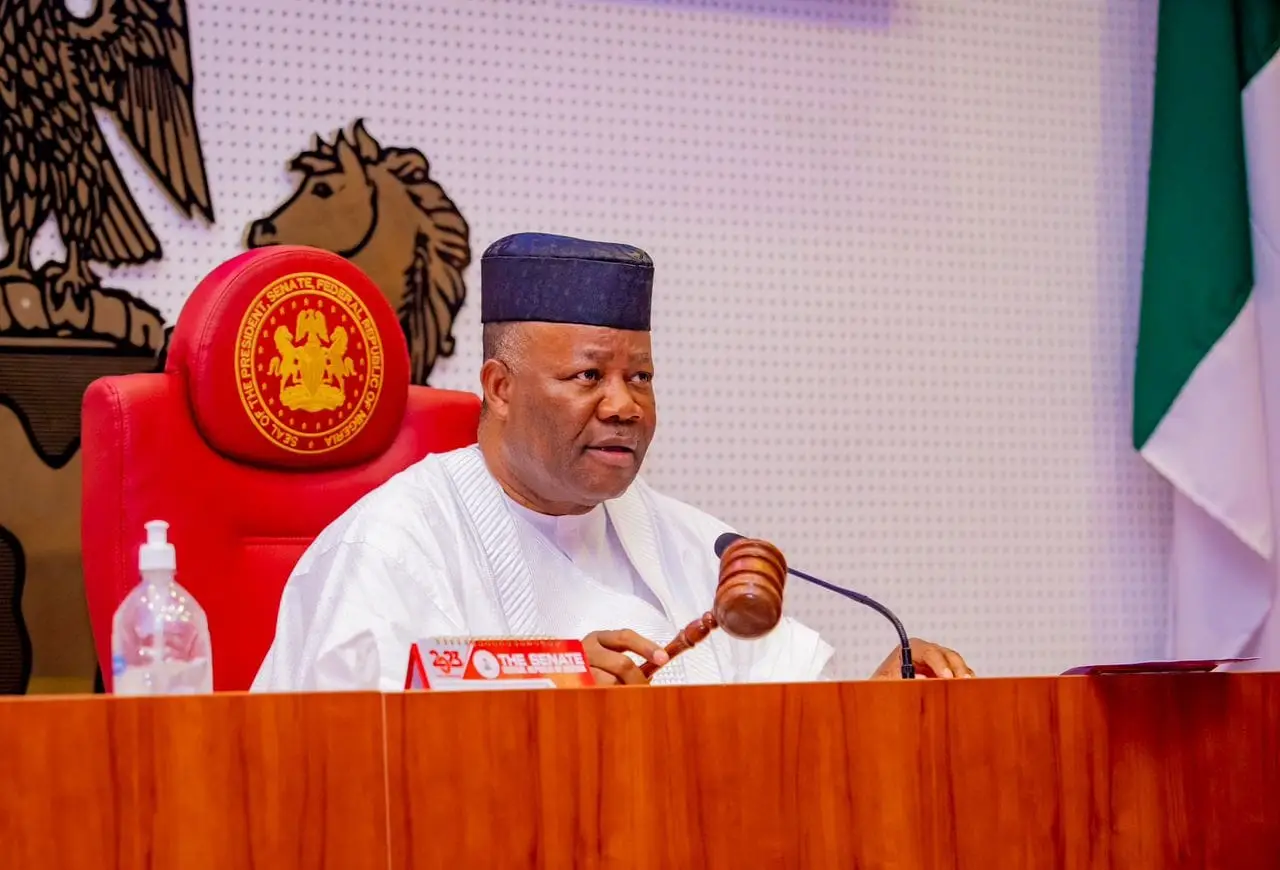
The motion never reached the floor for debate. Deputy Senate President Barau Jibrin, presiding over the plenary, ruled the matter out of order, arguing that the executive arm had already moved to address the scandal.
Jibrin informed lawmakers that President Bola Tinubu had directed the ICPC to investigate the matter and urged the chamber to let that probe run its course rather than open a parallel legislative inquiry.
That directive, issued a day earlier, instructed the anti-corruption agency to submit its findings within 30 days, with the probe expected to cover alleged forged appointment letters and official documents reportedly used by one Adeniyi Adeyemi Mathew, who allegedly presented himself as director-general of the council and falsely claimed to be a presidential appointee.
The ICPC has also been tasked with examining whether the false claim was used to seek official recognition, secure diplomatic support such as visa facilitation, and open multiple bank accounts in the names of purported government agencies using allegedly forged paperwork.
Adeyemi, who has been declared wanted for allegedly posing as director-general of both the PFIPC and a separate “Presidential Executive Advisory Council,” is currently in hiding and denies forging any documents, describing the allegations against him as an attempt to silence him.
He has accused the President’s Chief of Staff, Femi Gbajabiamila, of demanding a 48 percent cut of the N1.3 billion allocation, a claim Gbajabiamila has forcefully rejected.
Gbajabiamila responded by giving Adeyemi a 72-hour ultimatum to retract the allegations or face a N10 billion defamation suit and possible criminal proceedings.
Former Vice President Atiku Abubakar has called on the federal government to launch an independent investigation rather than leave the matter to an ICPC probe ordered by the presidency itself, a suggestion critics say raises questions about the investigation’s independence given that it touches figures close to the president.
Ahead of Wednesday’s vote, Senate spokesperson Yemi Adaramodu had already sought to insulate the chamber from blame, insisting that the N1.3 billion allocation was neither recommended nor inserted by lawmakers, an implicit suggestion that the anomaly originated elsewhere in the budget-preparation chain, possibly within the executive bureaucracy.
For now, the Senate’s position is to wait: lawmakers said they would await the ICPC’s findings before deciding on any further action, leaving unanswered for the moment the central question that has gripped Abuja for weeks: how an agency the government says never existed managed to acquire a functioning budget line, personnel costs, and apparently even bank accounts of its own.
WHAT YOU SHOULD KNOW
A government agency the presidency insists never legally existed still managed to secure an N1.3 billion budget line, complete with staff costs and bank accounts, exposing a serious breakdown in Nigeria’s budget vetting process.
Rather than let the Senate investigate that breakdown itself, lawmakers chose to defer entirely to an ICPC probe ordered by the very presidency now facing scrutiny, leaving the question of accountability and whether any of that money was actually spent unresolved for at least 30 more days.