The Nigerian naira closed Monday’s trading session on a steady footing, extending a run of relative calm that has characterized the country’s foreign exchange market through the opening days of the third quarter.
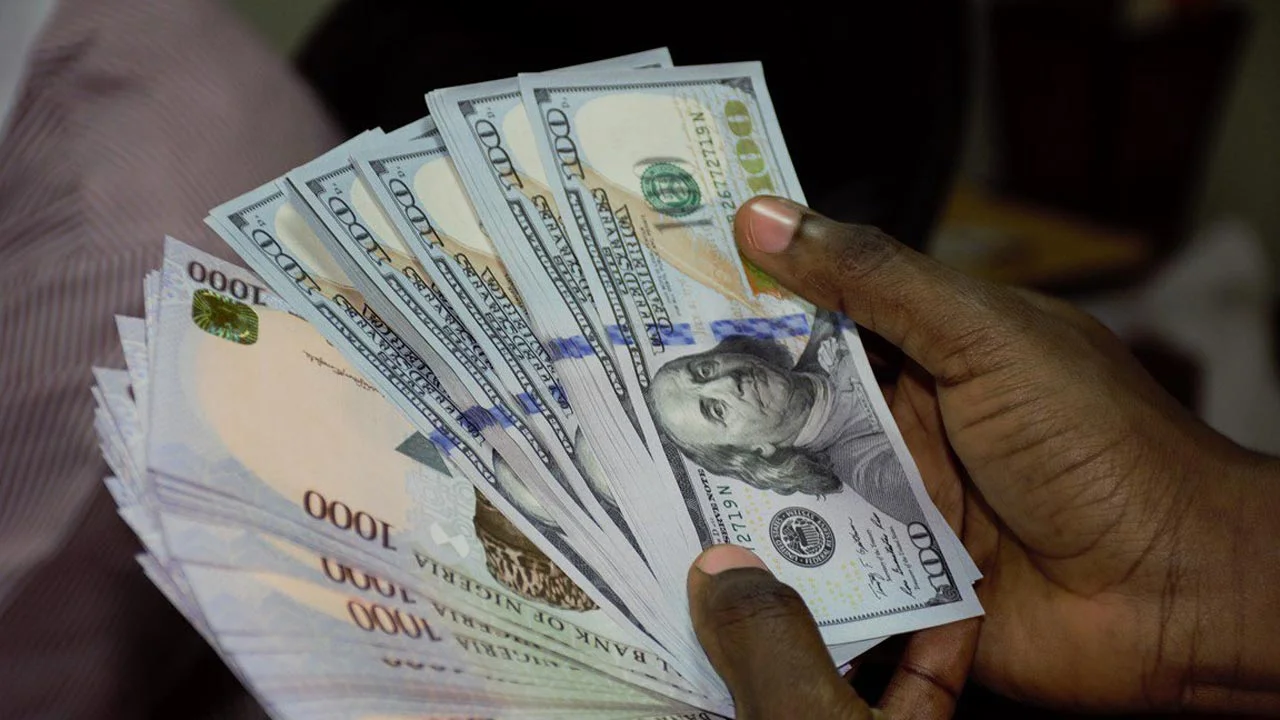
At the official window, the local unit settled at approximately ₦1,370.33 to the dollar, a level that places it comfortably within the tight band it has occupied for much of the past week.
The figure isn’t an outlier. Data tracking the pair over the past several sessions shows the naira fluctuating between a high of 1,390.02 on June 30 and a low of 1,371.11 on July 2, a narrow range by the standards of a currency that, not so long ago, was prone to sharper swings. Monday’s print continues that pattern of consolidation, coming in only marginally softer than the 1,369.62 recorded on July 3.
Zoom out further, and the picture becomes more instructive. Over the past month, the naira has weakened by roughly 0.63%. Yet, it remains up 10.48% over the trailing twelve months, a reminder that beneath the day-to-day noise, the currency has actually strengthened substantially from where it stood a year ago, even as it gives back a sliver of those gains in the near term.
As with every trading day, Monday’s benchmark was derived by the Central Bank of Nigeria using its volume-weighted average methodology, a calculation based on actual completed transactions that pass through the Nigerian Foreign Exchange Market (NFEM) rather than on indicative quotes.
The approach, in place since the CBN’s push toward a more market-reflective pricing regime, is designed to anchor the official rate in real trading activity and reduce the scope for the kind of distortions that plagued earlier iterations of Nigeria’s FX framework.
Away from the official window, street-side dealers were quoting the dollar at around ₦1,400 for sale and ₦1,385 for purchase, figures that track closely with what’s been observed across recent sessions.
Vendor postings gathered from parallel-market platforms this week show quotes clustering in a tight corridor, with sell rates hovering around ₦1,390–1,400 and buy rates in the ₦1,385–1,395 range depending on the dealer and location.
That leaves a spread of roughly ₦30 between the official and black-market rates, a gap analysts have flagged as notably narrow when set against the far wider chasms that once separated Nigeria’s dual exchange rate tracks.
A tight spread of this kind is typically read as a vote of confidence: it suggests fewer market participants feel compelled to seek dollars outside official channels and that liquidity in the formal market is sufficient to meet demand without pushing buyers into the informal economy in large numbers.
The stability didn’t emerge in a vacuum. It follows a sustained period of liquidity management by the central bank and a broader reform push aimed at improving price discovery efforts that have gradually rebuilt confidence in the official market after years of scarcity-driven volatility.
The naira’s position today, hovering in the ₦1,370–1,380 band, sits well within the range forecasters had projected for the currency heading into July, with monthly models pointing to an average settling around similar levels for the month.
For all the encouraging signs, market watchers continue to stress that the parallel market remains inherently fragmented. Rates posted by dealers in Lagos can diverge from those quoted in Abuja or Port Harcourt on any given day, and the numbers can shift within hours depending on localized demand and supply conditions.
Individuals and businesses looking to transact are advised, as ever, to confirm live rates with their bank or a licensed FX dealer before committing funds a caution that matters just as much in a stable market as in a volatile one.
Taken together, Monday’s numbers don’t represent a dramatic turn, but they do reinforce a trend that’s been building for weeks: a foreign exchange market that, while still imperfect, is behaving with a degree of predictability that had been in short supply for much of Nigeria’s recent economic history.
WHAT YOU SHOULD KNOW
The naira’s stability on July 6, trading at ₦1,370.33/$, with only a ~₦30 gap to the parallel market, is the key takeaway.
That narrowing spread is the clearest sign yet that CBN’s liquidity reforms are working and confidence is returning to Nigeria’s FX market. Still, parallel market rates vary by location and dealer, so always verify current rates before transacting.