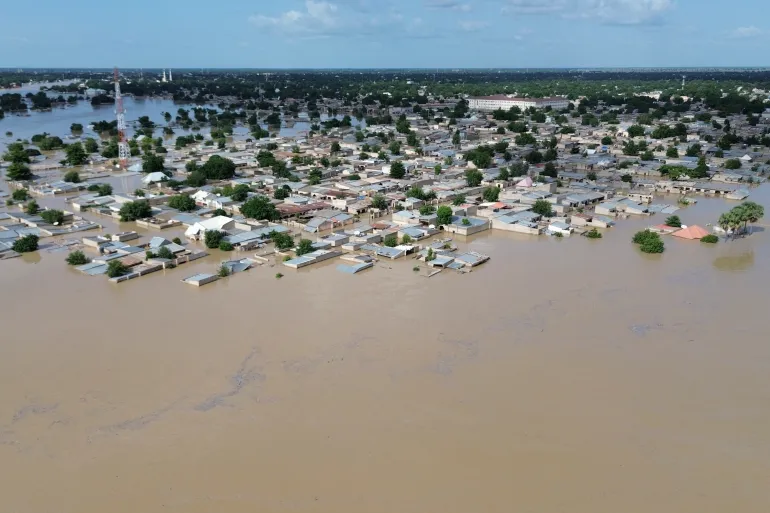
The Nigerian Meteorological Agency has issued a stark warning: the opening days of July could bring a wave of flash flooding capable of disrupting daily life across more than half the country’s states, just as the rainy season shifts into its most intense phase.
NiMet, in a bulletin released on Sunday, cautioned that the combination of an already waterlogged landscape and the seasonal surge in rainfall creates a dangerous setup for sudden, localized flooding between July 1 and 10. The culprit, according to the agency, isn’t simply the rain forecast for the coming days; it’s the rain that has already fallen.
Throughout June, heavy and widespread downpours soaked much of the country, leaving soils in a state the agency describes as heavily saturated. Ground that’s already full of water has nowhere to send fresh rainfall except sideways into streets, drainage channels, and low-lying neighborhoods rather than absorbing it.
With July marking the traditional peak of Nigeria’s rainy season, NiMet says that vulnerability is about to be tested, particularly in urban centers, coastal communities, and areas with inadequate drainage.
The scope of the warning is unusually broad, spanning the north, middle belt, southwest, and south-south alike.
States flagged for elevated flash flood risk include Taraba, Sokoto, Borno, Zamfara, Kebbi, Katsina, Kaduna, Nasarawa, Plateau, Adamawa, Kwara, Kogi, Oyo, Ogun, Lagos, Osun, Ekiti, Delta, Edo, Abia, Imo, Anambra, Enugu, Akwa Ibom, Cross River, Rivers, and Bayelsa—27 states in total, reflecting how far-reaching the country’s flood exposure has become.
NiMet’s advisory paints a picture of cascading disruption rather than an isolated weather event. On the roads, sudden downpours could translate into gridlock, closures, and hazardous driving conditions as visibility drops.
Power and telecom networks are flagged as vulnerable too, with the agency warning of possible outages in affected areas. Aviation operators were also cautioned to watch for reduced visibility during heavy rain.
Beyond the cities, the agency pointed to the toll flooding could take on agriculture, waterlogged farmland, and potential crop losses, as well as physical damage to roads, bridges, and drainage systems that many communities depend on.
Public health officials, meanwhile, were urged to prepare for a possible uptick in waterborne diseases linked to stagnant floodwater and compromised sanitation.
Rather than simply cataloguing risks, NiMet used the advisory to push for immediate, practical steps. Residents were encouraged to keep monitoring official forecasts, clear drains and gutters of debris, secure loose items outdoors, reinforce structures that may be vulnerable, and critically avoid wading or driving through floodwaters, a common cause of flood-related deaths.
The agency also turned its attention to institutions, calling on state emergency management agencies, the National Emergency Management Agency, and community leaders to intensify preparedness and response planning ahead of the anticipated rains.
NiMet closed its advisory with a message aimed less at logistics and more at civic responsibility: that preparedness is a shared task. “An informed community is a prepared community,” the agency stated, urging Nigerians to treat awareness itself as a first line of defense against a hazard that, in recent years, has repeatedly proved costly in lives, property, and livelihoods.
With the peak of the rainy season only just beginning, the coming days will serve as an early test of how well that message translates into action on the ground.
WHAT YOU SHOULD KNOW
The core takeaway from NiMet’s advisory is simple: Nigeria’s soil is already full, and more rain is coming. That combination, not the rainfall alone, is what makes the risk of flash flooding so acute across 27 states this July. Saturated ground can’t absorb fresh downpours, so water will run off fast, hitting roads, homes, farmland, and infrastructure with little warning.
The single most important thing for people to know is this: preparedness now matters more than reaction later. Clearing drains, avoiding floodwaters, and heeding early warnings can be the difference between inconvenience and disaster.
As NiMet puts it, an informed community is a prepared one, and in this case, acting early isn’t just advice; it’s protection.