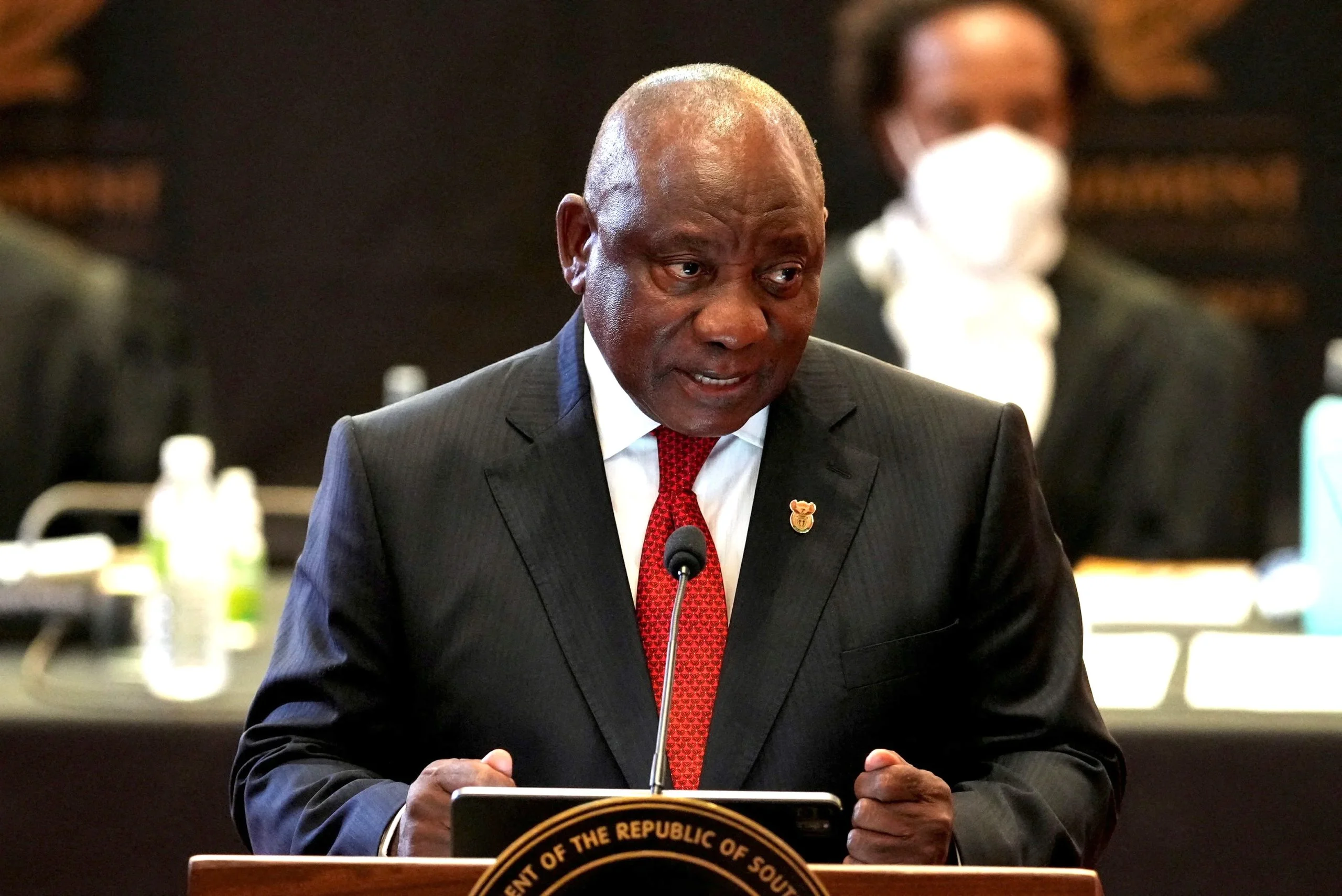
With tensions simmering across the country and thousands of citizens poised to take to the streets, South African President Cyril Ramaphosa stepped before the nation on Monday with a carefully calibrated message: protest if you must, but do so with restraint, dignity, and respect for the law.
In a nationally broadcast address titled “Protest is both a right and a responsibility,” Ramaphosa sought to walk a political tightrope, validating the frustrations of citizens angered by what they describe as an unchecked influx of undocumented immigrants, while simultaneously drawing a firm red line against the vigilante violence and xenophobic attacks that have periodically scarred South Africa’s post-apartheid history.
The protests, scheduled for Tuesday, June 30, have been organized by several civic groupings who argue that the government has been slow and ineffective in managing illegal immigration.
Their grievances touch on issues that resonate deeply with many South Africans: rising unemployment, an already overstretched public healthcare and education system, and what demonstrators describe as the exploitation of porous borders by criminal syndicates.
Ramaphosa did not dismiss these concerns. In unusually direct language for a leader who is often criticized for diplomatic vagueness, he conceded that the country’s immigration system is broken.
“These concerns are real, and they deserve to be heard,” the president stated, in what analysts are likely to read as a significant political acknowledgement, one designed to pre-empt accusations that Pretoria is tone-deaf to ordinary citizens’ daily realities.
Perhaps the most striking passage of Ramaphosa’s address was his invocation of one of apartheid’s most reviled instruments, the pass laws, a system that required Black South Africans to carry documents authorizing their presence in designated areas. The comparison was pointed and deliberate.
“The painful history of the pass laws reminds us why the authority to demand identification and enforce immigration laws belongs to government law enforcement officers acting within the Constitution, not to private individuals,” he warned.
The reference served as a stark reminder of just how quickly immigration enforcement, if left in the hands of private citizens, can slide into racial profiling and mob justice.
Reports in the days leading up to the protests suggested that some groups had already begun circulating messaging encouraging ordinary citizens to stop and question people they deemed “suspicious,” a development that clearly alarmed the presidency.
“Whatever the motivation, taking the law into one’s own hands is vigilantism and has no place in our constitutional democracy,” Ramaphosa said bluntly, adding that such actions represent “a betrayal of the very constitutional order those who commit such acts claim to be defending.”
Beyond the cautionary rhetoric, Ramaphosa outlined a series of measures his administration says are already underway to tighten immigration controls, including reinforced border management, crackdowns on undocumented migrants, and anti-corruption drives targeting officials who have allegedly enabled illegal entry into the country.
Whether those promises will be enough to placate protest organizers remains to be seen. Critics have long argued that successive ANC governments have made similar pledges without meaningful follow-through and that the current wave of public anger reflects years of accumulated frustration with a system widely perceived as both dysfunctional and corrupt.
The president said consultations had been held with traditional leaders, labour unions, business associations, and religious organizations in the lead-up to the protests, many of whom, he noted, had urged tolerance and lawfulness.
That coalition of voices may offer the government some political cover, though it is unlikely to silence the more hardline elements among the demonstrators.
Ramaphosa was equally clear that security forces would be deployed in force and that any criminal conduct, whether looting, assault, or destruction of property, would be met with prosecutions.
“Where there is criminal conduct, those responsible will be held accountable, and the law will take its course,” he said.
South Africa has vivid and recent memories of what can happen when civil unrest spirals beyond control. The July 2021 riots triggered by the imprisonment of former President Jacob Zuma left more than 350 people dead, caused billions of rands in economic damage, and exposed the fragility of the country’s social fabric. The government will be acutely conscious of that precedent as Tuesday’s events unfold.
Ramaphosa also took care to distinguish between undocumented immigrants, whose presence is at the center of the protests’ concerns, and the hundreds of thousands of foreign nationals who reside in South Africa legally.
“They work, study, raise families, invest in our economy, and contribute positively to our society,” he said. “They too are entitled to the protection of our laws and our Constitution.”
It was a necessary clarification, given that episodes of xenophobic violence in South Africa have historically targeted foreign nationals indiscriminately, legal or otherwise, with devastating consequences for communities and for the country’s international standing.
As South Africa prepares to wake up to what promises to be a tense and consequential day, the nation finds itself at a familiar crossroads: between legitimate democratic expression and the ever-present danger of that expression tipping into lawlessness.
Ramaphosa’s address was, at its core, an appeal to South Africa’s better instincts, a reminder that a country that dismantled one of the 20th century’s most oppressive systems through negotiation rather than all-out civil war is capable of resolving its present challenges through dialogue and due process.
“Let us protect both our borders and our Constitution,” he implored, “both our security and our humanity.”
Whether the streets of South Africa’s cities on Tuesday will reflect that aspiration or contradict it remains the defining question of the hour.
WHAT YOU SHOULD KNOW
As South Africa braces for nationwide anti-immigration protests on June 30, President Ramaphosa’s message is unambiguous: demonstrate by all means, but do not cross the line into violence or vigilantism.
The president acknowledges that the country’s immigration system is broken and pledges reform but firmly warns that enforcing immigration laws is the government’s job, not the public’s. His pointed reference to apartheid-era pass laws signals just how seriously the presidency views the risk of mob justice disguised as patriotism.
South Africa is a nation navigating a genuine crisis of immigration, unemployment, and public trust, and Tuesday’s protests will test whether its democracy is strong enough to contain that anger within constitutional boundaries or whether history’s darker chapters are destined to repeat themselves.