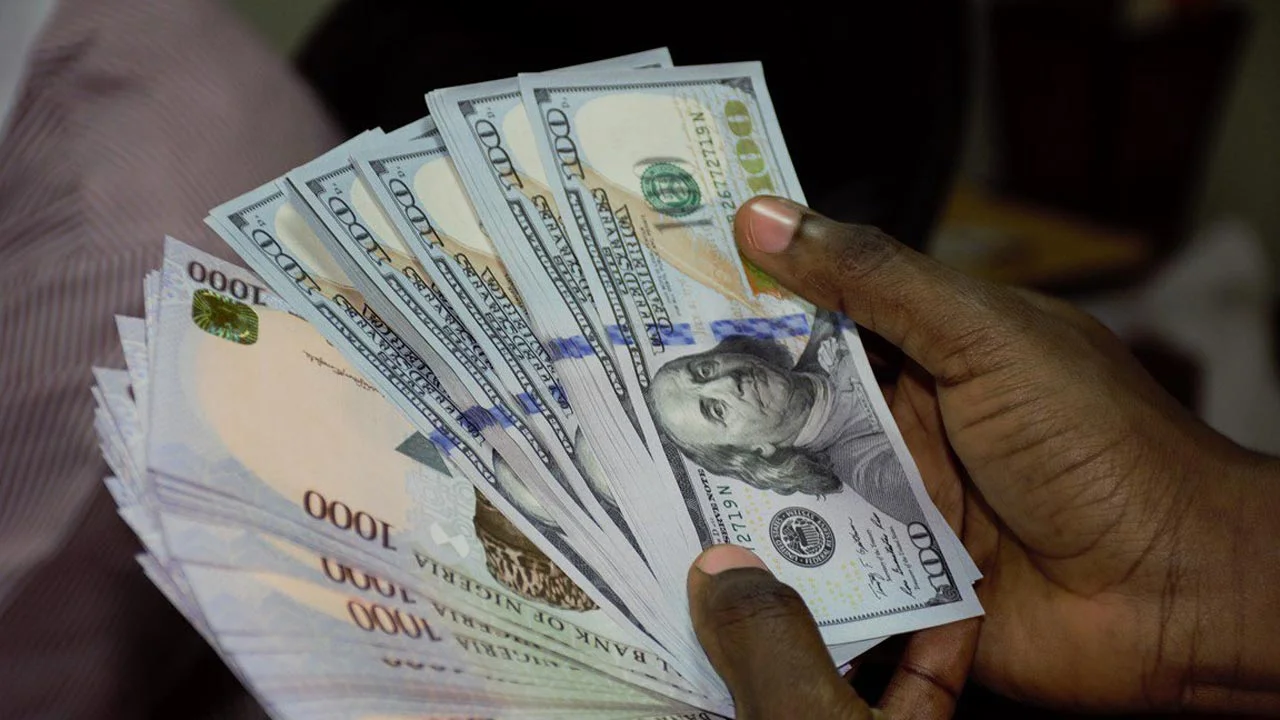
The Nigerian naira maintained a relatively stable footing on Monday, closing at ₦1,379.22 to the United States dollar at the Nigerian Foreign Exchange Market (NFEM), as the closely watched gap between official and parallel market rates held at its narrowest in recent memory.
The figures, released by the Central Bank of Nigeria (CBN), place the official value of $100 at approximately ₦137,922, with $1,000 exchanging for roughly ₦1.379 million, numbers that, while still reflecting the pressures facing Africa’s largest economy, point to a currency finding its footing after years of turbulence.
On the streets and in the bureau de change offices that dot Lagos’s busy commercial districts, the dollar told a slightly different story. In the parallel market colloquially known as the black market, the greenback was being bought at around ₦1,390 and sold between ₦1,400 and ₦1,405, with the final price often depending on the size of the transaction and the seller’s location.
At the average street selling price of ₦1,400 per dollar, those looking to exchange ₦100 were parting with roughly ₦140,000, a premium of ₦21 above the official window. That ₦21 spread, modest by Nigeria’s historically volatile forex standards, is being interpreted by market observers as a sign of cautious optimism.
For anyone who has tracked Nigeria’s foreign exchange crisis over the past decade, a sub-₦25 spread between the official and parallel markets is not a figure to gloss over.
At the height of Nigeria’s forex dysfunction in previous years, the gap between official and black market rates ballooned to hundreds of naira per dollar, a chasm that fueled round-tripping, speculation, and a suffocating squeeze on dollar-hungry businesses and ordinary Nigerians alike.
Currency analysts say Monday’s tight spread reflects a market in the early stages of normalization. Improved foreign exchange liquidity, partly attributed to increased oil revenues, diaspora remittances, and renewed portfolio investor confidence, has helped narrow the arbitrage opportunity that once made the parallel market an irresistible destination for dollar seekers.
“The modest spread we are seeing suggests that ongoing policy interventions are beginning to bite positively,” one Lagos-based forex analyst noted. “When the gap between both markets is this narrow, it reduces the incentive to bypass official channels, and that is exactly what the CBN wants to see.”
The CBN derives it from a volume-weighted average of transactions completed through the official foreign exchange market, a methodology designed to reflect true market pricing rather than administratively fixed rates that plagued earlier exchange rate regimes.
That said, Nigerians transacting across commercial banks, licensed bureaux de change, and various parallel market outlets may encounter slightly different figures on any given day.
Demand and supply conditions can shift rapidly, influenced by anything from global oil prices and CBN interventions to seasonal import demand and geopolitical developments, meaning the rate quoted at a bank branch in Abuja may not be identical to what a bureau de change in Port Harcourt is offering at the same hour.
Monday’s closing rate arrives at a moment when Nigeria’s economic managers are under pressure to sustain reforms that have, in the view of many economists, brought painful but necessary corrections to a currency long accused of being artificially propped up.
Since the CBN unified its exchange rate windows and adopted a more market-reflective pricing mechanism, the naira has experienced significant depreciation but also greater predictability, a trade-off the government has argued is essential to restoring investor confidence and attracting the foreign capital Nigeria desperately needs.
Whether today’s relative calm will hold depends, as it always does in Nigeria’s forex market, on a constellation of factors: oil production levels, dollar inflows, import demand, and the CBN’s willingness to intervene when volatility threatens to spiral.
For now, however, traders, importers, and the millions of Nigerians who watch the exchange rate as a daily barometer of economic health can take modest comfort in a naira that, at least for one more Monday, held its ground.
WHAT YOU SHOULD KNOW
The Nigerian naira closed at ₦1,379.22 to the dollar on Monday, June 29, 2026, with the parallel market rate hovering just ₦21 higher than the official rate, one of the narrowest official-to-black-market gaps in recent times.
This slim spread is the headline figure worth remembering: it signals that Nigeria’s foreign exchange market is stabilizing, driven by improved liquidity and CBN policy reforms.
While rate variations across banks and bureau de change remain normal, the overall picture is one of a currency gradually finding its footing, cautious progress, but progress nonetheless.