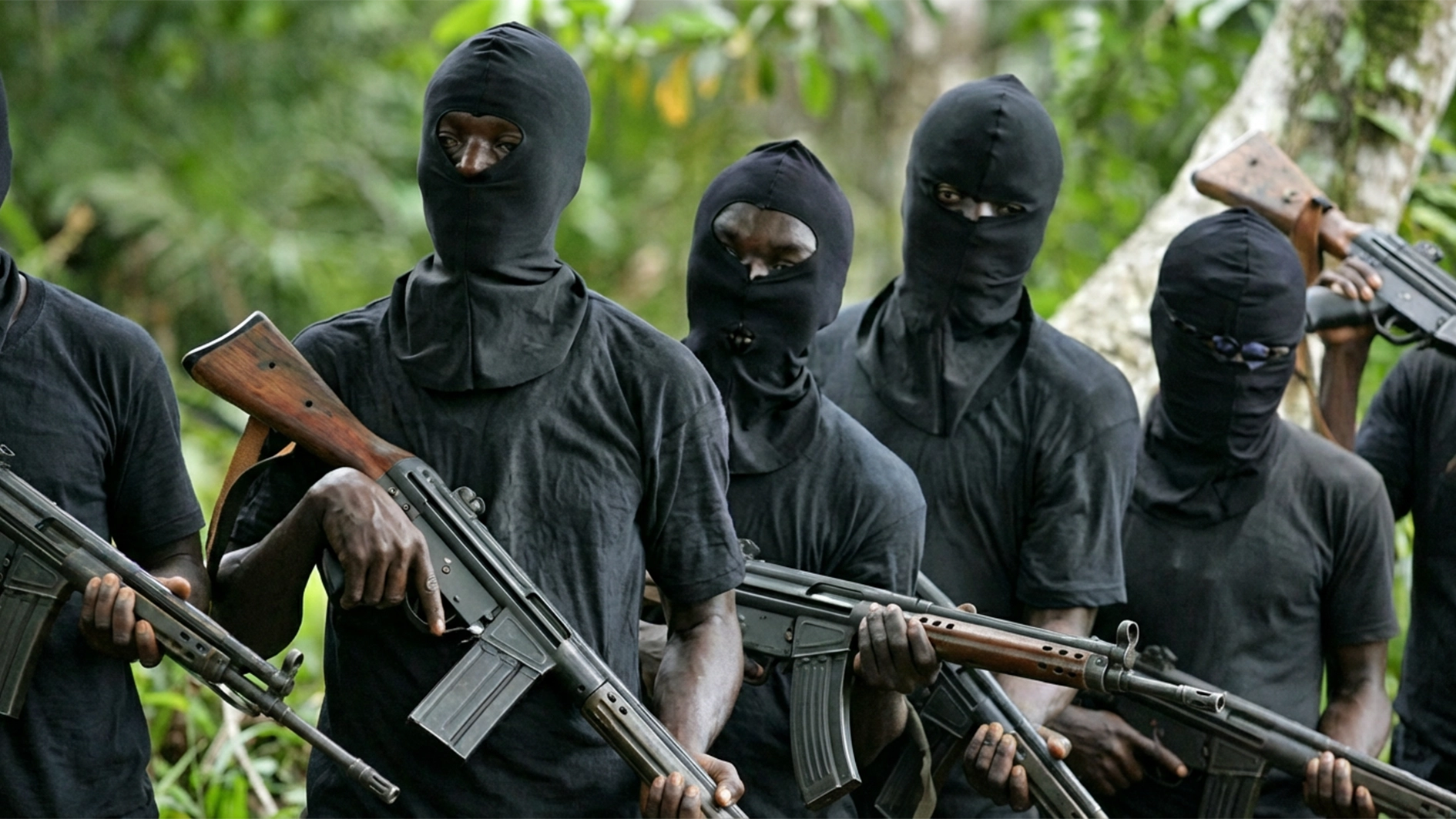
In Niger State’s Borgu Local Government Area, armed bandits stormed the town of Dekara on Wednesday, burning down the Central Primary School, just weeks after extorting a staggering N10 million levy from the very communities they had sworn to protect.
The attack, which stands as one of the most cynical betrayals yet in Nigeria’s worsening rural security crisis, has raised urgent and deeply troubling questions: when even paying ransoms offers no protection, what options remain for communities caught in the crosshairs of increasingly emboldened non-state armed groups?
According to multiple residents who spoke with this reporter, the bandits had, in the weeks preceding Wednesday’s attack, issued an ultimatum to villages and communities across the Dekara District. The message was simple and chilling: pay N10 million, or face an assault.
Faced with an impossible choice between financial ruin and physical danger, community leaders pooled resources and met the bandits’ demand in full. Assurances were reportedly given word, perhaps sealed in the shadow of the Kainji Lake National Park, from which these armed groups are known to operate, that residents would be left in peace.
It was a promise worth less than the breath used to make it.
“The bandits imposed a N10 million levy on communities in the district. The money was paid because they threatened to attack us if we failed to comply,” one visibly shaken resident recounted. “But despite receiving the money, they still attacked the district headquarters and burnt down the primary school.”
The Central Primary School, Dekara, the institution that represented the community’s most fundamental investment in its children’s future, now lies in ash.
The deliberate destruction of a primary school is not merely an act of violence against bricks and mortar. It is an assault on an entire generation.
In rural communities like Dekara, where schools are often the only gateway to literacy and opportunity, the loss of a classroom block can set children back by years, sometimes permanently.
Families already stretched thin by levy collections will now bear the additional burden of disrupted education, with no timeline for reconstruction in sight.
Education rights advocates have long warned that the targeting of schools by armed groups in Nigeria’s Northwest and North Central zones is a calculated tactic designed to hollow out communities from within, making long-term habitation untenable and accelerating the displacement of rural populations.
In what security analysts would describe as a coordinated multi-front operation, bandits simultaneously launched fresh attacks on the communities of Dnakau, Lanta, and Unguwan Kawo in the neighboring Shiroro Local Government Area, a district that has suffered some of the most sustained and lethal banditry in the state over recent years.
The human toll from the Shiroro raids is heartbreaking in its specificity. Moses Joseph, a resident of Unguwan Kawo, was abducted, and his whereabouts remain unknown. Emma, from the Bagna community, was shot during the raid. One person was confirmed killed.
Two men. Two families. Two more data points in a crisis that Nigeria’s authorities have yet to bring under control.
Perhaps as damning as the attacks themselves is the response, or rather, the absence of one from the Niger State Police Command.
This reporter made repeated attempts to reach the command’s spokesperson, SP Wasiu Abiodun, by phone and text message. Calls went unanswered. The text message drew no reply.
As of the time of filing this report, the Niger State Police Command had issued no statement acknowledging the attacks, no confirmation of casualties, and no indication of any operational response.
That silence will not be lost on residents of Dekara, Dnakau, Lanta, or Unguwan Kawo communities that paid N10 million for security they never received and who now watch their school burn while official phones ring out into the void.
Niger State has, over the past several years, emerged as one of the epicenters of Nigeria’s banditry epidemic, a complex security crisis driven by a volatile mix of ungoverned territory, porous borders, cattle rustling disputes, illegal mining, and the proliferation of small arms.
The Kainji Lake National Park, a vast and largely inaccessible forested reserve, has repeatedly been identified as a staging ground for armed groups who use its dense terrain as cover before striking surrounding communities.
Security experts have warned that the collection of levies, a phenomenon increasingly reported across Zamfara, Katsina, and now Niger State, represents a dangerous evolution in bandit tactics.
It is, in effect, the imposition of a parallel taxation system by non-state actors, one that simultaneously finances their operations and demonstrates to communities that the state cannot protect them.
When that system is followed by attacks regardless of payment, as happened in Dekara, it achieves something even more sinister: it destroys hope entirely.
WHAT YOU SHOULD KNOW
Armed bandits in Niger State have demonstrated a chilling new low, collecting a N10 million “protection” levy from defenseless rural communities, then attacking anyway and burning down a primary school. In Shiroro, simultaneous raids claimed a life and resulted in a kidnapping.
These communities surrendered scarce resources under duress, only to suffer the very violence they paid to avoid. This exposes a brutal reality that in large parts of Niger State, the state has effectively ceded its most basic duty to its citizens, leaving ordinary people trapped between extortion and violence, with law enforcement nowhere to be found.