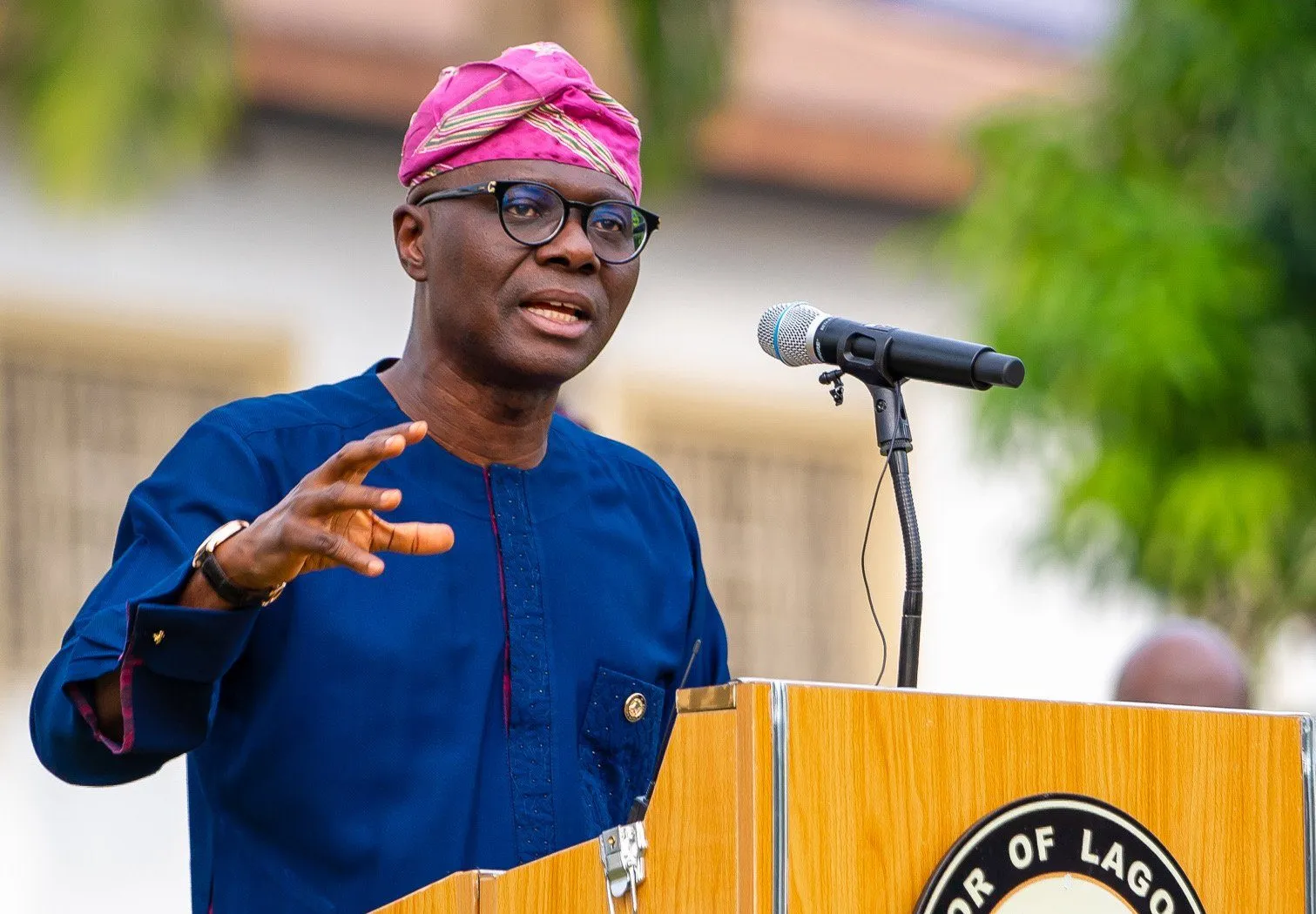
Governor Babajide Sanwo-Olu has issued a stern 72-hour ultimatum to all illegal occupants along the Lagos-Badagry Expressway, warning that the state government will no longer tolerate unapproved structures and operations along the highway.
The warning, which sources describe as a “final notice,” was delivered by the governor himself following the state’s monthly environmental sanitation exercise conducted across the Ojuelegba, Surulere, and Kosofe areas. These three districts have long been flashpoints for unregulated commercial activity, makeshift settlements, and indiscriminate waste disposal.
Speaking with the unambiguous tone of an administration running out of patience, Governor Sanwo-Olu ordered what officials are calling a “massive demolition” of illegal structures in the affected axis, signaling a significant escalation in the state’s ongoing war against urban blight.
“From next week, we are coming to clear the entire median. Everything there will go,” the governor declared, in remarks that sent a clear message to traders, squatters, and business operators who have for years encroached upon road corridors with seeming impunity.
The ultimatum gives affected persons a narrow 72-hour window to vacate voluntarily, after which, government officials are expected to move in with enforcement teams and heavy equipment.
The governor’s intervention comes at a critical time for Africa’s largest city by population, a sprawling, fast-growing metropolis that has long grappled with the twin challenges of rapid urbanization and inadequate waste management infrastructure.
The Lagos-Badagry Expressway, a vital artery linking the state capital to Nigeria’s border with the Republic of Benin, has increasingly become a corridor of concern, with its medians and roadsides choked by shanties, street vendors, and mountains of uncollected refuse, a situation many residents describe as both an eyesore and a public health emergency.
Beyond the ultimatum, the governor used the occasion to announce a raft of measures aimed at comprehensively overhauling the state’s waste management system, an acknowledgement, observers say, that enforcement alone cannot solve Lagos’s sanitation crisis.
Topping the list of new interventions is the procurement of an additional 150 compactor trucks, which the administration says will significantly boost logistics capacity and improve waste collection across all local government areas.
The move is expected to ease the perennial backlog of uncollected refuse that plagues many neighborhoods, particularly in densely populated low-income communities.
Sanwo-Olu also revealed that the state government is developing what he described as a “robust landfill management plan,” a long-awaited initiative intended to reduce turnaround time for Private Sector Participation (PSP) waste operators, who have frequently cited overwhelmed landfill facilities as a key bottleneck in their operations.
In what may be the most politically sensitive part of his address, the governor appealed directly to Lagos residents to honour their waste management obligations, urging them to pay their outstanding waste bills and to abandon the widespread habit of dumping refuse indiscriminately in public spaces.
“Collective action is highly needed on the part of the government and the people to achieve a cleaner Lagos,” Sanwo-Olu stated, framing the sanitation challenge not merely as a government problem but as a shared civic responsibility.
The call to pay waste bills is likely to resonate with PSP operators, many of whom have reported significant revenue shortfalls due to widespread non-payment by households and businesses, a financial strain that directly undermines their capacity to deliver efficient services.
With the 72-hour clock now ticking, all eyes will be on whether the state government follows through on its threats with the kind of sustained enforcement that past administrations have often promised but struggled to maintain.
Urban policy analysts warn that while demolitions and ultimatums can yield short-term results, durable change will require deeper investment in infrastructure, community engagement, and consistent law enforcement, not just episodic crackdowns timed to sanitation exercises.
For now, however, the message from Alausa is unmistakable: the Sanwo-Olu administration intends to reclaim Lagos’s roads and public spaces, one corridor at a time.
Residents and traders along the Lagos-Badagry Expressway have been advised to comply with the directive immediately to avoid the loss of property and goods during government enforcement operations.
WHAT YOU SHOULD KNOW
Lagos Governor Babajide Sanwo-Olu has drawn a firm line in the sand over the deteriorating state of the Lagos-Badagry Expressway, issuing a 72-hour ultimatum to illegal occupants and ordering the demolition of all unapproved structures along the corridor.
Backed by the procurement of 150 new compactor trucks and an incoming landfill management overhaul, the administration is signaling a serious, infrastructure-backed push toward a cleaner Lagos, not just tough talk.
The government is moving, and it expects residents to move with it by vacating illegally occupied spaces, paying waste bills, and ending indiscriminate dumping. Those who ignore the warning do so at the risk of losing their structures and property without further notice.