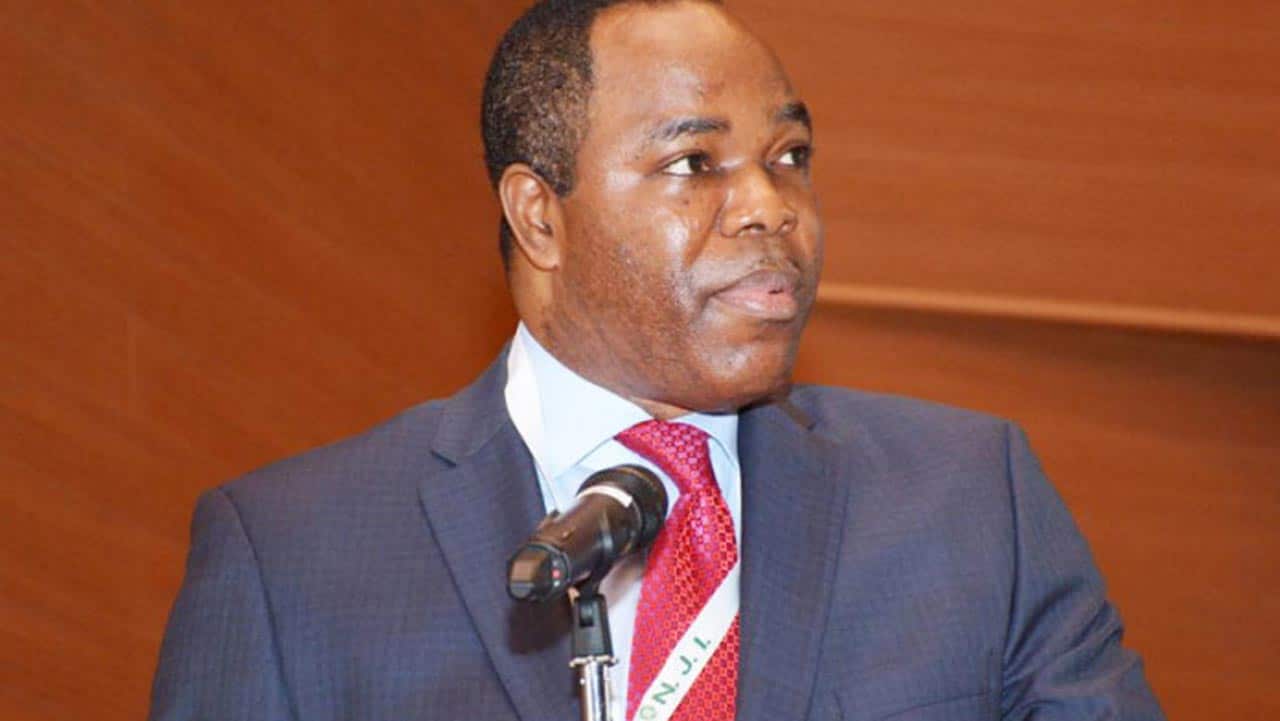
Tunde Ayeni, former chairman of the now-defunct Skye Bank Plc, was re-arraigned before the FCT High Court in Abuja on 18 criminal charges bordering on an alleged N15.6 billion fraud against depositors’ funds.
Standing before Justice Jude Onwuegbuzie, Ayeni entered a plea of not guilty to all 18 amended counts read against him, charges that paint a damning portrait of alleged insider betrayal at one of Nigeria’s once-prominent financial institutions. The trial is now scheduled to commence on July 6, 2026.
Monday’s proceedings were not Ayeni’s first appearance in the dock. The former bank chairman was initially arraigned on May 4, 2026, facing a 17-count charge.
His return to court this week followed the EFCC’s filing of an amended charge, now expanded to 18 counts, alongside what the commission described as additional proof of evidence, a development that signals prosecutors believe they have strengthened an already formidable case.
Prosecution counsel Abba Muhammed informed the court that both the amended charge and the supplementary evidence were formally filed on June 22, 2026.
Defence counsel Abdul Mohammed, representing Ayeni, confirmed he had been duly served with the amended charge, clearing the procedural path for the trial to begin.
The EFCC’s spokesman, Dele Oyewale, confirmed the re-arraignment in an official statement, noting that the charges border on alleged criminal breach of trust, misappropriation, and deliberate diversion of depositors’ funds.
At the heart of the prosecution’s case are specific, date-stamped allegations detailing how funds allegedly moved out of Skye Bank’s suspense account, a holding repository for customer deposits, and into private company accounts under circumstances the EFCC says were both unlawful and in direct violation of the bank’s own Operational Policy Manual.
Prosecutors allege that on that date, Ayeni, exercising dominion over depositors’ funds held in Skye Bank’s suspense account, orchestrated the transfer of N510 million to the account of Capital Field Investment Group Limited, an account domiciled within the bank itself. The transfer, prosecutors contend, constituted a criminal breach of trust and dishonest misappropriation.
Just days later, on September 23, 2014, Ayeni is alleged to have repeated a similar act. Count five of the charge accuses him of transferring N600 million from the same suspense account to the account of Harigold Ventures Limited, this time domiciled with Sterling Bank. Once again, the EFCC alleges the movement of funds violated Skye Bank’s internal operational guidelines.
Both transactions, if proven, are said to constitute offences contrary to Section 311 of the Penal Code, which deals with criminal breach of trust, and are punishable under Section 312 of the same legislation.
The remaining counts in the amended charge are expected to reveal further alleged transactions forming part of what prosecutors say was a sustained pattern of misappropriation amounting to N15.6 billion in total.
The case against Ayeni is inseparable from the dramatic and painful story of Skye Bank itself. Once a significant player in Nigeria’s commercial banking landscape, Skye Bank was taken over by the Central Bank of Nigeria in 2016 after it became clear the institution was in deep financial distress, unable to meet its obligations to depositors and failing key liquidity ratios.
The CBN subsequently revoked its operating license in 2018, replacing it with a bridge bank, Polaris Bank, to protect depositors and maintain financial system stability.
For millions of Nigerians who held accounts with Skye Bank, the institution’s collapse was a source of anxiety and financial disruption. The EFCC’s case against Ayeni, if it succeeds in court, would offer at least a partial accounting of what allegedly went wrong at the leadership level during the years preceding the bank’s demise.
For his part, Ayeni has shown no signs of capitulation. Through his defence counsel, Abdul Mohammed, he entered firm not guilty pleas to all 18 counts on Monday, a posture consistent with his denial of wrongdoing since the case first became public.
His legal team is expected to mount a vigorous defence when the trial formally opens next month, likely challenging both the interpretation of the Penal Code provisions cited by the prosecution and the evidentiary basis for the specific transfers alleged.
The re-arraignment of Ayeni fits squarely within the EFCC’s long-stated mission to hold Nigeria’s financial elite accountable for the alleged plunder of institutions that ordinary citizens depend upon.
Banking fraud cases have historically been among the most complex prosecutions the commission undertakes, involving voluminous documentary evidence, intricate financial paper trails, and defendants with access to top-tier legal representation.
With Justice Onwuegbuzie now set to preside over what promises to be a consequential trial, all eyes will be on courtroom proceedings when the case resumes on July 6. For the EFCC, a conviction would represent a landmark moment in its campaign against high-level financial crime.
WHAT YOU SHOULD KNOW
Tunde Ayeni, former chairman of the defunct Skye Bank, is facing trial over the alleged theft of N15.6 billion in depositors’ funds that ordinary Nigerians entrusted to a bank that later collapsed.
The EFCC’s expanded 18-count charge, detailing specific transfers to private companies in brazen violation of the bank’s own internal policies, suggests this was not reckless mismanagement but deliberate, calculated betrayal.
With trial set for July 6, 2026, the case is a stark reminder that positions of financial power are not a licence to loot and that accountability, however delayed, eventually finds its way to the courtroom door.