A fresh crack has emerged in the All Progressives Congress (APC) structure in Kano State, as a sitting member of the Kano State House of Assembly formally crosses the aisle just hours after a landmark court ruling threw open the floodgates for political defections across Nigeria.
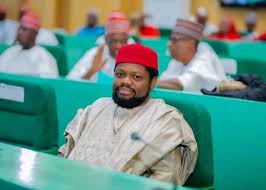
Abdulmajid Isa Umar Mai Rigar Fata, the lawmaker representing Gwale Constituency in the Kano State House of Assembly, on Thursday formally defected from the All Progressives Congress to the Nigerian Democratic Congress (NDC) in a move that carries outsized symbolic weight given the peculiar political geography of his constituency.
Gwale Local Government Area is no ordinary turf. It is the home base of Kano State Governor Abba Yusuf, making Mai Rigar Fata’s exit from the APC not merely a routine party switch but a pointed statement from within the governor’s own backyard.
The lawmaker was received with ceremony at the Maitama, Abuja, residence of former two-term Kano State Governor and NDC national leader Senator Rabiu Musa Kwankwaso, a man whose political gravitas in northern Nigeria needs little introduction.
The formal reception, held on Thursday, was confirmed by Kwankwaso’s media aide, Saifullahi Hassan, via a Facebook post that quickly circulated on social media.
“Today, Thursday, 21st May 2026, His Excellency Sen. Rabiu Musa Kwankwaso welcomed Hon. Abdulmajid Isa Umar Mai Rigar Fata, member representing Gwale Constituency in the Kano State House of Assembly, following his defection from the APC to the Nigeria Democratic Congress,” Hassan announced.
Mai Rigar Fata did not walk into the NDC fold alone. Also received by Kwankwaso were Hon. Kabiru Sani Auwal Obi, former Vice Chairman of Gwale Local Government, and Mal. Mahadi Isa Umar, a trio of defectors whose arrival signals a coordinated, rather than solitary, crossing of political lines.
The Gwale lawmaker’s political biography reads like a microcosm of Nigeria’s notoriously fluid party landscape. He was first elected to the Kano State House of Assembly in 2023 under the banner of the New Nigeria Peoples Party before subsequently realigning with the APC alongside Governor Yusuf, himself a product of the Kwankwasiyya political movement, who has since charted a different course from his former mentor.
According to Daily Trust, the immediate trigger for Mai Rigar Fata’s latest departure was a deeply personal and practical one: his failure to secure the APC’s legislative ticket for his return to the Assembly.
In Nigerian politics, denial of a return ticket by a ruling party has historically been among the most reliable catalysts for defection, and this case proved no exception.
The timing of the defection was far from coincidental. Hours earlier on Thursday, a Federal High Court delivered a ruling that political watchers are already describing as a potential earthquake for party structures ahead of the elections.
The ruling effectively dismantled legal restrictions that had previously constrained politicians seeking to move between parties and contest on alternative platforms.
The reaction from opposition parties was immediate and bullish. The African Democratic Congress, through its spokesman Bolaji Abdullahi, wasted no time in framing the judgment as a vindication of its long-held position that such restrictions were unconstitutional.
“The decision of the court on these issues, including those that directly contradict the Constitution, is therefore a welcome vindication of our position,” the ADC declared.
Going further, the party suggested the ruling was a deliberate tool of political suppression, now struck down. “We believed at the time that that particular restriction was designed to prevent people from leaving the ruling party, APC.
Now that the court has ruled against it, we are sure that, in the coming days, we will witness a mass exodus from the ruling party,” the party stated, barely concealing its anticipation.
Political analysts will be watching closely to see whether Mai Rigar Fata’s defection is the opening scene of a broader drama or an isolated incident driven purely by personal grievances.
But with a federal court now having cleared the legal runway for defections and with party primaries approaching, the incentive structures for disgruntled APC members, legislators denied tickets, local government officials sidelined, and powerbrokers overlooked have shifted dramatically.
For Kwankwaso and the NDC, each new arrival is both a trophy and a recruitment advertisement. The former governor, who commanded one of the most formidable political machines in Kano’s recent history, appears intent on rebuilding his influence through a steady accumulation of figures from the state’s political establishment.
For the APC, the challenge is no longer merely electoral; it is structural. When defections begin in the governor’s own constituency, the party’s grassroots foundations in Kano face questions that a press release cannot easily answer.
WHAT YOU SHOULD KNOW
The defection of Kano lawmaker Abdulmajid Mai Rigar Fata from the APC to the NDC is significant on two fronts: it happened in Governor Abba Yusuf’s own home constituency, exposing cracks within the APC’s Kano structure, and it coincided with a Federal High Court ruling that has effectively removed legal barriers to political defections.
With ticket denial emerging as the immediate trigger, and opposition parties already predicting a mass exodus from the ruling party, this development may well be the first domino in a broader realignment of Nigeria’s political landscape ahead of the elections.