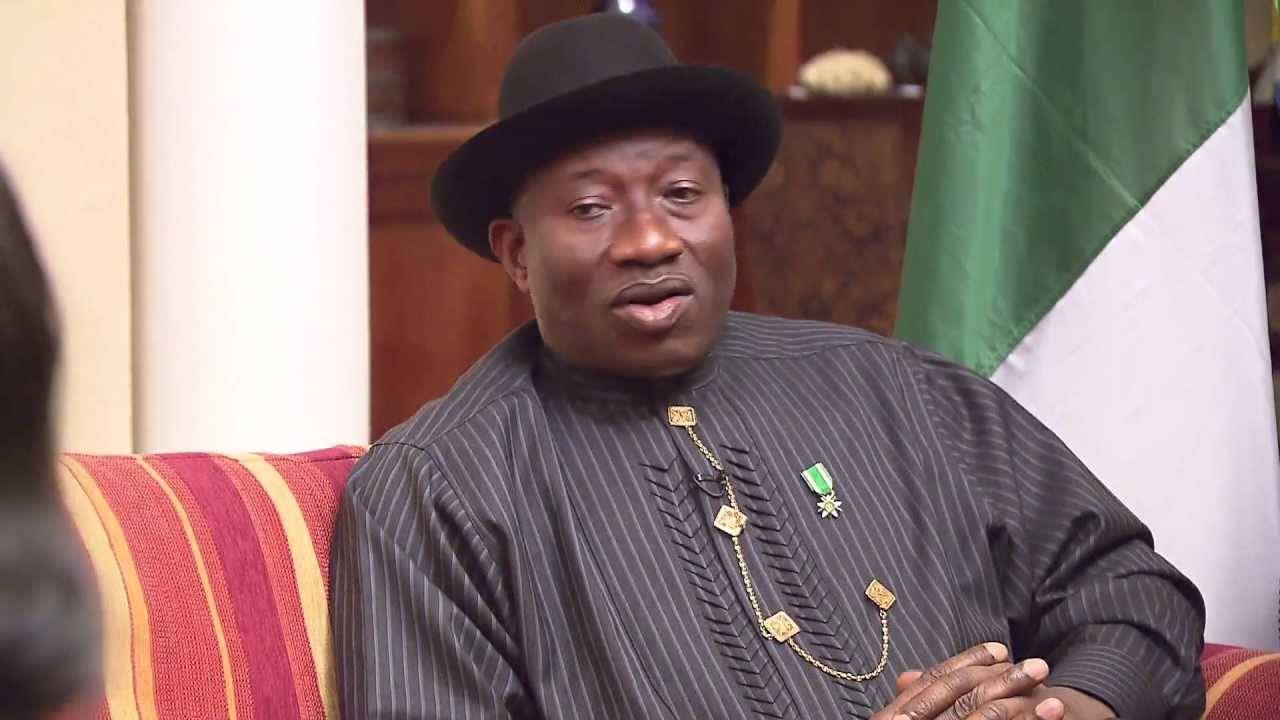
Former President Goodluck Jonathan has formally opposed a lawsuit seeking to stop him from contesting the 2027 presidential election.
Jonathan’s counsel, Chris Uche, informed the Federal High Court on Friday that the former president had already filed all necessary legal processes challenging the suit.
Uche told Justice Peter Lifu that Jonathan’s legal team submitted a conditional appearance, preliminary objection, counter-affidavit and written address on May 5, asking the court to strike out the case.
According to him, the defence moved quickly after becoming aware of the matter through media reports.
He argued that the legal dispute centres on Jonathan’s eligibility to contest the 2027 election and maintained that the issue had already been resolved by previous court decisions, including judgments of the Court of Appeal.
Counsel to the plaintiff, Ndubuisi Ukpai, however, told the court that he had only recently received Jonathan’s response and required more time to review the documents and prepare a reply.
Following submissions from both parties, Justice Lifu adjourned the matter until May 11 for hearing on both the preliminary objection and the substantive suit.
The judge also directed that hearing notices be served on the Independent National Electoral Commission and the Office of the Attorney-General of the Federation, both of whom were absent during proceedings.
The suit was filed by lawyer Johnmary Jideobi, who is asking the court to permanently prevent Jonathan from participating in the 2027 presidential race.
Specifically, the plaintiff seeks an order restraining the former president from presenting himself to any political party as a presidential candidate.
He also requested that the court stop INEC from recognising or publishing Jonathan’s name as a validly nominated candidate.
Filed on October 6, 2025, the case lists Jonathan as the first defendant, while INEC and the Attorney-General of the Federation are joined as co-defendants.
At the centre of the dispute is the interpretation of Sections 1 and 137(3) of the Nigerian Constitution and whether Jonathan remains constitutionally qualified to seek office again after taking the oath of office twice as president.
The plaintiff argued that by completing the unexpired tenure of late President Umaru Musa Yar’Adua and later serving a full elected term after winning the 2011 election, Jonathan had exhausted the constitutional limit.
“That if the court does not intervene timeously, a political party may present the 1st defendant as its presidential candidate in the 2027 general election, thereby breaching the Constitution,” the suit stated.
The plaintiff further argued that Jonathan could eventually contest and even win the election if the court fails to intervene, potentially creating constitutional uncertainty over presidential tenure limits.
In an affidavit supporting the suit, Emmanuel Agida described the plaintiff as a defender of constitutionalism and the rule of law acting in the public interest.
Jonathan’s legal team, however, insists that the matter has already been judicially settled and should not be reopened.
The case is expected to attract significant national attention as legal and political observers await the court’s interpretation of the constitutional provisions ahead of the 2027 election season.
What You Should Know
The legal battle over Goodluck Jonathan’s eligibility for the 2027 presidential election revolves around constitutional term-limit provisions.
The key question is whether his completion of former President Umaru Musa Yar’Adua’s tenure, followed by his own elected term, counts as exhausting the constitutional two-term limit.
Jonathan’s legal team argues that the matter has already been settled by higher courts, while the plaintiff insists another presidential bid would violate the Constitution.
The court’s eventual ruling could have major political implications ahead of 2027.