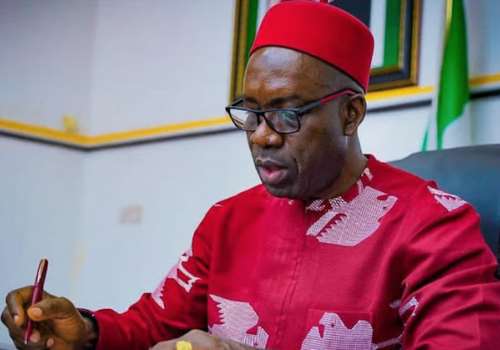
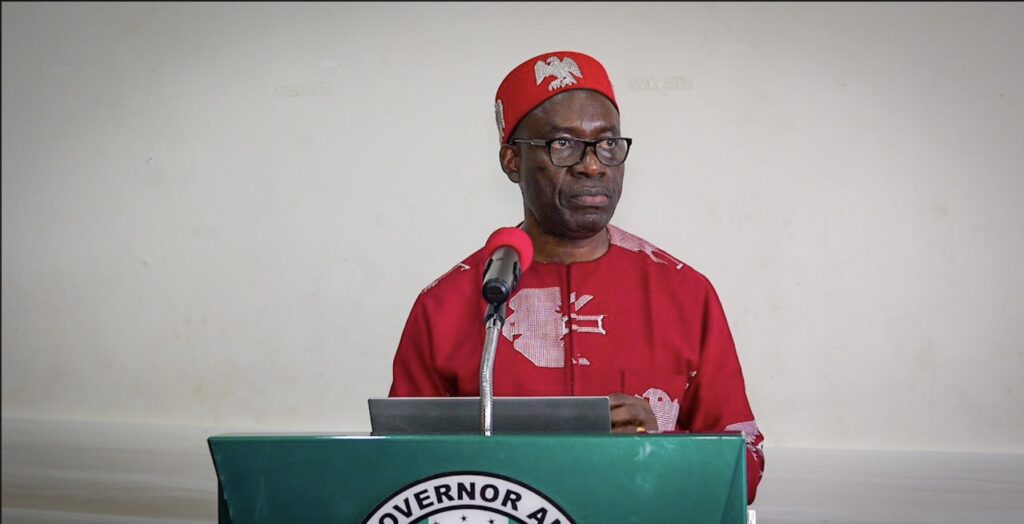
Anambra State Governor, Chukwuma Soludo, has forwarded the first batch of commissioner-nominees to the State House of Assembly for screening and confirmation.
The list was formally presented on Tuesday during plenary by the Speaker of the Anambra State House of Assembly, Somtochukwu Udeze, who subsequently referred it to the Committee on Screening and Election Matters for further legislative consideration.
The governor’s list contains 18 nominees assigned to key ministries across the state’s governance structure.
Among the nominees are Ben Odoemena for Agriculture; Chukwukadibia Okoye (FCCA) for Budget and Economic Planning; Udoji Amedu for Culture, Entertainment and Tourism; and Ekene Ogugua for Education.
Others include Clem Aguiyi for Environment; Izuchukwu M. Okafor for Finance; Afam Obidike for Health; Law Mefor for Information and Value Reformation; Tobechukwu Nweke (SAN) for Justice and Attorney-General; Offornze Amucheazi (SAN) for Lands; and Vin Ezeaka for Local Government and Community Affairs.
Also on the list are Prof. Charles Ofoegbu for Petroleum and Mineral Resources; Chijioke Oseloka Ojukwu for Physical Planning and Urban Development; Casmir Agummadu for Power; Okey Ezeobi for Works and Infrastructure; Eddy Ibuzo for Transport; Esther Onyekesi for Women Affairs and Social Development; and Patrick Agha (MBA) for Youth Development and Sports.
Notably, some commissioners from Soludo’s first term were retained, including Afam Obidike, Law Mefor, and Patrick Agha, who were returned to their previous portfolios.
The Assembly is expected to begin screening of the nominees in line with its legislative procedures before final confirmation.
What You Should Know
Governor Chukwuma Soludo has begun a fresh round of executive appointments as part of efforts to restructure his cabinet for his second term in office.
The submission of 18 commissioner-nominees marks the first phase of his cabinet formation process, which now moves to the Anambra State House of Assembly for screening and confirmation.
The list includes a mix of new appointees and returning commissioners, reflecting continuity in some ministries and changes in others.
The development is a key step in shaping Soludo’s governance team and policy direction for the coming administrative cycle.