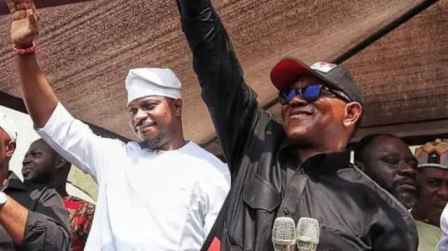
The 2023 Labour Party governorship candidate in Lagos State, Gbadebo Rhodes-Vivour, has drawn a clear political line by rejecting the growing coalition around the Nigerian Democratic Congress (NDC) and choosing to remain with the African Democratic Congress (ADC).
The decision comes amid ongoing political realignments following the high-profile defection of former Labour Party presidential candidate Peter Obi and his emerging 2027 ally, Rabiu Musa Kwankwaso, to the NDC.
The development has already triggered a series of defections from the ADC, as political figures across the country continue to reposition ahead of the 2027 general elections.
Rhodes-Vivour, who has long been regarded as one of Peter Obi’s most visible and loyal political allies in Lagos, is now charting a separate political course.
His decision marks a notable shift in the relationship between the two politicians and signals what many observers see as a subtle but important crack within the broader Obidient movement that gained national momentum during the 2023 elections.
The political association between Rhodes-Vivour and Obi had become one of the defining alliances of opposition politics in Lagos over the last four years, particularly during the Labour Party’s rise in the state.
However, his latest move suggests that while political alliances may have shaped previous electoral contests, strategic calculations for 2027 are already redefining loyalties.

In a statement released on Tuesday, Rhodes-Vivour acknowledged the difficult political decisions many actors are currently facing amid the ongoing realignments.
He, however, made it clear that his conviction remains firmly rooted in the ADC.
“To those who have made the difficult decision to move on to a new platform, I offer my genuine respect and best wishes. These are hard choices. We are all fighting for a better Nigeria, even when our roads diverge. I want to make it clear that I am staying in the ADC,” he said.
His position now places him among the most prominent political figures resisting the pull of the NDC, despite the growing influence of the party following Obi and Kwankwaso’s entry.
Political analysts say the decision could have significant implications for opposition politics in Lagos, where Rhodes-Vivour remains a major force with considerable grassroots support.
His continued stay in the ADC also raises fresh questions about the cohesion of the wider opposition bloc and whether Peter Obi’s movement to the NDC will successfully attract all of his previous political allies.
The development underscores the increasingly fluid nature of Nigeria’s opposition politics, as alliances continue to shift and political actors reposition themselves ahead of what is expected to be a fiercely contested 2027 election cycle.
What You Should Know
Gbadebo Rhodes-Vivour’s decision to remain in the ADC despite Peter Obi’s move to the NDC represents a notable political divergence within the opposition camp.
Rhodes-Vivour was one of Obi’s strongest allies during the 2023 elections, particularly in Lagos where both benefited from the Obidient movement. His refusal to follow Obi signals that political loyalty may now be giving way to strategic independence as opposition leaders position themselves for 2027.
The move could affect coalition-building efforts and reshape opposition strength in Lagos, a state considered crucial to any serious presidential and governorship contest.