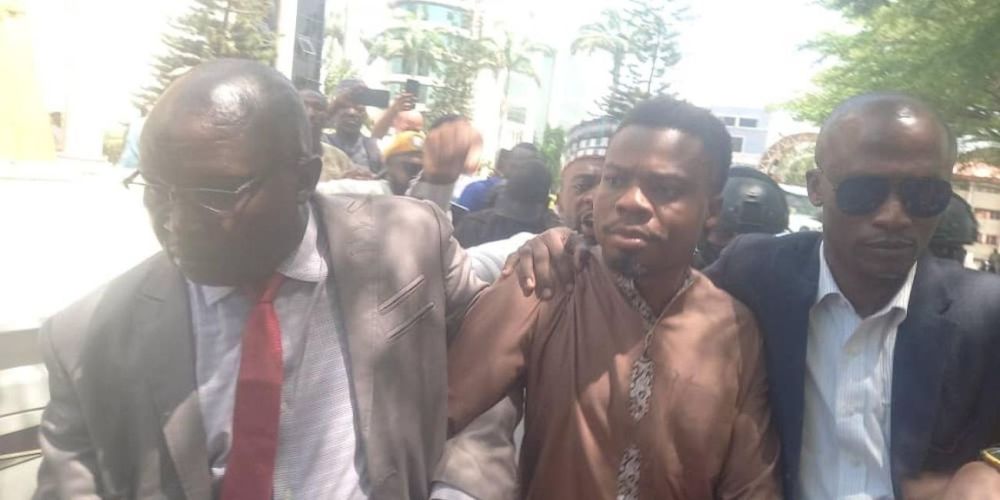
The Federal High Court sitting in Abuja has ordered the remand of social media influencer and blogger Chidiebere Justice Mark, widely known as Justice Crack, in the custody of the Department of State Services over alleged cybercrime offences linked to a viral video involving the Nigerian Army.
Mark was arraigned on Monday before Justice Joyce Abdulmalik on a three-count charge bordering on the alleged dissemination of false information and the publication of materials capable of causing public unrest.
The charges stem from a viral video and accompanying statements he allegedly posted through his X handle, @JusticeCrack, in which he raised concerns about the feeding conditions of Nigerian soldiers.
According to the prosecution, the defendant was arrested by the Nigerian Army over the weekend before being handed over for prosecution.
One of the charges accused Mark of knowingly circulating false information to the public through his social media platform.
The prosecution alleged that the publication concerning inadequate feeding of Nigerian Army personnel was deliberately designed to incite public annoyance, ill will, and hatred among citizens with differing views.
Part of the charge read:
“That you, CHIDIEBERE JUSTICE MARK, adult, male, of Plot 88 Sabon-Lugbe, Abuja, on or about the 28th day of April, 2026, in Abuja, within the jurisdiction of this Honorable Court, did circulate information to the public through your social media handle @JusticeCrack, regarding alleged inadequate feeding of Nigerian Army personnel, which you know the said information to be false but posted it for the purpose of causing annoyance, ill will, and hatred…”
The charge stated that the alleged offence is punishable under Section 24(1)(b) of the Cybercrimes (Prohibition, Prevention, etc) Act 2015 as amended.
In the second count, the DSS accused Mark of publishing the viral video and related statements in a manner that allegedly generated widespread negative reactions capable of causing fear and disturbing public peace.
The prosecution argued that the content had the potential to trigger unrest due to its nature and the sensitivity of issues relating to national security institutions.
The third count accused him of attempting to commit a felony through what prosecutors described as derogatory content targeted at the Nigerian Army.
According to the charge, the publication allegedly violated Section 509 of the Criminal Code Act.

Following the arraignment, the court adjourned the matter until May 25, 2026, for trial and possible consideration of a bail application.
Justice Abdulmalik subsequently ordered that the defendant remain in DSS custody pending further proceedings.
The case has already generated significant public attention, particularly given its intersection with issues of free speech, national security, and the growing scrutiny of online commentary relating to state institutions.
Mark’s prosecution follows earlier explanations by the Nigerian Army that his arrest was connected to allegations that he engaged soldiers in discussions capable of inciting discontent within the ranks.
The military had maintained that preliminary investigations suggested actions it considered capable of undermining discipline and national security.
What You Should Know
The case against Justice Crack highlights ongoing tensions between digital free expression and national security enforcement in Nigeria.
Cybercrime-related prosecutions involving social media posts have increasingly sparked debate over the interpretation of laws governing false information and public order. Critics often argue that such provisions can be broadly applied, while authorities insist they are necessary to prevent misinformation and instability.
This case could become significant in shaping public discourse on how online criticism of security institutions is treated under Nigerian law, especially as digital activism continues to expand.