Good governance advocate Shehu Gazali Sadiq has threatened to shut down elections across northern Nigeria if the ADC is barred from the 2027 general elections ballot.
In a post on his verified X (formerly Twitter) handle that quickly spread like wildfire across the platform, Sadiq left no room for ambiguity. “If ADC is not on the ballot, there will be no election in Northern Nigeria,” he wrote. “If you come out to vote, whatever you see, accept it. This is both a threat and a warning.”
The post, which garnered over 90,000 impressions and was shared more than 1,000 times within hours, drew an alarming response from party supporters who appeared to endorse the message, amplifying concerns that the rhetoric could incite real-world unrest in one of Nigeria’s most politically volatile regions.
The timing of the statement is particularly significant. It comes just hours before the Supreme Court of Nigeria is expected to deliver what many are calling a “make or mar” verdict on the bitter leadership dispute threatening the ADC’s eligibility to participate in the coming election.
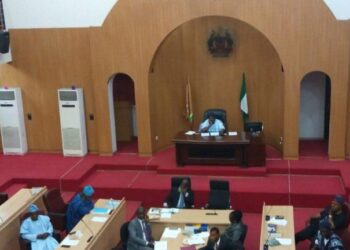
The Supreme Court announced it will deliver its verdict on the ADC leadership dispute on Thursday, April 30. A five-member panel of the apex court, led by Justice Mohammed Garba, had reserved judgment after parties adopted their final written addresses.
At the heart of the crisis is a legal battle between the faction led by former Senate President David Mark and rival party members, including Nafiu Bala Gombe and Ralph Nwosu, who are challenging the legitimacy of Mark’s leadership. Mark is contesting the March 12 judgment of the Court of Appeal, which ordered all parties to maintain the status quo in the dispute.
The stakes could not be higher. The Independent National Electoral Commission (INEC) has already acted pursuant to the lower court’s judgment to remove or de-recognize the ADC’s leadership, effectively leaving the party without recognized leadership even as it remains a registered political party in Nigeria.
In a letter dated April 28, 2026, the Mark-led faction’s counsel warned the court: “Without the delivery of judgment within the next three days from the date of this letter, the ADC stands at the grave and irreversible risk of being excluded from participating in the 2027 General Elections.”
The letter further cautioned that this outcome “would disenfranchise millions of Nigerians who have subscribed to the ideals of the ADC and deny them their constitutional right to freely associate and contest elections.”
Sadiq’s threat has sent shockwaves through political and security circles. His declaration that the safety of any northerner who comes out to vote “may not be guaranteed” is being viewed by analysts as a direct incitement that could embolden violent actors in a region with a well-documented history of election-related violence.
Security analysts note that such statements, particularly when they achieve the kind of viral reach Sadiq’s post has garnered, carry serious risks of being interpreted as a green light by fringe groups and political thugs.
The threat also places Nigeria’s security agencies in a difficult position ahead of what is already shaping up to be a fiercely contested 2027 election cycle. The verdict of the apex court is expected to either draw the curtain on the ADC’s hopes of participating in the 2027 general elections or provide fresh momentum for the party, which has assumed the position of a major opposition force seeking to wrest power from President Bola Tinubu and his All Progressives Congress (APC).
The Supreme Court is also expected to rule on the leadership crisis rocking the Peoples Democratic Party (PDP) around the same time, with both rulings anticipated to have wide-ranging implications for Nigeria’s opposition politics ahead of 2027.
As Nigerians await the Supreme Court’s verdict today, the question on many lips is whether the nation’s democratic institutions can withstand the pressure and whether inflammatory rhetoric from political actors will be left unchecked as the country hurtles toward what promises to be one of its most consequential electoral seasons in recent memory.
As of press time, neither the Nigeria Police Force nor the Department of State Services (DSS) had issued a public response to Sadiq’s threat. Civil society groups and opposition voices are expected to react in the hours ahead. Sadiq himself has not walked back his comments.
WHAT YOU SHOULD KNOW
Nigeria’s 2027 election preparations have taken a dangerous turn as governance advocate Shehu Gazali Sadiq issued a direct threat to disrupt elections across Northern Nigeria if the ADC is excluded from the ballot, a possibility that hinges entirely on today’s Supreme Court ruling.
At the core of the crisis is a bitter leadership tussle within the ADC that has already prompted INEC to de-recognize the party’s leadership.
Today’s Supreme Court verdict will either defuse the tension or pour fuel on an already volatile situation. The judiciary, in this moment, holds the fate of both a major opposition party and northern electoral peace in its hands.