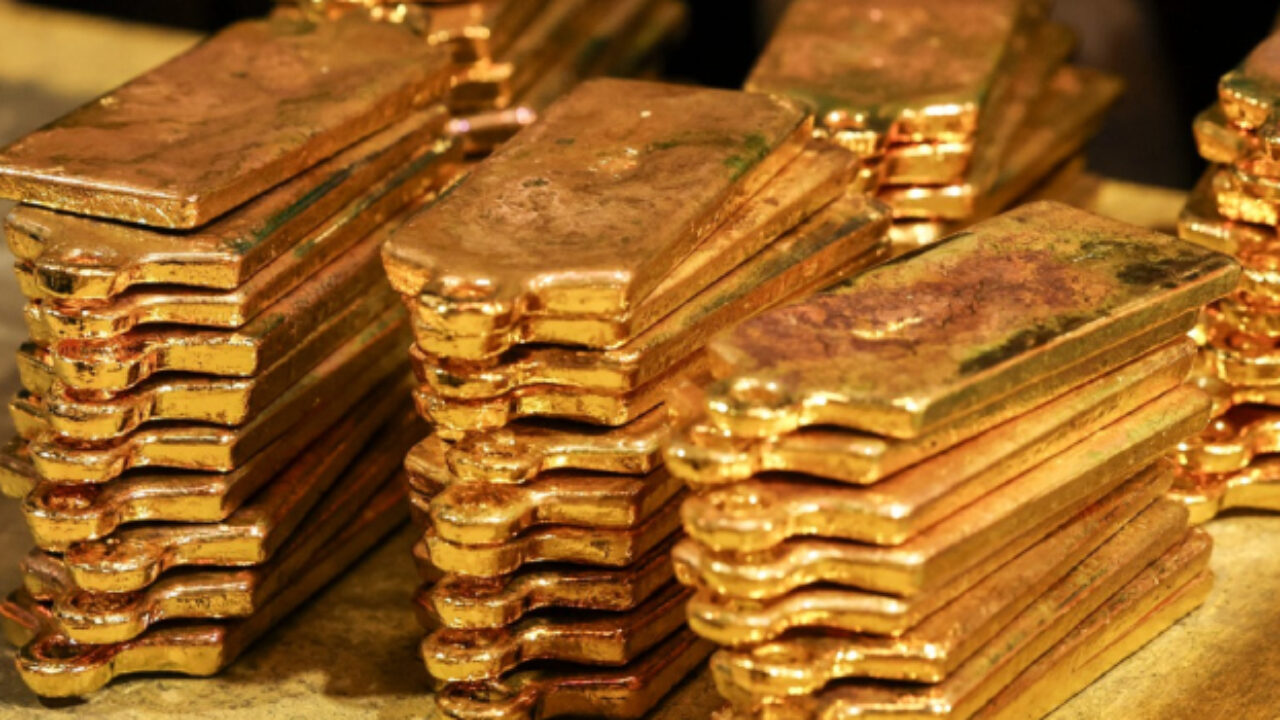
The safe-haven allure of gold met a formidable headwind on Wednesday as a toxic cocktail of surging energy costs and “higher-for-longer” interest rate fears forced bullion prices to retreat.
Despite the deepening geopolitical crisis in the Middle East, the yellow metal slipped as investors braced for a hawkish tone from the U.S. Federal Reserve.
Spot gold dropped “0.4%” to “$4,986.79” per ounce by 09:15 GMT, while U.S. gold futures for April delivery followed suit, sliding “0.3%” to settle at “$4,990.70.” The dip marks a rare moment of hesitation for the metal, which typically thrives on the kind of chaos currently gripping global headlines.
The primary weight on gold’s shoulders stems from the energy sector. With the conflict between Iran and Israel entering its third week—following a missile barrage on Tel Aviv—Brent crude remains stubbornly positioned above the “$100-per-barrel” mark.
The continued closure of the Strait of Hormuz has paralyzed a critical global artery for oil, stoking fears that inflation, which many hoped was cooling, may be due for a second wind.
“Investors are worried about rates staying ‘higher-for-longer’ due to elevated energy prices,” noted Jamie Dutta, market analyst at Nemo. money. “The longer the Iran conflict goes on, the more likely that scenario.”
While gold is historically the “insurance policy” of choice during inflation, it faces a mechanical disadvantage when interest rates rise. Unlike Treasury bonds or savings accounts, gold pays no dividend or interest.
As the Fed prepares to announce its policy decision later today, the market is sensing a shift. While a “hold” is expected, the rhetoric from Fed Chair Jerome Powell is anticipated to be stern.
Futures markets have already turned pessimistic, pricing in only a single 25-basis-point cut for the remainder of 2026, likely not until September.
Asset Current Price:
Spot Gold: $4,986.79
Spot Silver: $79.42
Spot Platinum: $2,089.55
Brent Crude: $100.00
Despite the Wednesday wobble, some analysts argue the fundamental bull case for gold remains intact. The “stagflation” cocktail—stagnant economic growth paired with high inflation—remains a persistent threat.
“Long-term drivers like central bank buying and diversification demand remain,” Dutta added, suggesting that while the Fed might win the battle for the narrative today, the systemic risks of 2026 could see gold testing new highs by year-end.
For now, all eyes turn to Washington. If Powell hints that the inflation fight is far from over, the “non-yielding” yellow metal may find the $5,000 threshold a difficult ceiling to shatter in the short term.
WHAT YOU SHOULD KNOW
Geopolitical chaos is pushing gold up, but the resulting “energy inflation” is keeping interest rates high, which pulls gold down.
While the Middle East conflict makes gold a necessary haven, the $100+ oil prices are forcing the Federal Reserve to keep rates “higher for longer.” For investors, this means that despite the global instability, gold’s growth remains capped by the high “opportunity cost” of not holding yield-bearing assets.