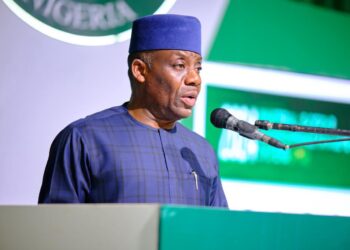
The Governor of Lagos State, Babajide Sanwo-Olu, has officially flagged off the reintroduction of the monthly environmental sanitation exercise that was suspended nearly a decade ago following a court ruling against movement restrictions.
Speaking during the ceremony, the governor explained that the sanitation exercise would now take place between 6:30 a.m. and 8:30 a.m. on the last Saturday of every month as part of efforts to maintain cleanliness across the state.
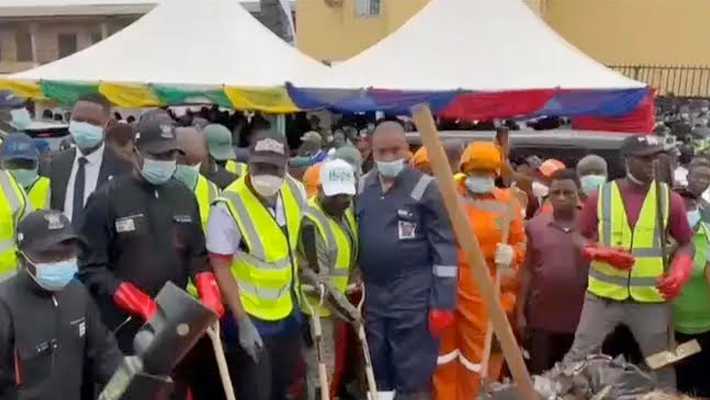
Sanwo-Olu also appealed to residents to avoid dumping waste indiscriminately and urged them to hold their refuse until the designated day their Private Sector Participation (PSP) waste operators arrive for collection.
He clarified that although the sanitation exercise has returned, there will be no restriction of movement during the period. Instead, the government plans to enforce the initiative through monitoring and community cooperation to ensure the expected results are achieved.
According to the governor, environmental responsibility used to be a deeply rooted culture among residents of the state, and the government intends to revive that tradition.
“It reinforced a simple but important principle that a clean city depends not only on government systems, but on the discipline and cooperation of its residents.
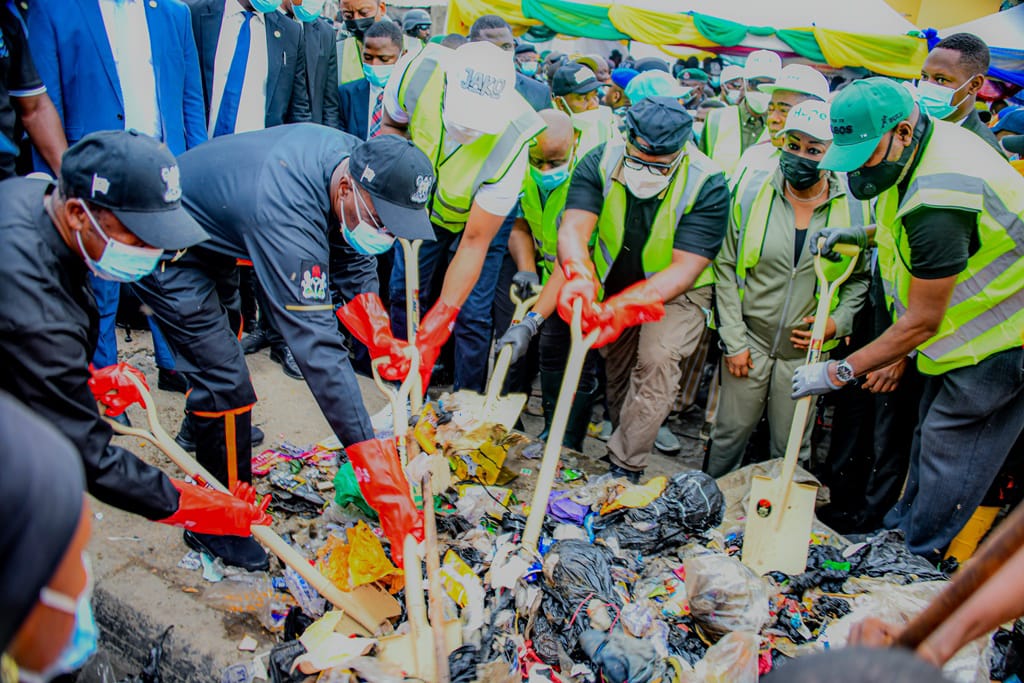
“Today’s symbolic flag-off is therefore a renewed call to civic responsibility. It is an opportunity to revive the culture of environmental consciousness in our communities, this time driven by awareness, partnership, and voluntary participation.”
Sanwo-Olu further stated that the state government remains committed to strengthening waste management systems, upgrading drainage infrastructure, and improving environmental enforcement mechanisms throughout Lagos.
What you should know
Monthly environmental sanitation was once a long-standing public practice across several Nigerian states, particularly in Lagos, where residents were required to participate in community clean-up activities.
The exercise was later suspended after a court ruling that challenged the legality of restricting movement during the sanitation hours.
The Lagos State government’s decision to reintroduce the initiative without enforcing movement restrictions reflects a shift toward voluntary participation and increased public awareness as key strategies for maintaining environmental cleanliness in the rapidly growing city.