President Bola Tinubu on Friday approved the establishment of a Presidential Petroleum Reform & Value Optimization Task Force, mandating the high-powered body to deliver a full structural overhaul of Nigeria’s petroleum sector within six months.
The announcement, carried in a State House press release issued by presidential spokesman Bayo Onanuga, arrives at a pivotal moment for Africa’s largest oil producer, which has spent the better part of the past two years lurching through the turbulence of subsidy removal and foreign exchange unification, bold but painful reforms that have yet to fully translate into the promised dividends for ordinary Nigerians.
At the helm of the new body is Fola Adeola, a name that carries considerable weight in Nigeria’s business establishment. A chartered accountant and entrepreneur, Adeola co-founded Guaranty Trust Bank in 1990 and served as its pioneer managing director until 2002, before going on to establish the Fate Foundation in 2000 to promote entrepreneurship and wealth creation in Nigeria.
His appointment as chairman signals that the presidency wants a financial architect, not a petroleum technocrat, steering the reform agenda, a choice that underscores the administration’s conviction that the sector’s problems are as much about capital structure and governance as they are about crude output.
Joining Adeola on the task force are Ademola Adeyemi-Bero, Osagie Okunbor, Abubakar Suleiman, Adaeze Aguele, Farouk Gumel, Phillipa Osakwe-Okoye, and Seyi Bella, with Mofoluwasho Fadayomi serving as secretary — a composite of legal, financial, and industry expertise that the Presidency is betting can get the job done quickly.
The task force’s mandate is anchored around three deliverables, each carrying significant weight.
The first is an Implementation Toolkit for Immediate Structural Fixes encompassing draft legislative amendments, executive instruments, and institutional restructuring proposals. In other words, the team is expected to hand the President not just recommendations but ready-to-use legal and policy instruments, a departure from the all-too-familiar Nigerian tradition of government committees that produce voluminous reports that gather dust on ministerial shelves.
The second, and perhaps most eye-catching, is the Capital & Liquidity Acceleration Blueprint. The Presidency says this is aimed at unlocking between $5 billion and $10 billion in sectoral liquidity while safeguarding Nigeria’s sovereign interests, a figure that, if realized, would represent a transformative injection into an industry that has long been starved of the investment needed to maximize the country’s hydrocarbon potential.
The third deliverable is a National Energy Transformation Strategy, a ten-year roadmap with hard targets on production volumes, foreign exchange earnings, GDP contribution, and cost competitiveness. Unlike the lofty vision documents Nigeria has produced in abundance over the decades, the presidency insists this will come with measurable benchmarks.
Perhaps the most telling detail in Friday’s announcement is what the task force is explicitly not. The Presidency clarified that it is a technical reform body consulting stakeholders while concentrating on actionable policy design, a pointed contrast to the sprawling, often politically constituted committees that Nigerian governments have routinely deployed and then quietly forgotten.
It will engage industry operators, regulators, investors, and civil society as consultees, while focusing on actionable policy design and implementation strategies.
The body will report directly to President Tinubu and submit monthly progress memoranda, with an interim report expected after three months and final outputs within six months of inauguration. The task force will automatically dissolve upon submission and acceptance of its final report, a built-in expiration clause designed to prevent the kind of institutional creep that has plagued previous reform bodies.
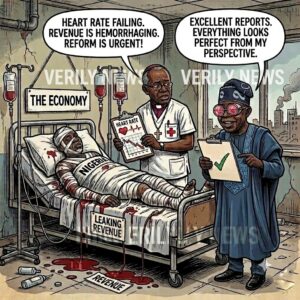
The establishment of the task force comes against the backdrop of a petroleum sector that, despite dramatic interventions, remains far from its potential. Nigeria’s petroleum sector has undergone significant reforms under the Tinubu administration, including the removal of the petrol subsidy, unification of foreign exchange windows, and efforts to increase crude oil production from one million barrels per day to 1.5 million barrels per day.
Whether those reforms have delivered commensurate gains remains a subject of fierce public debate, with pump prices and the cost of living still painfully elevated for millions of Nigerians.
To ensure the task force does not work in a vacuum, Tinubu has directed all ministries, departments, agencies, regulators, and relevant institutions to provide full technical support to the task force and submit inventories of ongoing initiatives to ensure alignment with the emerging reform framework.
All existing committees and working groups within the petroleum sector have also been ordered to align their activities and reporting structures with the new body — a consolidation move aimed at cutting through the bureaucratic fragmentation that has long hampered coherent sector governance.
Oil remains the lifeblood of Nigeria’s federal revenues and foreign exchange earnings, and the stakes of getting this reform moment right could hardly be higher. With global energy transition pressures mounting and international capital increasingly gravitating toward cleaner energy destinations, Nigeria faces a narrowing window to make its petroleum resources work harder—and smarter—for the national economy.
Whether a six-month task force, however well-constituted, can deliver where decades of reform efforts have only partially succeeded will be the test that history will ultimately apply.
For now, the presidency is betting that the right combination of financial acumen, technical rigor, and direct presidential accountability can finally move the needle.
WHAT YOU SHOULD KNOW
Nigeria’s President Tinubu has launched a high-powered, six-month petroleum reform task force with a clear and measurable mission: unlock up to $10 billion in sector capital, fix structural inefficiencies through ready-to-implement policy tools, and chart a ten-year energy transformation roadmap.
Led by GTBank co-founder Fola Adeola, the body is deliberately designed to be action-oriented rather than advisory—reporting directly to the President, operating on a strict timeline, and dissolving once its work is done.
Nigeria’s petroleum sector is at a make-or-break juncture, and the success or failure of this task force will largely determine whether the country capitalizes on its oil wealth before the global energy transition narrows that window permanently.