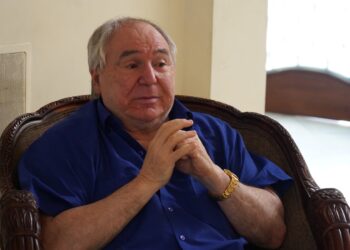
The Federal High Court in Abuja on Wednesday adjourned a fundamental rights enforcement suit filed by former Kaduna State governor Nasir El-Rufai against the Independent Corrupt Practices and Other Related Offences Commission and four other respondents until March 25 for hearing.
Justice Joyce Abdulmalik postponed the proceedings to enable all parties involved in the case to properly regularise their legal filings.

According to the News Agency of Nigeria, El-Rufai is seeking N1 billion in damages against the ICPC, the Chief Magistrate of the Magistrate’s Court of the Federal Capital Territory, the Inspector-General of Police, and the Attorney-General of the Federation, who were listed as the first to fourth respondents in the case.
When the matter came up, counsel to El-Rufai, Ubong Akpan, informed the court that the case had been scheduled for hearing but noted that while they had responded to the ICPC’s counter-affidavit, they were yet to file a response to the submission made by the Inspector-General of Police.
Lawyers representing the ICPC and the police, Abdulsufiano Abubakar and Ezekiel Rimamsomte respectively, confirmed Akpan’s statement before the court.
Following the submissions, Justice Abdulmalik adjourned the case to March 25 and directed that hearing notices be issued and served on the second respondent, the Chief Magistrate, and the fourth respondent, the Attorney-General of the Federation, who were not represented during the court session.
In the originating motion on notice marked FHC/ABJ/CS/345/2026 and filed on February 20 by senior advocate Oluwole Iyamu, El-Rufai asked the court to grant seven reliefs.
He requested the court to declare that the invasion and search of his residence at House 12, Mambilla Street, Aso Drive in Abuja on February 19 at about 2 p.m. by operatives of the ICPC and officers of the Nigeria Police amounted to a serious breach of his fundamental rights.
The former governor argued that the action violated his rights to dignity of the human person, personal liberty, fair hearing and privacy as provided under Sections 34, 35, 36 and 37 of the Nigerian Constitution.
He also asked the court to declare that any evidence obtained through what he described as an invalid search warrant and unlawful search should not be admissible in any proceedings involving him because it was allegedly obtained in breach of constitutional safeguards.
El-Rufai further requested an injunction preventing the respondents and their agents from relying on, using or presenting any materials seized during the search in any investigation or prosecution involving him.
In addition, he urged the court to direct the ICPC and the Inspector-General of Police to immediately return all items taken from his residence during the operation and provide a detailed inventory of the seized materials.
He also sought an order awarding him N1 billion as general, exemplary and aggravated damages, among other reliefs.
In its response, the ICPC stated in a counter-affidavit that it had received a petition against the former governor and began an investigation based on the allegations.
The commission said that its operatives carried out the search after obtaining a valid warrant issued on February 18, which was executed the following day between 1:37 p.m. and 3:56 p.m. at the residence located at 12 Mambilla Street in Asokoro, Abuja.
According to the anti-corruption agency, the operation was conducted in the presence of police officers and witnessed by El-Rufai’s wife, Hadiza El-Rufai, and his son, Mohammed El-Rufai.
The commission urged the court to dismiss the suit and also provided a list of items it claimed were recovered from the residence during the search.

The Nigeria Police Force also filed a counter-affidavit sworn by Inspector Ewa Anthony, arguing that it possesses the legal authority to detect, arrest, investigate and prosecute criminal suspects.
The police maintained that the search conducted at the former governor’s residence was based on a warrant issued by a competent court of law.
They rejected El-Rufai’s claim that the warrant was invalid, insisting that it was a lawful court order and that officers involved in the operation followed all necessary legal procedures during the execution of the search.
According to the police, the applicant is attempting to use the court process to shield himself from ongoing security investigations and potential prosecution.
The police therefore asked the court to dismiss the suit entirely.
What you should know
Nasir El-Rufai served as governor of Kaduna State from 2015 to 2023 and remains a prominent figure in Nigerian politics.
Legal disputes involving former public officials often arise from anti-corruption investigations carried out by agencies such as the ICPC and the police. Fundamental rights enforcement suits are commonly filed when individuals believe law enforcement actions, including searches and seizures, violated constitutional protections.
Courts typically examine whether search warrants were validly issued and properly executed before determining whether evidence obtained during such operations can be used in legal proceedings.