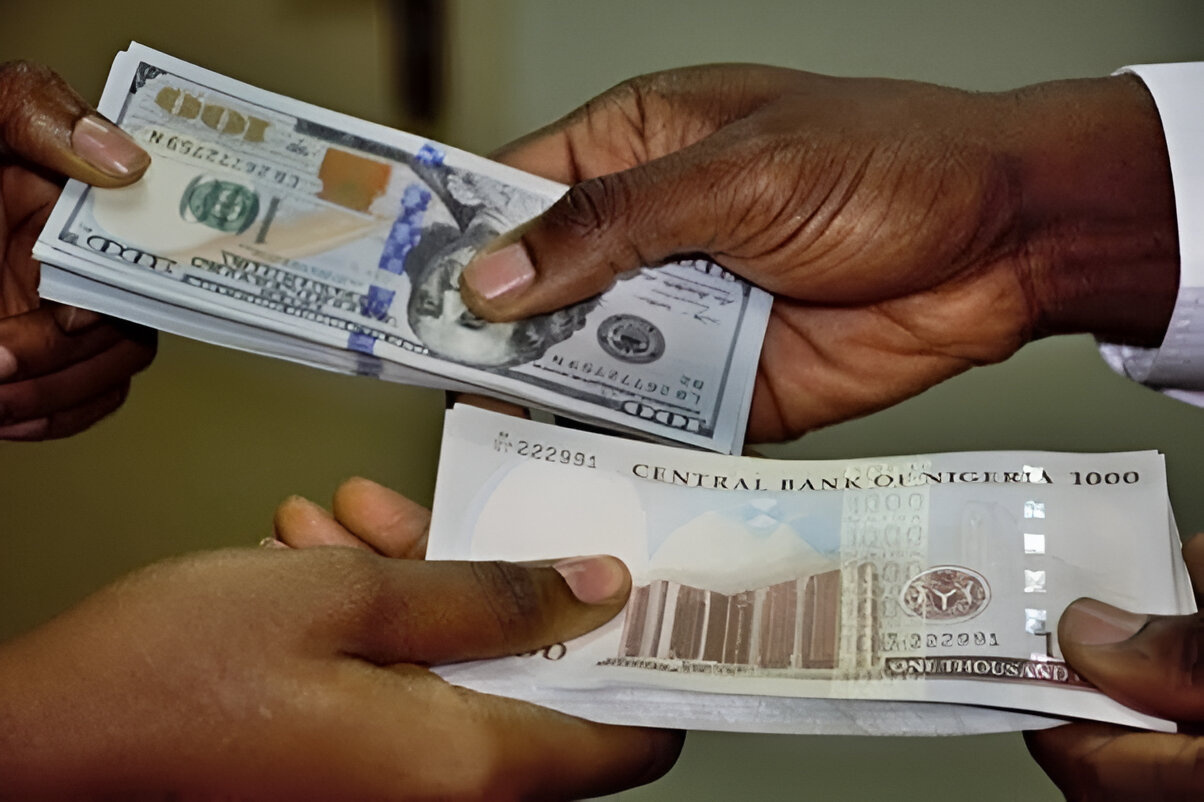
The Nigerian naira dipped slightly in the official market on Monday, closing at ₦1,353.5 per dollar, as traders awaited the outcome of the CBN’s 304th MPC meeting concluding today in Abuja.
This subtle weakening reflects cautious trading sentiments ahead of potential shifts in monetary policy, with investors keenly eyeing signals on interest rates, inflation control, and exchange rate stability.
According to data released by the CBN, the naira fell from its Friday close of N1,348 per dollar, marking a depreciation of about 0.4 percent. Intraday trading on Monday showed volatility, with the currency hitting a high of N1,354.5 per dollar and a low of N1,343 per dollar before settling at a simple average rate of N1,349.24 per dollar.
This performance in the Nigerian Foreign Exchange Market (NAFEM) indicates mild pressure on the local currency, potentially driven by demand-supply imbalances and pre-meeting positioning by investors.
In contrast, the parallel market—often seen as a barometer of street-level sentiment—saw the naira strengthen marginally, closing at N1,358 per dollar on Monday compared to N1,361.5 per dollar the previous Friday.
This divergence highlights the fragmented nature of Nigeria’s FX ecosystem, where official rates are influenced by CBN interventions, while the black market responds more fluidly to immediate economic pressures.
Adding a layer of optimism, Nigeria’s external reserves continued their upward trajectory, climbing to $48.77 billion as per the latest CBN figures. This build-up in reserves, bolstered by improved oil revenues and diaspora remittances, provides a buffer against external shocks and could empower the MPC to adopt a more accommodative stance if deemed necessary.
The timing of this FX movement is particularly noteworthy, occurring on the eve of the MPC’s deliberations. The two-day meeting, which commenced on Monday, February 23, and concludes today, is the first of 2026 and comes amid a backdrop of easing inflationary pressures.
Headline inflation has moderated for eleven consecutive months, dropping to 15.1 percent in recent data, a trend that has fueled speculation about a possible interest rate cut. Analysts are divided, with some forecasting a hold on rates to maintain financial stability, while others, including Goldman Sachs, anticipate Nigeria’s largest rate reduction in over a decade—potentially up to 100 basis points—to stimulate growth.
For context, the previous MPC gathering—the 303rd in November 2025—saw the committee maintain a tight monetary policy framework. The Monetary Policy Rate (MPR) was held steady at 27.00 percent, alongside the Cash Reserve Ratio (CRR) at 45.00 percent for deposit money banks and 16.00 percent for merchant banks.
The liquidity ratio remained at 30.0 percent, and a 75 percent CRR was upheld on non-Treasury Single Account public sector deposits. This decision followed a period of improved liquidity, which had supported naira gains across FX segments at the time. Back then, the currency closed at N1,452 per dollar on November 24, 2025, an improvement from N1,458 per dollar the prior Friday.
That November meeting’s outcome was influenced by a sustained decline in inflation and efforts to safeguard economic stability. However, internal votes revealed a split, with five members advocating for a 50-basis-point cut, citing stronger external buffers and better growth prospects. Today’s deliberations could pivot similarly, especially as recent surveys show 65 percent of Nigerians favoring lower interest rates to ease borrowing costs and spur investment.
Market watchers suggest that a rate cut could alleviate pressure on businesses, where maximum lending rates have hovered around 29.32 percent as of December 2025, mirroring the CBN’s stance.
Lower rates might also encourage liquidity in the banking sector, potentially boosting stock market performance—the Nigerian Exchange (NGX) has already swelled by N25 trillion in the first seven weeks of 2026, partly on hopes of easing. Conversely, holding or hiking rates could underscore ongoing concerns about residual inflation risks and fiscal imbalances.
CBN Governor Olayemi Cardoso is slated to address the press at 2:00 PM WAT today, providing clarity on the committee’s decisions. Until then, trading remains subdued, with the naira’s trajectory likely to hinge on the MPC’s signals.
As Nigeria navigates post-reform challenges, including fuel subsidy removals and FX unification, the outcome could set the tone for economic recovery in Africa’s largest economy.
This mixed FX performance underscores the delicate balance the CBN must strike between growth stimulation and inflation containment. Stakeholders, from Lagos traders to international investors, will be watching closely for indications of policy easing that could herald a more favorable environment for businesses and consumers alike.
WHAT YOU SHOULD KNOW
The naira recorded a modest 0.4% depreciation in the official market on Monday, closing at N1,353.5/$, as investors adopted a wait-and-see stance ahead of the CBN’s 304th MPC meeting outcome today.