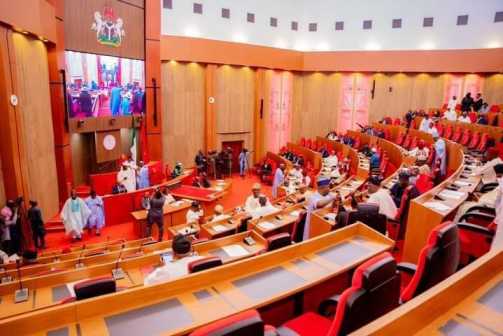
The Senate has commenced the process of reversing and recommitting the Electoral Act, 2022 (Repeal and Re-Enactment) Bill, 2026, citing concerns related to the scheduling of the 2027 general elections and technical inconsistencies identified in the legislation.
Relying on Order 52(6) of the Senate Standing Orders, Senate Leader Opeyemi Bamidele sponsored a motion seeking to rescind the earlier passage of the bill and return it to the Committee of the Whole for renewed consideration.

Bamidele explained that the move followed the announcement by the Independent National Electoral Commission (INEC) setting February 2027 as the date for the next general elections. The timetable, he said, was unveiled after consultations with the leadership of the National Assembly.
He noted that several stakeholders had expressed reservations that the proposed timeline might conflict with provisions in the amended law, particularly the clause mandating that elections be conducted not later than 360 days before the expiration of the tenure of elected officials.
According to the lawmaker representing Ekiti Central, a careful review of the bill revealed that the 360-day notice requirement contained in Clause 28 could inadvertently lead to the scheduling of the 2027 Presidential and National Assembly elections during the Ramadan fasting period.
Bamidele cautioned that conducting elections during Ramadan could potentially impact voter participation, operational planning, stakeholder engagement, and the overall inclusiveness and credibility of the electoral process.

In addition to concerns over timing, the motion also pointed to several drafting errors and inconsistencies within the bill. Discrepancies were identified in the Long Title and multiple clauses, including Clauses 6, 9, 10, 22, 23, 28, 29, 32, 42, 47, 51, 60, 62, 64, 65, 73, 77, 86, 87, 89, 93, and 143. These issues reportedly affected cross-referencing, numbering, and internal coherence within the proposed legislation.
Meanwhile, proceedings in the House of Representatives turned tense as lawmakers clashed over a similar motion to rescind the passage of the Electoral Act Amendment Bill, particularly provisions concerning real-time electronic transmission of election results.
The Chairman of the House Committee on Rules and Business, Francis Waive, moved a motion requesting the House to revisit its earlier decision on the bill, which had been approved on December 23 in alignment with the Senate’s stance on electronic transmission of results.
When the Speaker of the House, Tajudeen Abbas, subjected the motion to a voice vote, the “nays” appeared louder than the “ayes.” However, the Speaker ruled in favour of the “ayes,” declaring that the motion had passed.

The ruling sparked immediate protests from several lawmakers, who voiced strong objections on the floor of the chamber. The uproar eventually compelled the Speaker to call for an executive session to address the dispute behind closed doors.
The developments in both chambers highlight ongoing legislative debates over the framework governing Nigeria’s 2027 general elections, particularly around timing, procedural compliance, and the use of technology in the electoral process.
What you should know
The Senate has moved to rescind and recommit the Electoral Act Amendment Bill over concerns that its 360-day notice provision could clash with INEC’s February 2027 election timetable and potentially overlap with Ramadan.
Technical drafting inconsistencies were also identified in several clauses.
Meanwhile, the House of Representatives witnessed a rowdy session after a disputed voice vote on a similar motion concerning real-time electronic transmission of election results.