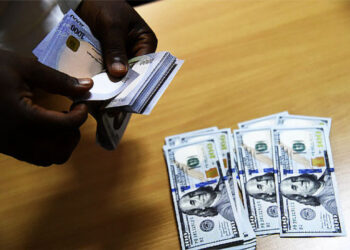
Nigeria’s external reserves have breached the $47 billion mark for the first time since 2018, marking a significant milestone in the country’s economic recovery and underscoring the effectiveness of recent monetary policy interventions.
The latest figures tracked by a financial data platform show that gross external reserves have reached $47.025 billion, surpassing the $47.01 billion recorded on August 3, 2018. The achievement represents the culmination of a sustained upward trend that commenced in late 2025 and has accelerated into the opening weeks of 2026.
The reserve buildup reflects a dramatic turnaround in Nigeria’s external position. The country’s foreign exchange buffers stood at approximately $40.8 billion at the beginning of 2025 but climbed to $45.5 billion by year-end—an annual accretion of nearly $4.7 billion. This momentum has continued into the new year, with reserves gaining over $700 million in January alone, opening the month at $45.565 billion and closing at $46.279 billion.
The progression has been remarkably consistent. In the first 22 days of January 2026, reserves increased by approximately $509 million, demonstrating sustained inflows and improved foreign exchange liquidity conditions. In December 2025, reserves rose from approximately $44.8 billion to $45 billion, a six-year high at the time.
“This is a clear validation of the Central Bank of Nigeria‘s policy direction,” said financial analysts familiar with the situation. “The sustained accumulation since mid-December signals that Nigeria’s external buffers are being rebuilt at a measured but steady pace.”
While the CBN has not yet released a detailed breakdown of the sources driving recent inflows, market observers point to several converging factors behind the reserve surge.
Chief among these is improved crude oil production and stronger export earnings. Nigeria, Africa’s largest oil producer, has benefited from enhanced output as security challenges in oil-producing regions have eased and production infrastructure has stabilized. Higher foreign exchange receipts from petroleum exports have provided a substantial boost to reserve levels.
The CBN’s comprehensive foreign exchange market reforms have also played a crucial role. Greater market transparency, unified exchange rate mechanisms, and measures to reduce arbitrage opportunities have encouraged autonomous inflows from legitimate economic activities. These reforms appear to be gradually yielding measurable results after years of forex market distortions.
Additionally, renewed foreign investor confidence has contributed to portfolio inflows. International investors, who had largely stayed on the sidelines during periods of currency volatility and policy uncertainty, are showing increased willingness to deploy capital into Nigerian assets as macroeconomic indicators improve.
Multilateral and bilateral funding arrangements, along with stronger diaspora remittance flows through official channels, have further supported reserve accumulation. The combination of these factors points to a more stable external sector compared to recent years when reserve levels faced persistent downward pressure.
The psychological significance of crossing the $47 billion threshold cannot be understated. For a country that experienced severe foreign exchange shortages and reserve depletion in recent years, the current trajectory reinforces confidence in the CBN’s medium-term outlook and its ability to meet ambitious reserve targets for 2026.
However, challenges remain. Nigeria must maintain production gains in the oil sector, continue attracting foreign investment, and sustain policy reforms to ensure the reserve buildup proves durable rather than temporary. The global economic environment, fluctuating oil prices, and domestic security conditions will all influence whether this positive trend continues.
For now, though, the numbers tell a story of gradual recovery and renewed economic resilience—a narrative that both policymakers and investors will be watching closely in the months ahead.
WHAT YOU SHOULD KNOW
Nigeria’s external reserves have climbed above $47 billion for the first time in eight years, driven by improved oil revenues, successful foreign exchange reforms, and renewed investor confidence.
This $4.7 billion increase since early 2025 signals a significant turnaround in the country’s economic stability and demonstrates that the Central Bank’s policy interventions are working.
The sustained buildup marks a critical recovery for an economy that previously struggled with severe forex shortages, though maintaining this momentum will require continued reform implementation and stable oil production.